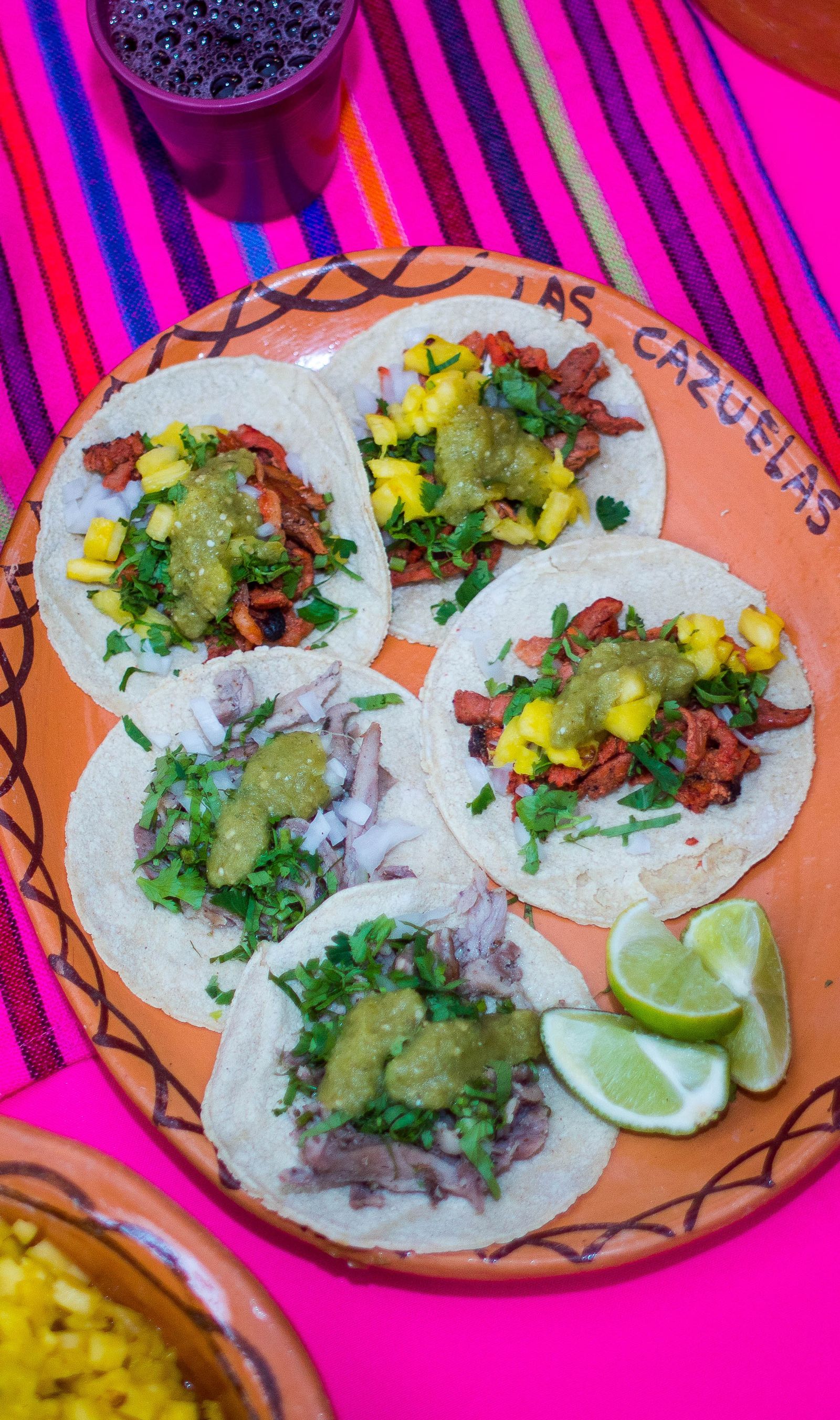
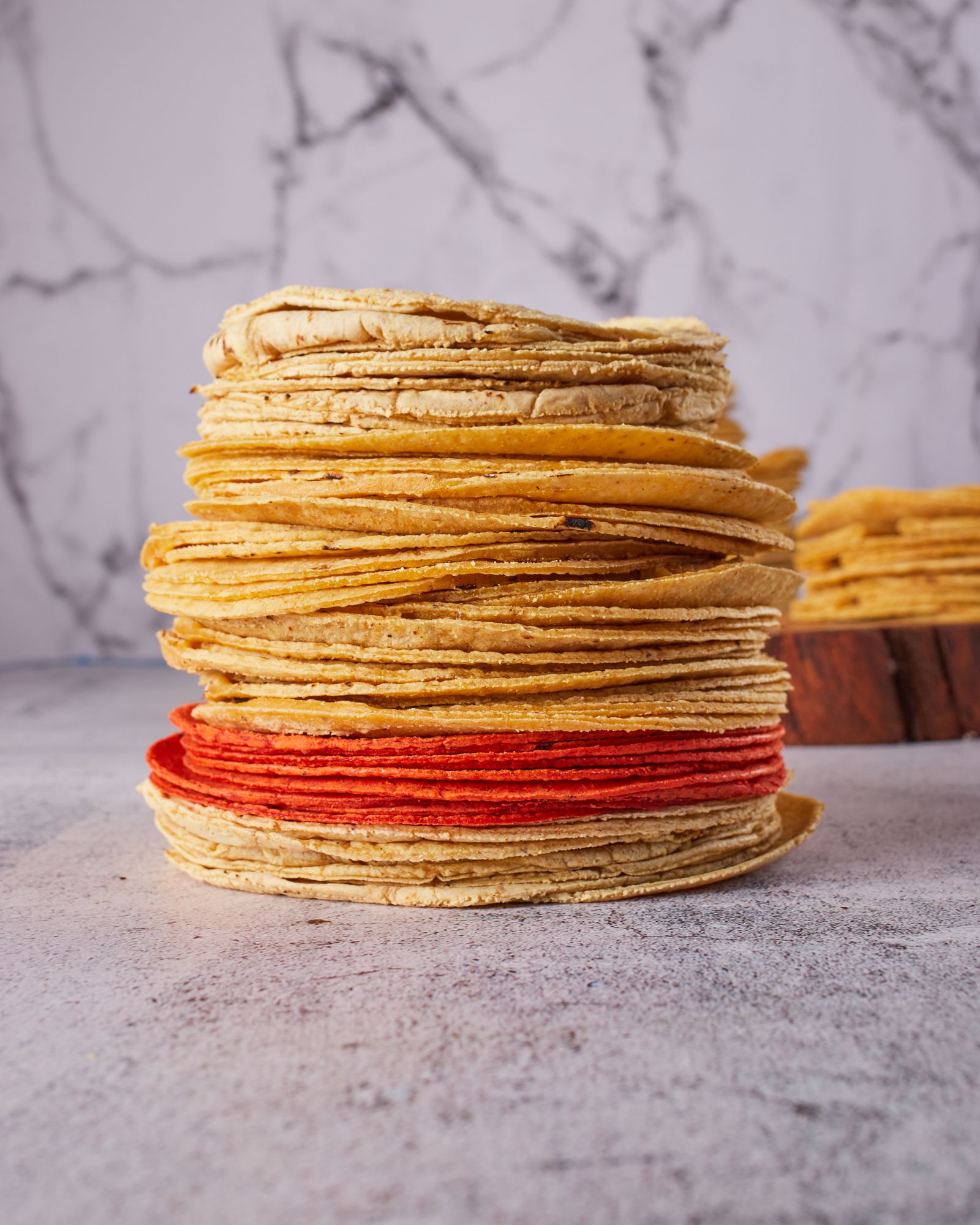
Tacos al pastor are small corn tortillas filled with thin slices of marinated pork shaved from a vertical spit, topped with pineapple, onion and cilantro. The name means “shepherd style”, a nod to the dish’s roots in lamb.
The usual account traces them to Lebanese immigrants who arrived in Mexico in the early twentieth century, many settling in Puebla and Mexico City. They brought the technique of cooking marinated meat on a vertical spit, known as shawarma. In Puebla the meat was served in flatbread, in a dish known as tacos árabes.
Mexican cooks adapted the idea to local tastes. Pork replaced lamb, which was less common, and the marinade changed to include dried chilies, achiote, vinegar and spices. The meat was served on small corn tortillas instead of pita. A slice of pineapple was placed on top of the spit, and a taquero often flicks a piece of it onto the taco.
Tacos al pastor became popular in Mexico City in the middle of the twentieth century and are now a symbol of the city’s street food, eaten late at night at taquerías across Mexico.
Their story is a lesson in culinary exchange: a technique traveled from the eastern Mediterranean to Mexico and was reshaped by ingredients that came from the Americas, such as chilies, corn and pineapple.
The story in more depth
Mexico City’s food culture absorbed influences from many migrants: Spanish, Lebanese, Chinese, Jewish and others. Lebanese migrants began arriving in Mexico in the late nineteenth and early twentieth centuries, and many ran businesses in Puebla and Mexico City. They brought kibbeh, which became the Mexican “kibi”, along with other foods. The shawarma spit adapted to Mexican ingredients, the corn tortilla and the chili, and tacos árabes continue to be sold in Puebla.
Tacos al pastor depend on a spit, called a trompo, topped with a pineapple. The pork is marinated with dried chilies such as guajillo, achiote paste, vinegar and spices, stacked on the spit, and roasted. A taquero shaves thin slices into a small tortilla and may flick a piece of pineapple onto it with the knife. The taco is topped with onion, cilantro and salsa.
Tacos al pastor have spread to many parts of the world, including the United States, Canada, Europe and Australia, where taquerias use trompos. Chefs also experiment with versions using chicken, mushrooms or jackfruit. The dish demonstrates how food traditions are formed by migration, and how an idea can be transformed when it moves.
A timeline
- Late 1800s and early 1900s: Lebanese immigrants arrive in Mexico.
- 1930s and 1940s: Shawarma-style meats are sold in Puebla as tacos árabes.
- 1950s: Al pastor tacos develop in Mexico City.
- 1960s: El Huequito, among others, becomes known for al pastor.
- Today: Tacos al pastor are sold across Mexico, and in taquerias worldwide.
Regional styles and variations
- Tacos árabes: pork or lamb in pita-style bread, a Puebla specialty.
- Al pastor with pineapple: the classic Mexico City taco.
- Gringas: al pastor with cheese in a flour tortilla.
- Pastor de pollo: a chicken version.
- Vegetarian al pastor: made with mushrooms or jackfruit.
Buying, tasting and choosing well
Look for a taquería with a trompo (vertical spit) and cooks who slice meat to order. The meat should be juicy with crisp edges, and the tortillas warm and fresh. Add onion, cilantro, lime and salsa as you like. At home, marinate thin slices of pork with chilies, achiote and pineapple juice, and roast or grill.
Did you know?
- The pineapple on top of the trompo is a signature element.
- The marinade is typically red because of achiote and chilies.
- Al pastor is among the most popular taco fillings in Mexico City.
- The Lebanese influence is also seen in the Mexican dish kibbeh.
Eating it today
Tacos al pastor are a perfect example of how migration shapes food. Enjoy them late at night as Mexico City does, with a squeeze of lime.
Countries connected to this story
- Lebanon: the origin of the shawarma tradition that Lebanese migrants brought to Mexico.
- Mexico: where tacos al pastor became a signature dish of Mexico City.
- Turkey: the source of the doner kebab tradition connected to the spit.
- Greece: with gyros, a similar spit-roasted meat.
- United States: where taquerias popularized al pastor.
- Germany: known for the doner kebab sandwich.
Where to try it
- El Huequito (Mexico City, Mexico): a taquería often mentioned as one of the earliest to serve al pastor, from the 1950s.
- Taquería Orinoco (Mexico City, Mexico): a well-known chain of al pastor taquerias.
- Los Cocuyos (Mexico City, Mexico): a late-night taco stand in the historic center.
- Tacos Árabes in Puebla (Puebla, Mexico): restaurants selling tacos árabes with pita-style bread.
These are well-known examples, not paid recommendations or rankings, and places change. Check opening times and details before you travel.
Well-known brands
- Maseca: a Mexican brand of corn flour for tortillas.
- La Costeña: a Mexican brand of canned chilies and sauces.
- Herdez: a Mexican-American brand of salsas and sauces.
- Goya Foods: a US company specializing in Hispanic foods.
Brands are named as widely known examples of makers, not as endorsements.
Related: Easy Chicken Tacos and corn tortillas.
Many food origins are disputed. This story summarizes commonly cited accounts as an introduction, not the final word.
Photo credits: Davis Arenas on Pexels; Israel Albornoz on Pexels; DΛVΞ GΛRCIΛ on Pexels. Free stock photos shown as illustrations only.