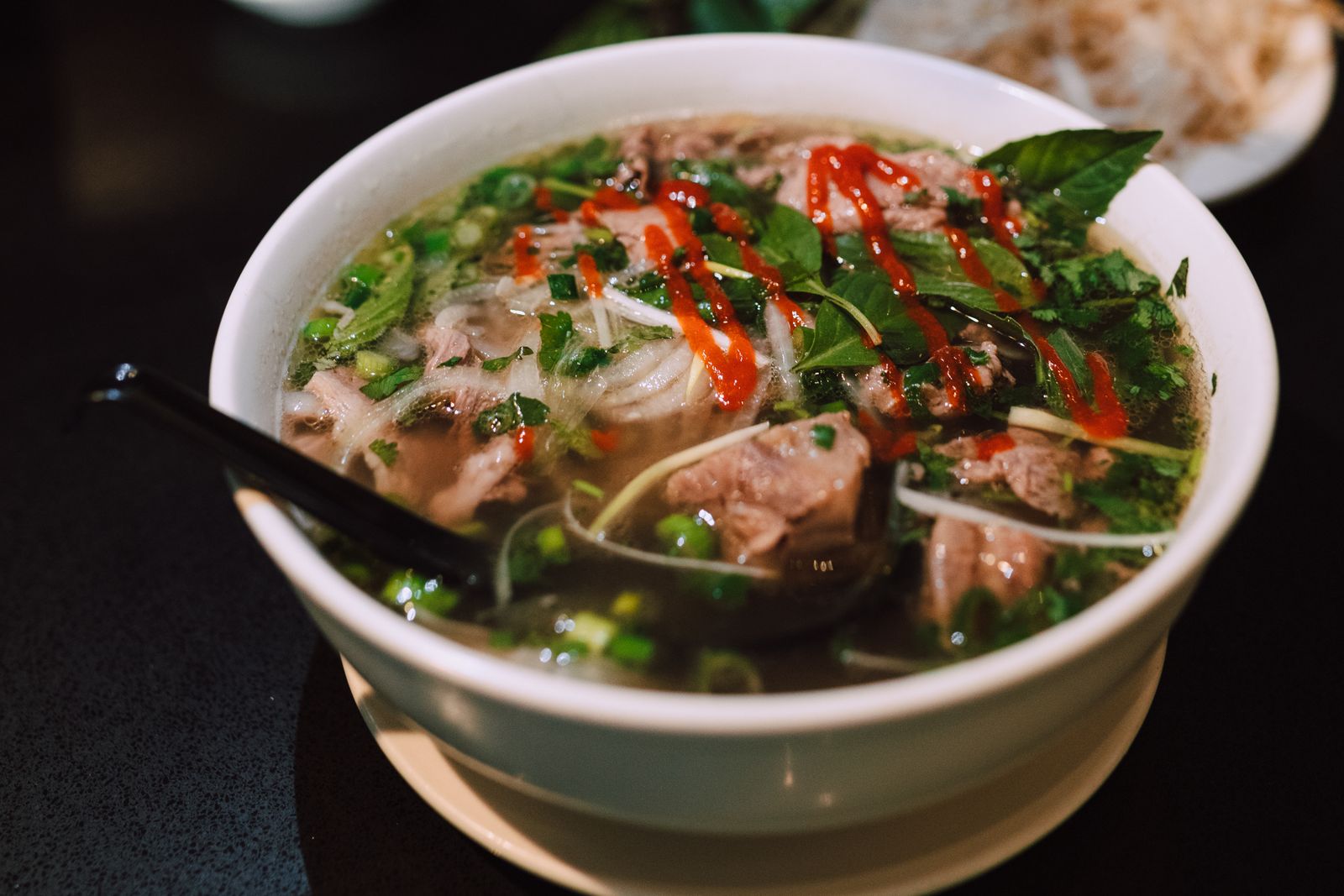
Pho is a Vietnamese noodle soup of clear, aromatic broth, flat rice noodles and thin slices of beef or chicken, served with fresh herbs, lime and chili. It is eaten at breakfast, lunch and late-night stalls all over Vietnam.
Most accounts place its beginnings in northern Vietnam, around Hanoi and Nam Dinh, in the late nineteenth or early twentieth century. The French colonial period increased beef consumption, since beef had previously been less common, and butchers had spare bones for broth. Chinese noodle soups and local rice noodle traditions also contributed. Some say the name comes from the French dish pot-au-feu, while others link it to a Vietnamese word for rice noodles, and the matter remains debated.
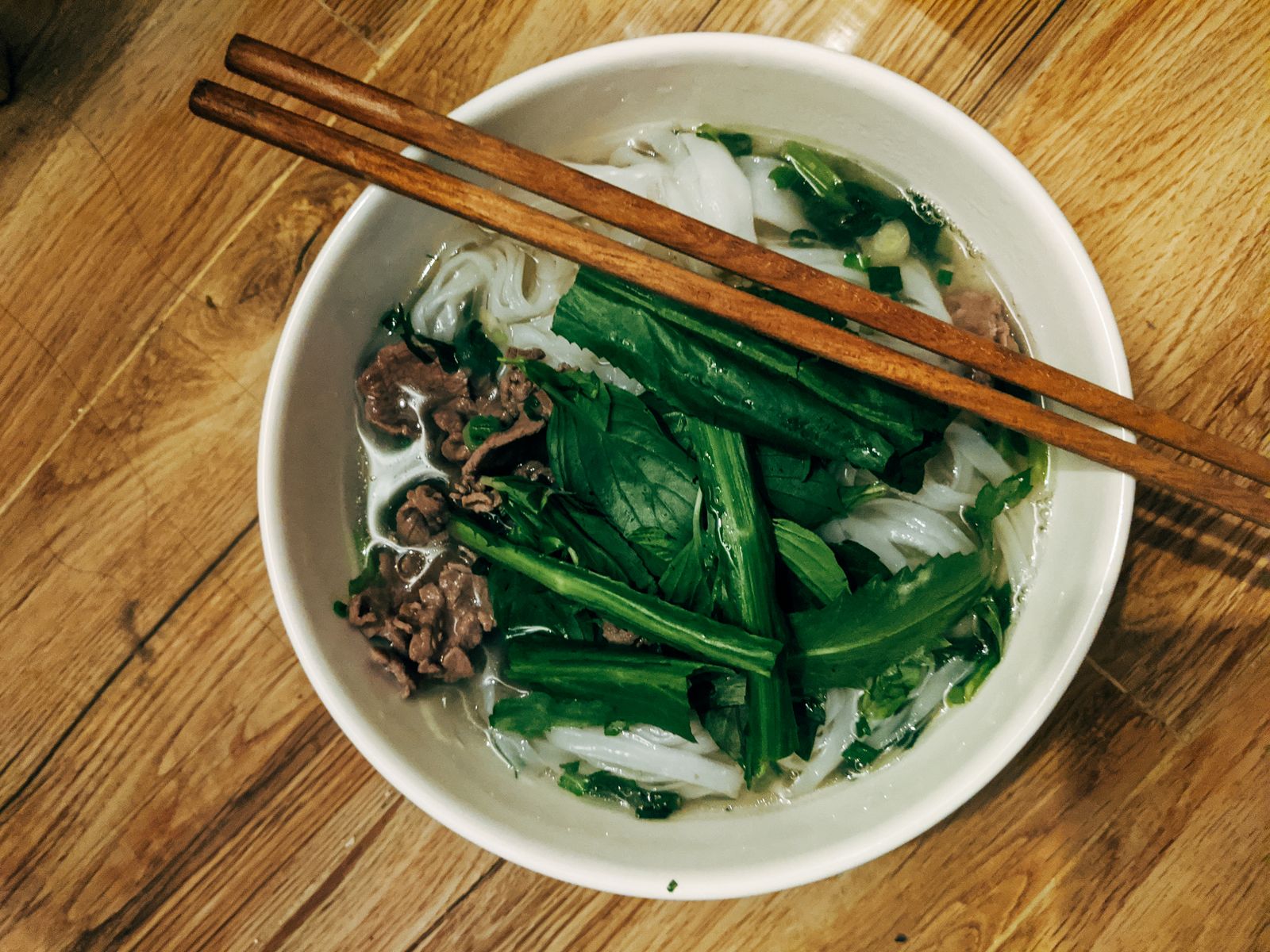
The broth is the soul of pho. Beef bones are simmered for many hours with charred onion and ginger, and spiced with star anise, cinnamon, cloves, coriander seed and cardamom. In the north, the soup is simple and clear, served with green onions. In the south, around Saigon, it came with more herbs, bean sprouts, hoisin and chili sauce.
After the partition of Vietnam in 1954, many northerners moved south and brought pho with them. After 1975, refugees took it around the world, and pho shops opened in the United States, France, Australia and elsewhere. Today pho is a source of national pride and appears on menus in cities worldwide.
The story in more depth
A bowl of pho is built from a series of choices. Beef options include tái (rare slices cooked by the broth), chín (well-done brisket), nạm (flank) and gân (tendon), and there is also phở gà, with chicken. Diners add basil, culantro, bean sprouts, lime, chili and sauces such as hoisin and sriracha. Northern and southern styles differ, and some purists in Hanoi prefer to leave out many additions.
Pho has traveled with the Vietnamese diaspora. In the United States, pho restaurants are common in places such as California, Texas and Virginia. The name has also entered English dictionaries. The dish shows how a food can be shaped by history and then become a source of identity.
A timeline
- Early 1900s: Pho appears in Hanoi and Nam Dinh.
- 1930s: Pho vendors become common in Hanoi.
- 1954: Vietnam’s partition sends many northerners south with their pho.
- 1975: Refugees take pho abroad.
- 2000s: Pho restaurants multiply worldwide.
- Today: Pho is among Vietnam’s best-known dishes.
Regional styles and variations
- Phở bò: beef pho, the classic.
- Phở gà: chicken pho.
- Northern style: clear broth, few herbs.
- Southern style: sweeter broth, more herbs and sauces.
- Phở cuốn: fresh rolls with pho noodles.
- Phở xào: stir-fried pho noodles.
Buying, tasting and choosing well
Great pho begins with a clear, fragrant broth with depth from long-simmered bones and spices. The noodles should be soft but not mushy. Add herbs and lime to taste, but taste the broth before adding sauces. Eat promptly while hot. At home, charring onion and ginger and toasting spices makes a big difference.
Did you know?
- Pho is pronounced like “fuh”.
- It is commonly eaten for breakfast in Vietnam.
- Broth can simmer for six hours or more.
- Pho shops often specialize in only pho.
Eating it today
A bowl of pho is a comforting meal at any time. Try regional variations and see which broth you prefer.
Countries connected to this story
- Vietnam: the home of pho, especially Hanoi and Saigon (Ho Chi Minh City).
- France: whose colonial presence is often linked to the dish’s beef culture.
- China: whose noodle soup traditions influenced Vietnamese cooking.
- United States: home to the largest Vietnamese diaspora outside Vietnam.
- Australia and France: with large Vietnamese communities and many pho restaurants.
Where to try it
- Phở Thìn (Hanoi, Vietnam): a popular pho restaurant on Lò Đúc Street.
- Phở Gia Truyền (Hanoi, Vietnam): a well-known shop on Bát Đàn Street, often with long queues.
- Phở Hòa Pasteur (Ho Chi Minh City, Vietnam): a large and popular restaurant in the city.
- Pho 2000 (Ho Chi Minh City, Vietnam): a restaurant near Ben Thanh Market that former US President Bill Clinton visited in 2000.
These are well-known examples, not paid recommendations or rankings, and places change. Check opening times and details before you travel.
Well-known brands
- Vifon: a Vietnamese food company known for instant noodles, including pho.
- Acecook: a Vietnamese instant noodle company.
- Phở Hòa: a Vietnamese restaurant chain with locations abroad.
- Three Ladies Brand (Bánh Phở): a brand of rice noodles sold in Asian shops.
Brands are named as widely known examples of makers, not as endorsements.
Related: Rice noodles and spring onion.
Many food origins are disputed. This story summarizes commonly cited accounts as an introduction, not the final word.
Photo credits: bo MEO on Pexels; RDNE Stock project on Pexels; Markus Winkler on Pexels. Free stock photos shown as illustrations only.