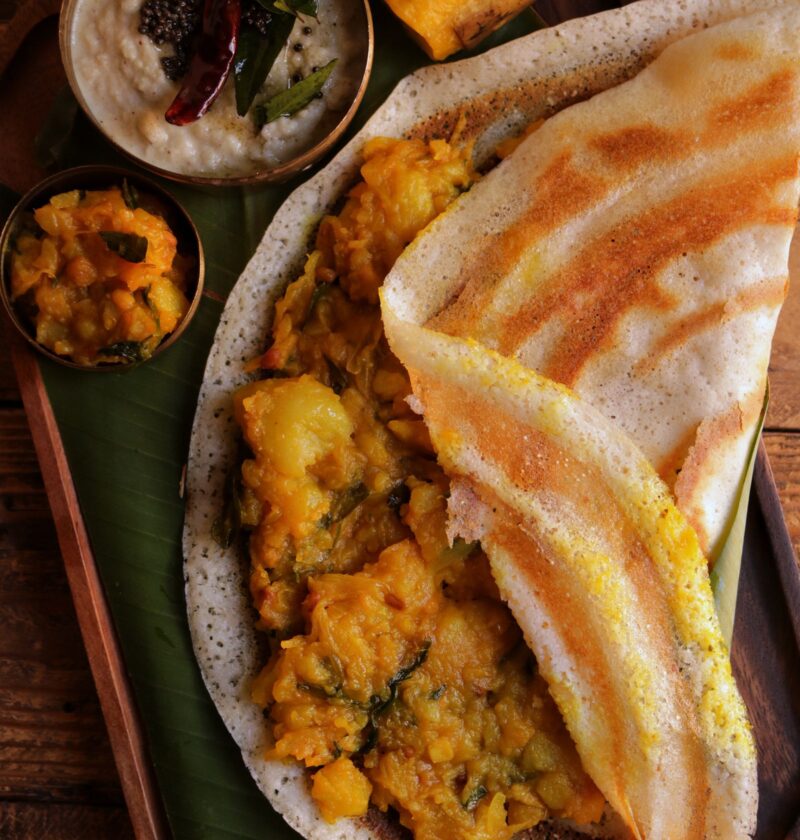
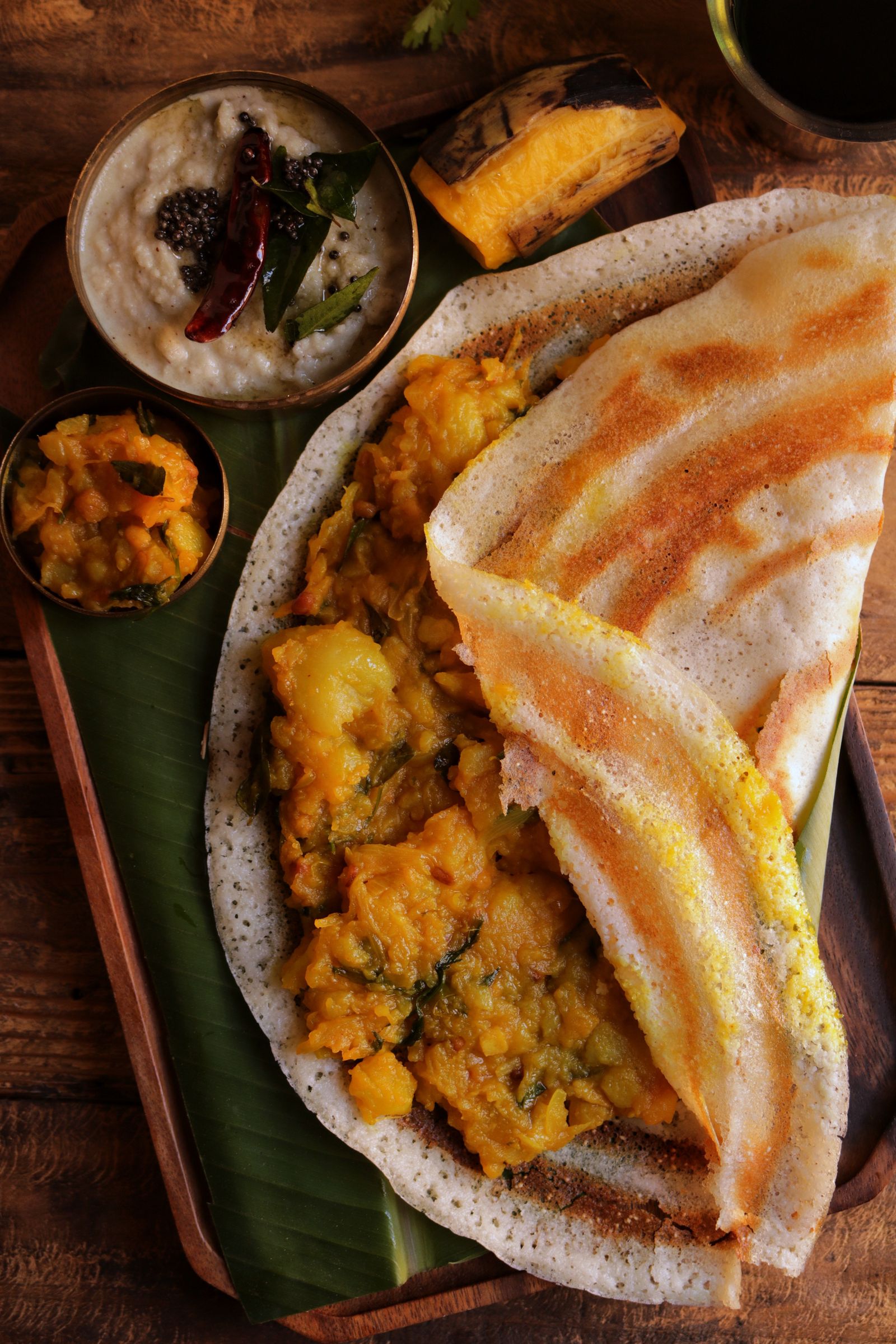
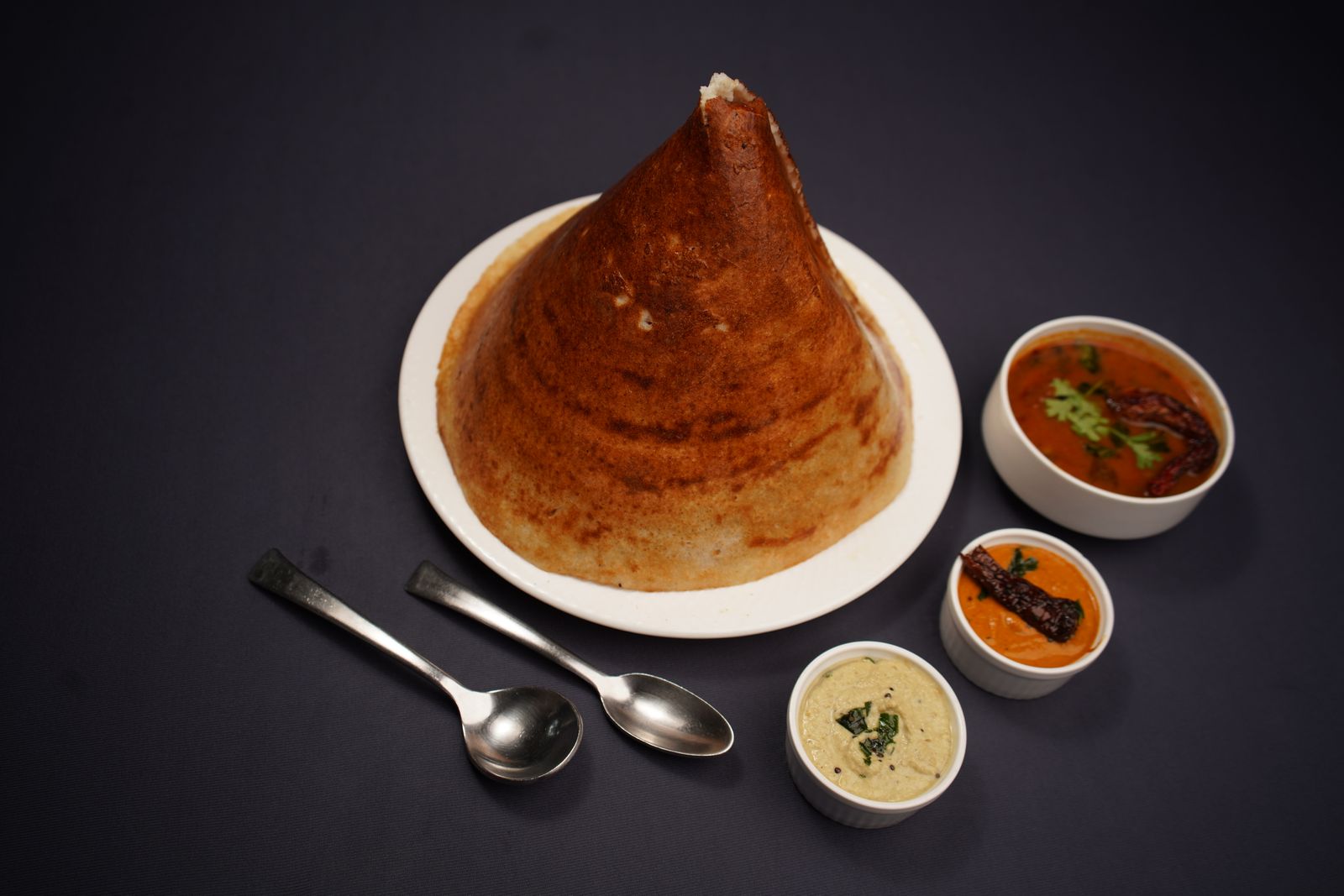
The dosa is a thin, crisp crepe made from a fermented batter of rice and urad dal. It is a staple of South Indian breakfasts and is served with coconut chutney and sambar.
Its history is debated. Some food writers cite references to dosa in ancient Tamil literature from the early centuries of the common era, though scholars discuss how closely those early foods match today’s dosa. Fermented rice and lentil batters are certainly an old tradition across South India.
Dosa’s fame beyond the south owes much to the restaurants of the coastal Karnataka town of Udupi. In the twentieth century, cooks from Udupi opened vegetarian hotels in cities such as Mumbai, Chennai and Bengaluru, and their menus popularized dosas, idlis and filter coffee. The masala dosa, filled with spiced potato, is often linked to this tradition.
There are many styles: paper dosa, rolled long and extra thin; Mysore masala dosa, with a red chutney spread inside; rava dosa, made with semolina; and the soft, thick uttapam.
The batter itself is an example of natural fermentation. It is left to rest overnight, and wild yeasts and bacteria make it lightly sour and bubbly. Today dosa is enjoyed worldwide, and ready-made batter is sold in many shops.
The story in more depth
Udupi cuisine takes its name from the temple town of Udupi in coastal Karnataka, where the Krishna Matha temple’s kitchen tradition shaped a style of pure vegetarian cooking. Cooks from the region, many of them from the Brahmin communities, set up modest restaurants in Mumbai and other cities from the early twentieth century, often called “Udupi hotels”, known for being hygienic and affordable. They became cultural institutions across India.
Dosa has dozens of variations. The paper dosa is crisp and very long; the set dosa is small, thick and spongy; the neer dosa from coastal Karnataka is a thin rice crepe; the pesarattu from Andhra Pradesh is made from green gram; and the Mysore masala dosa is smeared with a fiery red chutney. Rava dosa uses semolina, and oats and millet dosas are modern variants.
The batter requires skill. Rice and urad dal are soaked and ground, then left to ferment for 8 to 12 hours. The ratio of rice to dal, the type of rice and the climate affect the result. Dosas are cooked on a hot iron griddle, spread with a ladle in a spiral, and finished with ghee or oil. Dosa is now served worldwide, in restaurants and increasingly in ready-made forms.
A timeline
- Early centuries CE: Fermented rice and lentil foods are mentioned in South Indian texts, according to some scholars.
- 1900s: Udupi cooks open restaurants in Mumbai and other cities.
- 1924: Mavalli Tiffin Room opens in Bengaluru.
- 1943: Vidyarthi Bhavan opens in Bengaluru.
- 2000s: Ready-made dosa batter becomes available.
- Today: Dosa restaurants and food trucks serve it worldwide.
Regional styles and variations
- Plain dosa: a thin crisp crepe.
- Masala dosa: filled with spiced potato.
- Mysore masala dosa: with a spicy red chutney.
- Rava dosa: crisp, lacy semolina dosa.
- Set dosa: small, soft, spongy dosas served in sets.
- Neer dosa: a thin, soft rice crepe from coastal Karnataka.
Buying, tasting and choosing well
A good dosa is crisp and golden at the edges, lightly sour from fermentation and not oily. Fresh coconut chutney and hot sambar are the traditional partners. To make dosa at home, use a well-fermented batter and a hot, lightly oiled griddle, spreading it quickly in a thin circle. If the batter is sticky, adjust the water and try again.
Did you know?
- Dosa batter is fermented overnight.
- Dosa is naturally vegan and gluten-free, when made with rice and lentils.
- Dosa sizes can be enormous at some restaurants.
- Filter coffee is a classic accompaniment.
Eating it today
A masala dosa is a satisfying meal at any time. If you are new to South Indian food, it is an easy and delicious introduction.
Countries connected to this story
- India: the home of dosa, with regional styles in Tamil Nadu, Karnataka, Kerala and Andhra Pradesh.
- Sri Lanka: where thosai is also eaten, especially in Jaffna.
- Malaysia and Singapore: where thosai is a popular breakfast among Indian communities.
- United Kingdom: with South Indian restaurants in London and Leicester.
- United States: where dosa restaurants and food trucks are found in many cities.
Where to try it
- Sagar Ratna and Udupi restaurants (Delhi and other Indian cities): chains and local restaurants serving South Indian meals.
- Mavalli Tiffin Room (MTR) (Bengaluru, India): a historic restaurant, founded in 1924, known for its dosas and breakfast.
- Vidyarthi Bhavan (Bengaluru, India): a famous restaurant known for its masala dosa, since 1943.
- Saravana Bhavan (Chennai and worldwide): a South Indian vegetarian restaurant chain with branches in many countries.
These are well-known examples, not paid recommendations or rankings, and places change. Check opening times and details before you travel.
Well-known brands
- MTR Foods: a well-known Indian brand of ready mixes, including dosa and idli mixes.
- iD Fresh Food: an Indian brand of ready-made idli and dosa batter.
- Aachi and Eastern: Indian brands of spice mixes.
Brands are named as widely known examples of makers, not as endorsements.
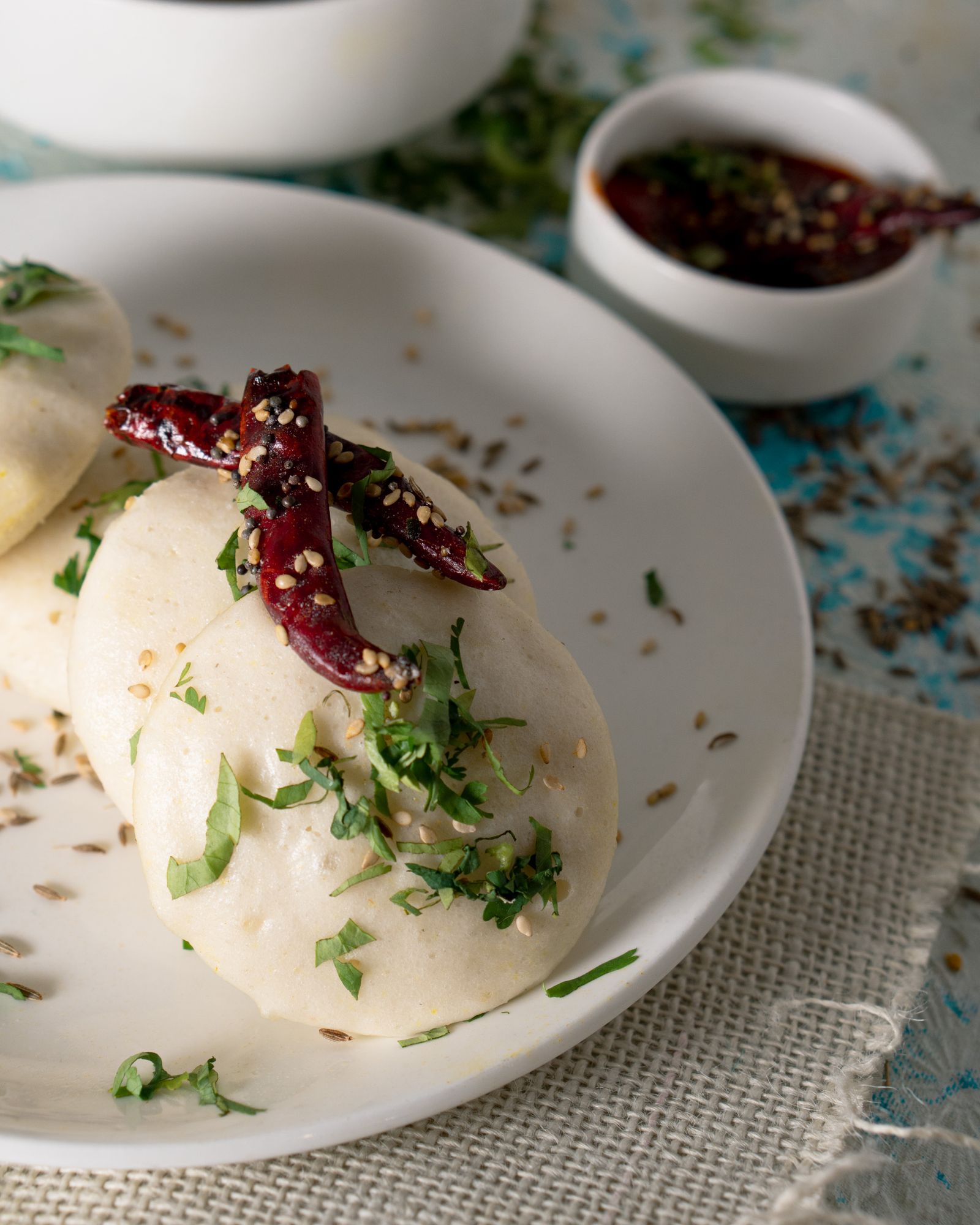
Related: Soft Idli recipe uses the same fermented batter idea.
Many food origins are disputed. This story summarizes commonly cited accounts as an introduction, not the final word.
Photo credits: Saveurs Secretes on Pexels; Jack Baghel on Pexels; sarthak on Pexels. Free stock photos shown as illustrations only.