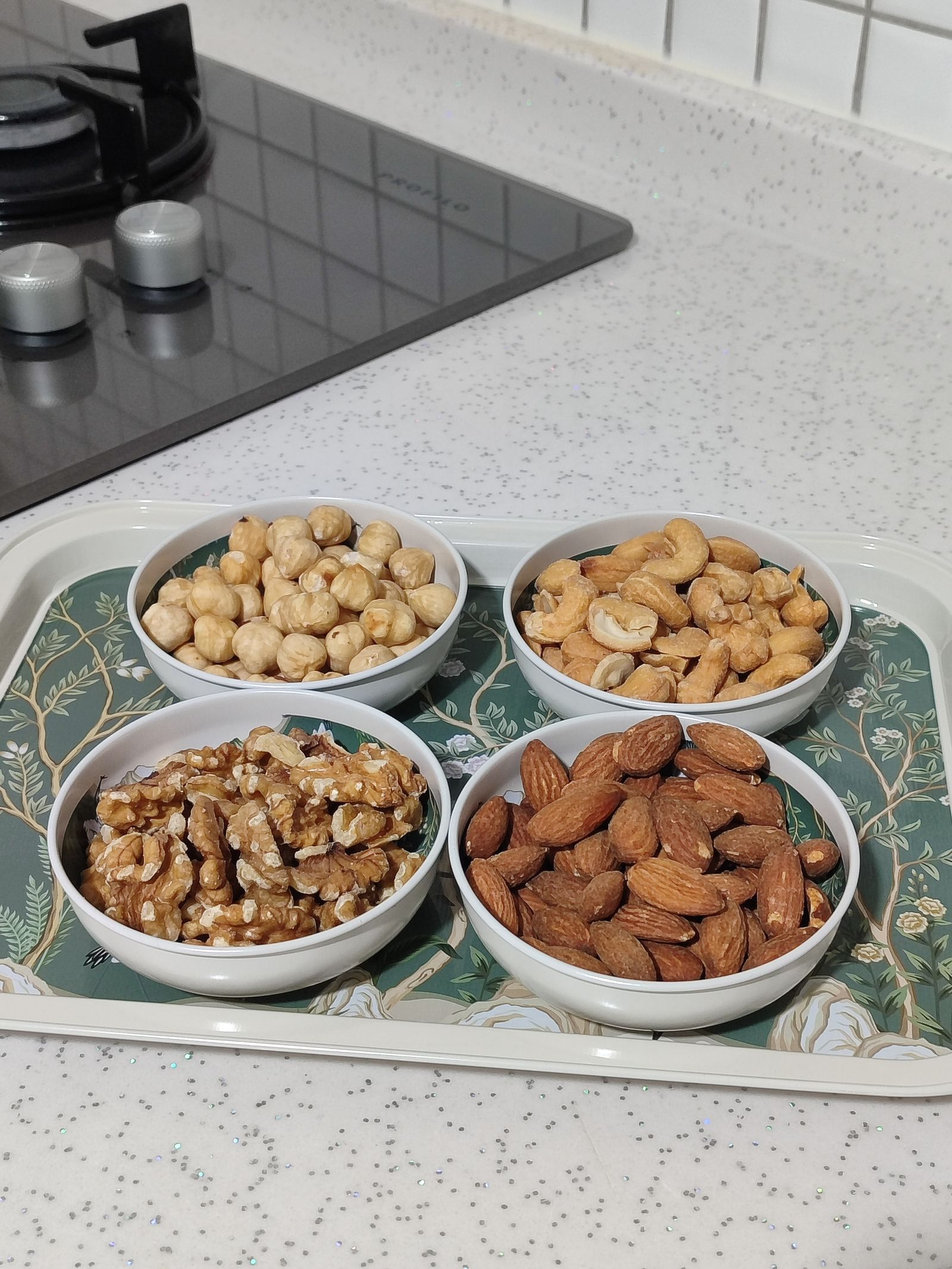
Nuts have fed people for thousands of years, and each has its own story, from the Persian walnut to the Australian macadamia. Browse the history, origin, uses and storage tips for each nut below.
- Almonds: the most widely grown tree nut
- Cashews: from Brazil to India’s curries
- Pistachios: one of the oldest nuts
- Walnuts: the Persian or English walnut
- Hazelnuts: the heart of chocolate spreads
- Pecans: native to North America
- Pine Nuts: seeds of the stone pine
- Macadamia Nuts: from Australian rainforests
Allergy note: tree nuts are a common allergen. Always read labels.
Why nuts matter in cooking
Nuts add crunch, richness and body to dishes around the world: almonds and pistachios in Middle Eastern and Indian sweets, cashews in North Indian curries, walnuts in Georgian and Persian sauces, hazelnuts in Italian and Turkish desserts, and pine nuts in Mediterranean cooking. Ground nuts also thicken sauces and enrich gravies.
Buying and storing nuts
Buy nuts from stores with good turnover, and smell them: rancid nuts smell like old paint or crayons. Store them in airtight containers in a cool place, or in the refrigerator or freezer for longer storage, because their oils can spoil. Toasting nuts briefly in a dry pan or in the oven brings out flavor, but watch them closely, since they burn quickly.
Allergy note
Tree nuts and peanuts are among the most common serious food allergens. If you are cooking for others, ask about allergies, label dishes, and keep utensils separate. Peanuts are legumes, not tree nuts, but they are often avoided together.
Photo credit: Nur Tok on Pexels.