
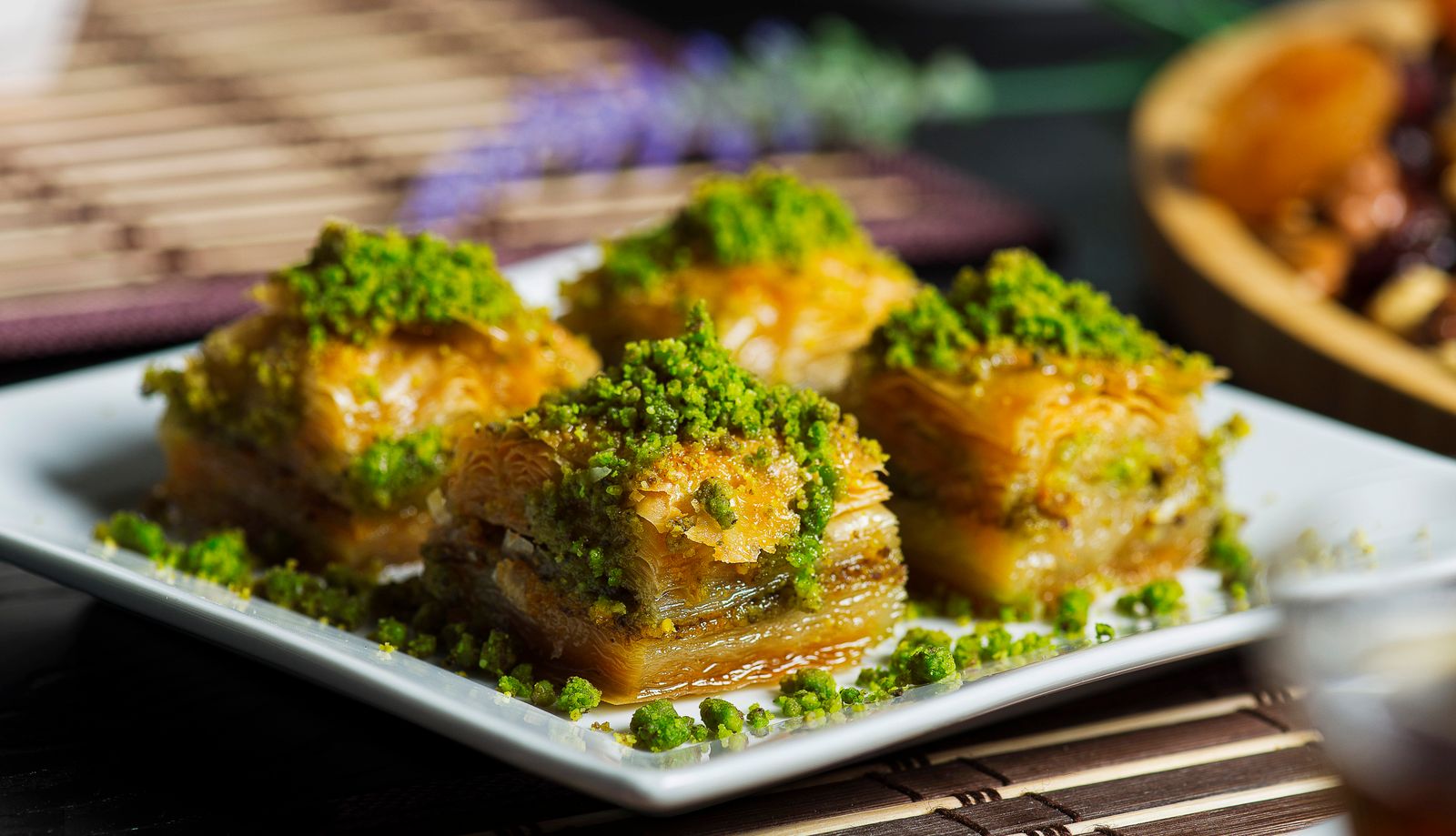
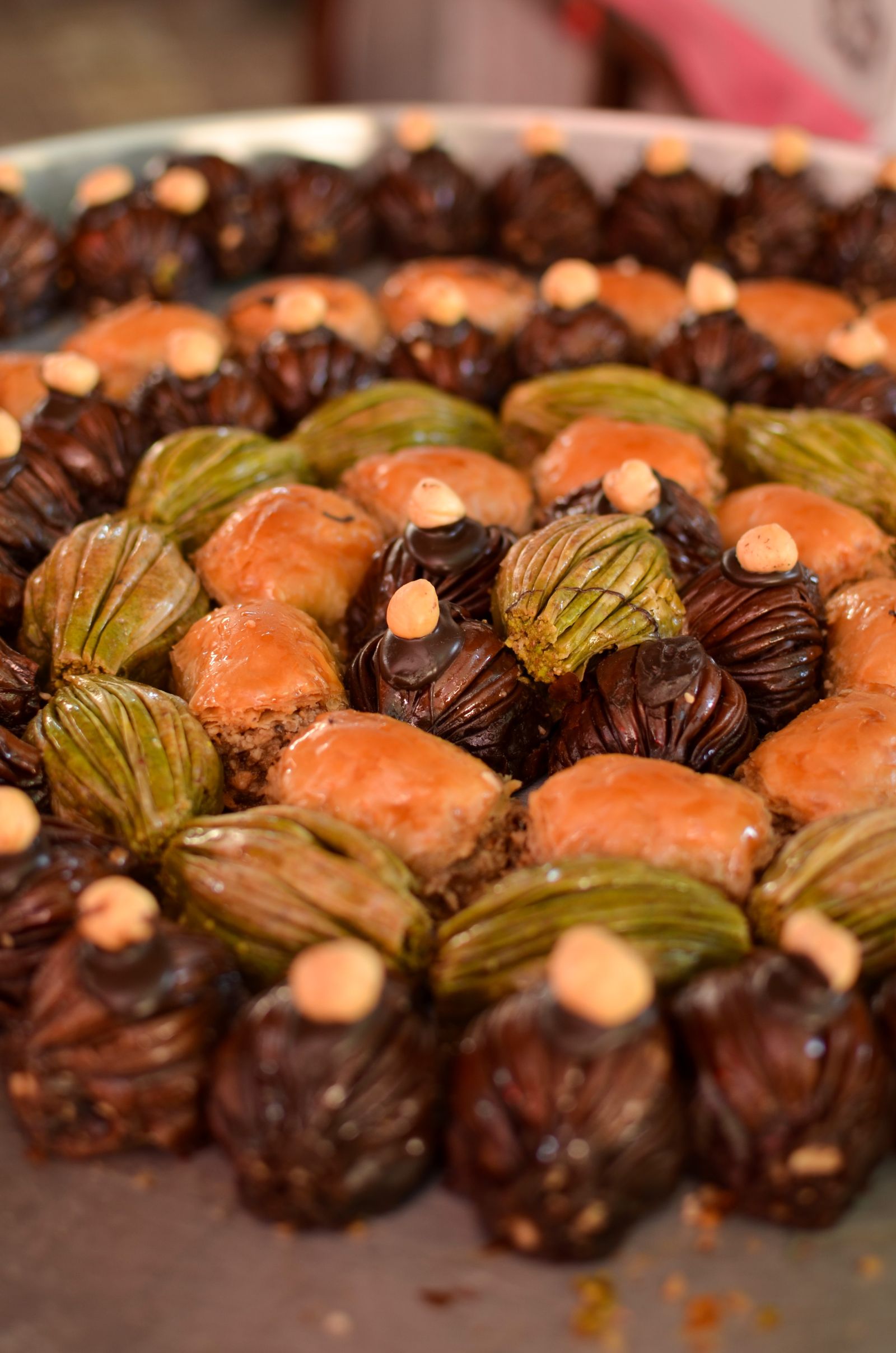
Baklava is a pastry of layered filo dough, filled with chopped nuts and sweetened with syrup or honey. It is served at festivals and celebrations across Turkey, Greece, the Levant, the Balkans, the Caucasus and Central Asia.
Its exact origin is debated. Layered doughs with nuts and honey were made in the ancient Mediterranean and Middle East, and in Central Asian traditions as well. The modern form with paper-thin filo is often credited to the kitchens of the Ottoman Empire, especially the Topkapı Palace in Istanbul, in the fifteenth century. A custom known as the baklava procession (Baklava Alayı) saw trays of baklava delivered from the palace kitchens to the Janissary soldiers in the middle of Ramadan.
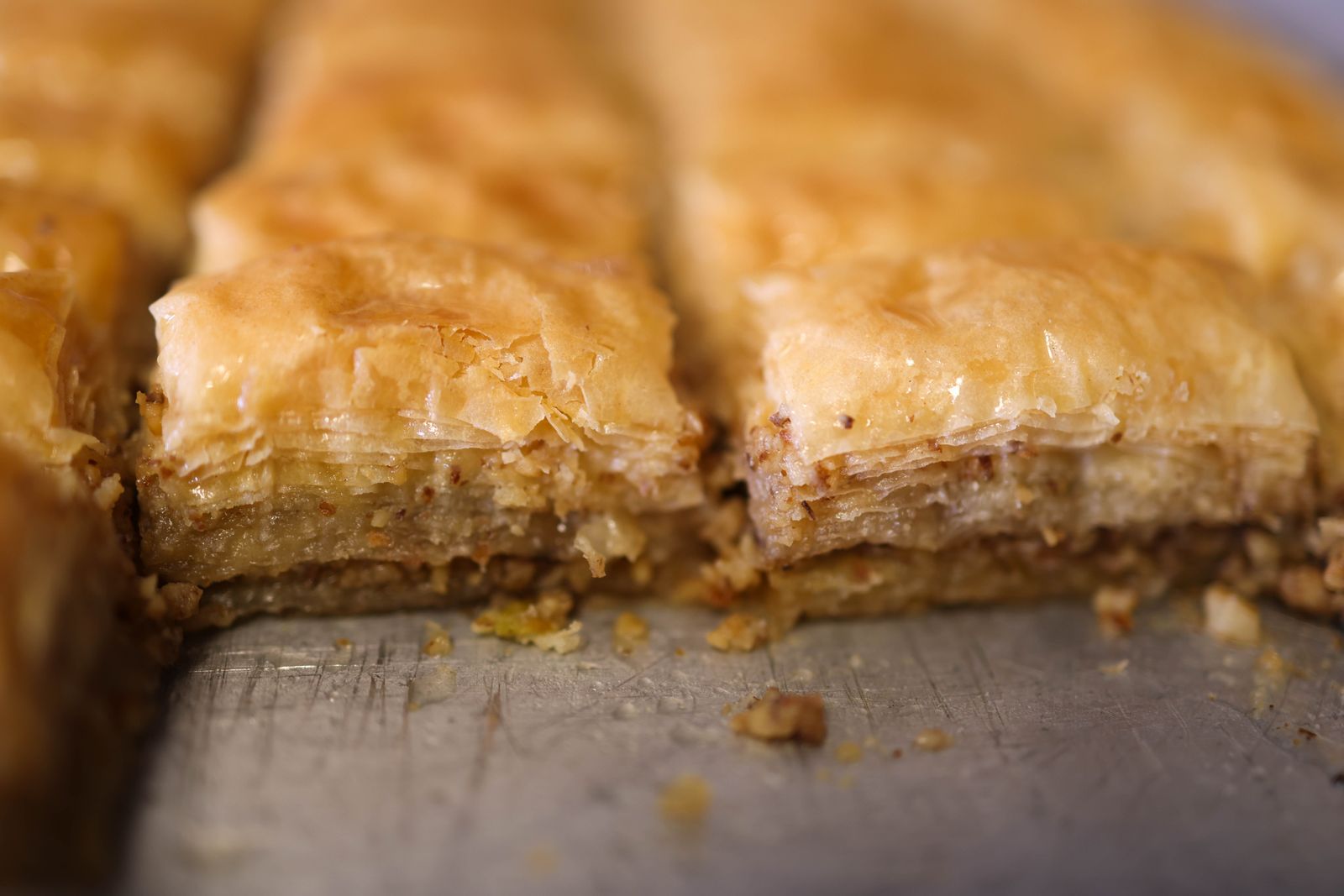
The art of baklava is in the dough. Filo is rolled out so thin that you can see through it, and 30 or more layers may be brushed with butter. Pistachio baklava from Gaziantep in southeastern Turkey is among the best known, and the city’s baklava has a European protected geographical indication. In Greece, baklava is flavored with honey, cinnamon and walnuts; in Lebanon and Syria, often with rose or orange blossom water.
Baklava also stands for hospitality. It is offered with coffee, brought as a gift, and eaten at Eid, Christmas and Easter, depending on the community. Today, baklava makers all over the world have adapted it with chocolate, cashews and other ingredients, but the heart of the sweet is a thin pastry, rich nuts and fragrant syrup.
The story in more depth
Baklava has different forms across regions. Turkish baklava often uses sugar syrup and pistachios; in Greece, honey, walnuts and spices like cinnamon and clove are common; in Lebanon and Syria, a lighter syrup flavored with rose or orange blossom water is used; in Iran, a smaller and drier version, often with rose water and cardamom, is made in Yazd; and in the Balkans, walnuts are often used. Related sweets include kadayif (shredded dough), sütlü nuriye (milk-based baklava) and burma.
Quality depends on fresh butter, thin filo, and syrup that is cooled or poured at the right temperature, so the pastry stays crisp. In many cultures, baklava is made in large trays and cut into diamonds or squares before baking, with a whole clove placed on each piece in Greek versions. It is eaten with Turkish tea or coffee and given as a gift in boxes.
A timeline
- Ancient times: Layered doughs with nuts and honey appear around the Mediterranean and Middle East.
- 1400s: Baklava is made in the Ottoman palace kitchens.
- 1864: Hafız Mustafa is founded in Istanbul.
- 1887: İmam Çağdaş is founded in Gaziantep.
- 2013: Gaziantep baklava receives European protected status.
- Today: Baklava is made worldwide.
Regional styles and variations
- Gaziantep pistachio baklava: bright green, with fine layers.
- Greek baklava: with walnuts, honey and cinnamon.
- Lebanese baklava: with fine pastry and orange blossom syrup.
- Kadayif: shredded pastry dessert.
- Sütlü nuriye: milk-based baklava.
- Sarma: rolled baklava with pistachios.
Buying, tasting and choosing well
Good baklava should be crisp and flaky, not soggy, with plenty of nuts and syrup that is sweet but not cloying. Buy from busy shops that make it fresh daily, and store it uncovered at room temperature, since refrigeration can make it hard. Serve with strong tea or coffee to balance the sweetness.
Did you know?
- Traditional baklava can have 40 layers or more.
- Syrup is poured on hot baklava, or baklava is cooled and hot syrup added.
- The sweet is popular during Ramadan, Eid and holidays.
- It is sold by weight in many countries.
Eating it today
Baklava is a special treat and a gift of hospitality. Try it from a specialist bakery, and share a box with friends.
Countries connected to this story
- Turkey: known for pistachio baklava, especially from Gaziantep.
- Greece: where baklava is made with walnuts and honey.
- Lebanon and Syria: known for fine, delicate baklava with rose or orange blossom water.
- Iran: with its own style, especially in the city of Yazd.
- Armenia, Bulgaria and the Balkans: where baklava is a festive sweet.
- Azerbaijan: with the diamond-shaped pakhlava.
Where to try it
- Güllüoğlu (Istanbul and Gaziantep, Turkey): a famous baklava maker with several shops, a Turkish institution.
- İmam Çağdaş (Gaziantep, Turkey): a historic restaurant and baklava shop, open since 1887.
- Hafız Mustafa (Istanbul, Turkey): a sweet shop founded in 1864.
- Hallab (Tripoli, Lebanon): a famous Lebanese sweet shop, founded in 1881.
These are well-known examples, not paid recommendations or rankings, and places change. Check opening times and details before you travel.
Well-known brands
- Güllüoğlu: a Turkish baklava brand with shops in many countries.
- Hafız Mustafa 1864: a Turkish sweet brand with international branches.
- Hallab 1881: a Lebanese sweets brand.
- Gaziantep baklava (PGI): a protected designation sold by many producers.
Brands are named as widely known examples of makers, not as endorsements.
Many food origins are disputed. This story summarizes commonly cited accounts as an introduction, not the final word.
Photo credits: Jacob Yavin on Pexels; Sofia Mishchenko on Pexels; Valeria Boltneva on Pexels. Free stock photos shown as illustrations only.


