
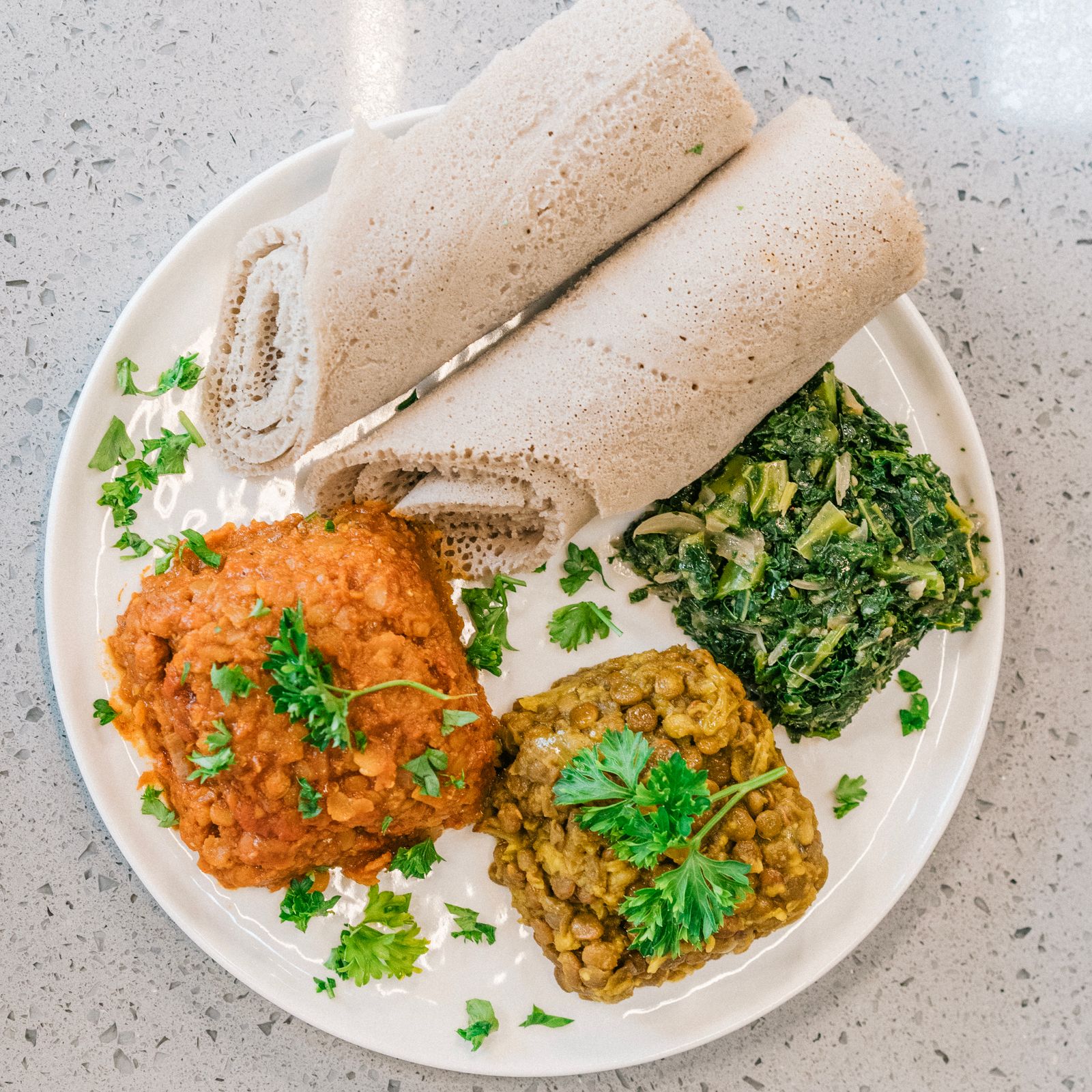
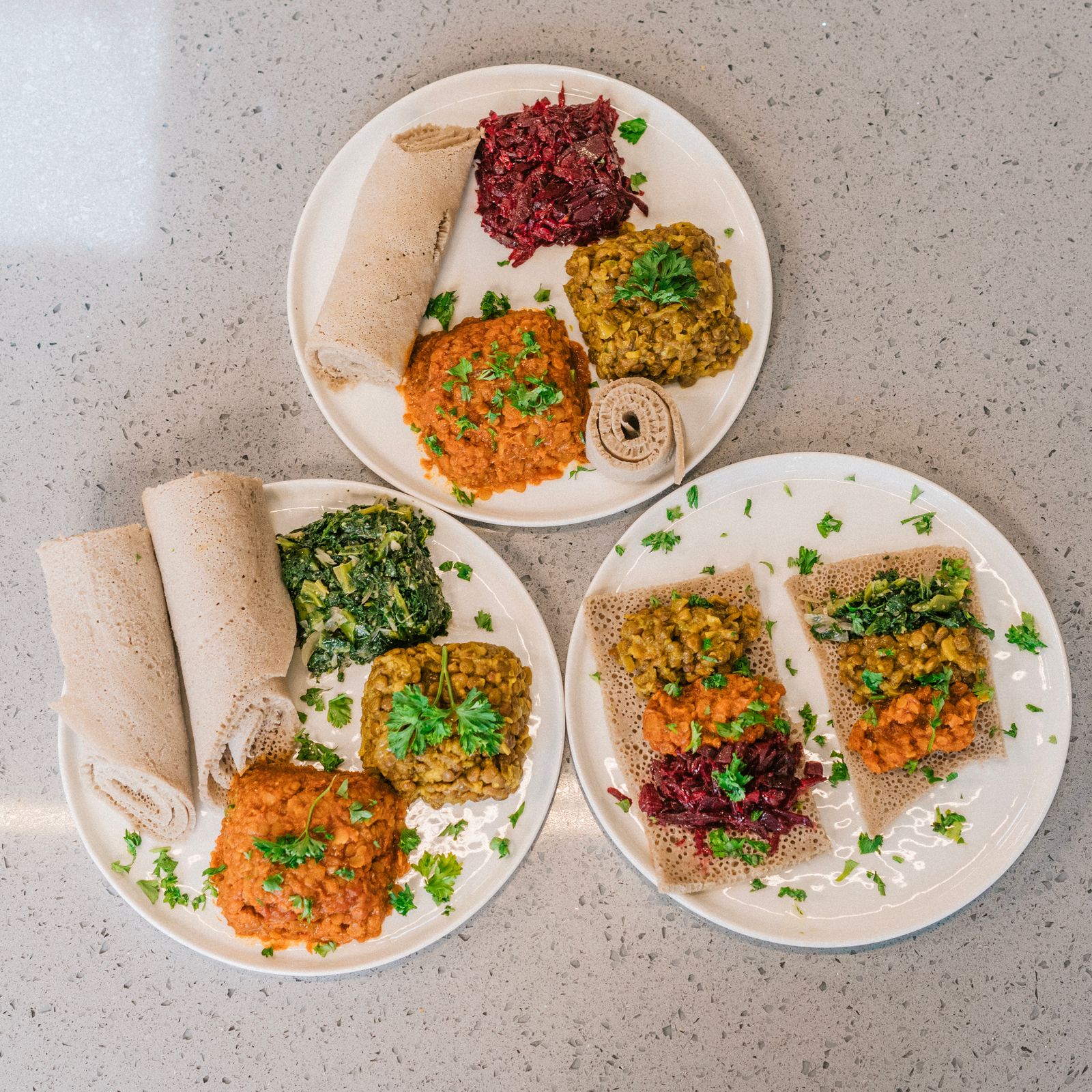
Injera is a large, soft, pancake-like flatbread with a sour tang and a surface full of tiny holes. In Ethiopia and Eritrea, meals are served on a large round of injera, with stews and salads placed on top and extra injera on the side, which is torn and used to scoop up the food.
It is made from teff, a tiny grain domesticated in the Ethiopian highlands thousands of years ago. The batter is mixed with water and left to ferment for a few days, until it bubbles and turns sour, then it is poured in a spiral onto a large, flat clay griddle called a mitad and cooked on one side only, which gives it the holes.
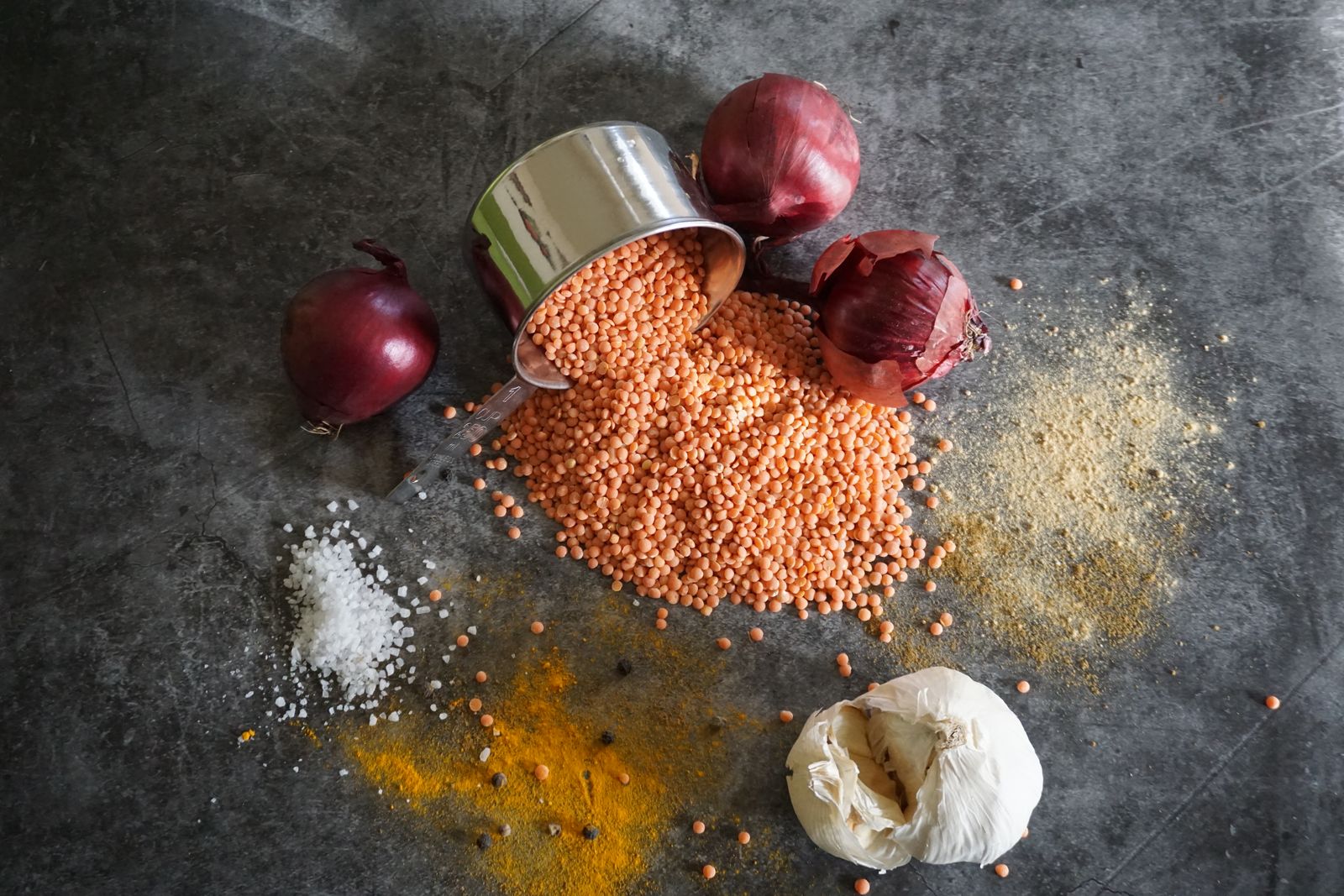
Dining with injera is a communal act. People often share one large plate, and a custom called gursha involves feeding someone a bite by hand as a sign of friendship and love. Dishes include doro wat, a spicy chicken stew; misir wat, red lentils; shiro, chickpea stew; and tibs, sautéed meat. On fasting days, the Ethiopian Orthodox Church recommends vegan food, so many restaurants offer large platters of vegetable dishes.
Teff is nutritious and naturally gluten-free, which has increased interest abroad. Ethiopian communities, notably in Washington, D.C., created restaurants and shops that introduced injera to new audiences. Meanwhile, Ethiopia has protected its teff heritage, and teff is now grown in the United States, South Africa and elsewhere.
The story in more depth
The coffee ceremony is another important part of Ethiopian hospitality, and often follows a meal. Green coffee beans are roasted over a charcoal stove, ground by hand, brewed in a clay pot called a jebena, and served in small cups, often three rounds, with incense burning. Ethiopian and Eritrean cuisine shares many dishes, including injera, spiced stews and spiced butter called niter kibbeh.
Teff has become a subject of international interest and debate. In the early 2000s, a Dutch company obtained patents related to teff, leading to controversy in Ethiopia, which was resolved in 2016 when the agreement was ended. Today, a number of growers in Idaho and elsewhere also produce teff, and Ethiopian restaurants worldwide use imported and local teff flour.
A timeline
- Thousands of years ago: Teff is domesticated in the Ethiopian highlands.
- Ancient and medieval periods: Injera becomes the staple bread of the region.
- 1900s: Ethiopian restaurants open in cities abroad.
- 1980s: Ethiopian migration expands diaspora communities.
- Today: Injera and teff are widely available.
Regional styles and variations
- Teff injera: made fully from teff, tangy and dark.
- Mixed injera: made with teff and other grains such as barley or wheat.
- White teff: lighter and milder.
- Red or brown teff: stronger flavor.
- Kitcha: unleavened flatbread.
- Dabo: Ethiopian bread.
Buying, tasting and choosing well
Good injera is soft, slightly sour, springy and full of tiny holes, and should not be dry or crumbly. Use a piece to scoop food, and eat with the right hand, as is traditional. Try several stews, such as doro wat, misir wat and shiro, and a mix of spiciness. At home, fermented batter takes days, so many cooks buy injera from Ethiopian shops.
Did you know?
- Teff is one of the smallest grains in the world.
- Injera is both a plate and an eating tool.
- A spread of dishes on injera is called a beyaynetu on fasting days.
- Teff is naturally gluten-free.
Eating it today
Eating injera together is an act of friendship. If you are new to Ethiopian food, order a platter to share, and try each flavor.
Countries connected to this story
- Ethiopia: the home of teff and injera.
- Eritrea: with a shared injera tradition .
- Sudan and Somalia: with related flatbreads such as kisra and laxoox.
- United States: where Washington, D.C. has a large Ethiopian community and many restaurants.
- Israel: with a large Ethiopian-Israeli community.
Where to try it
- Yod Abyssinia (Addis Ababa, Ethiopia): a cultural restaurant that offers traditional food with music and dance.
- 2000 Habesha Cultural Restaurant (Addis Ababa, Ethiopia): a cultural restaurant with traditional food and entertainment.
- Dukem (Washington, D.C., USA): a long-running Ethiopian restaurant on U Street.
- Little Ethiopia (Los Angeles, USA): a neighborhood on Fairfax Avenue with Ethiopian restaurants.
These are well-known examples, not paid recommendations or rankings, and places change. Check opening times and details before you travel.
Well-known brands
- Bob’s Red Mill: an American brand that sells teff flour.
- Maskal Teff: a US teff company in Idaho.
- Ethiopian berbere and niter kibbeh makers: small producers selling spice blends and spiced butter.
Brands are named as widely known examples of makers, not as endorsements.
Many food origins are disputed. This story summarizes commonly cited accounts as an introduction, not the final word.
Photo credits: Deane Bayas on Pexels; Antigoni Pavlaki on Pexels. Free stock photos shown as illustrations only.


