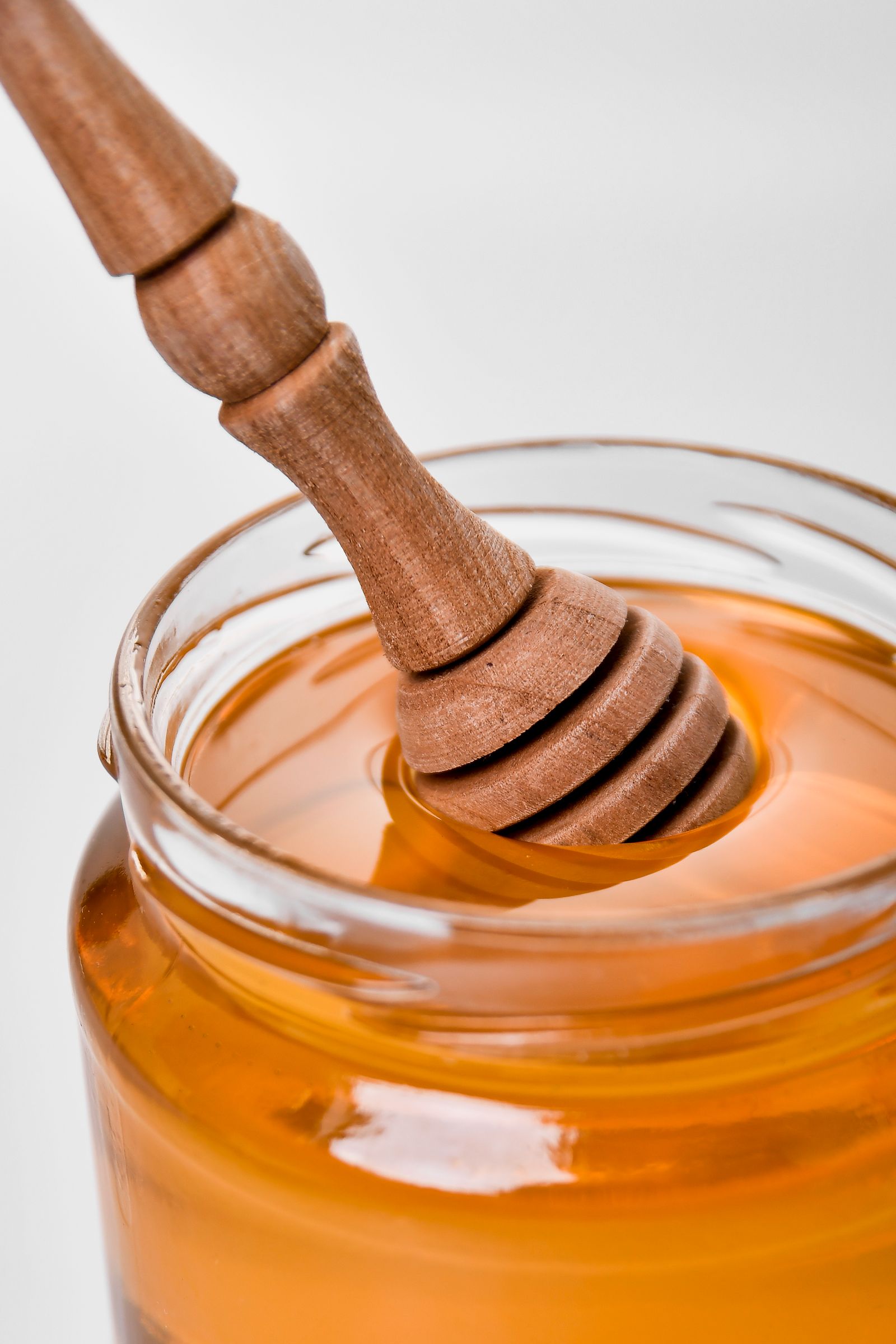
Honey is a thick, sweet syrup that bees make from flower nectar. It sweetens drinks, glazes and baking and has a flavor that changes with the flowers.
- Made by
- Honey bees
- Main sugars
- Fructose and glucose
- Flavor
- Sweet, floral, varies by source
- Shelf life
- Very long when sealed
- Not for
- Infants under 12 months
History
People have gathered honey since prehistoric times, and cave paintings in Spain and India show honey hunters. Ancient Egyptians kept bees, and honey was used as a sweetener and offering long before cane sugar was common.
Where it comes from
Honey is produced by bees everywhere; major producers include China, Turkey, Iran, Argentina and the United States.
Where it is used most
Glazes and marinades, desserts such as baklava, teas, dressings and baking worldwide. In India, honey is also used in traditional sweets and remedies.
Varieties and types
Wildflower, clover, acacia, manuka and eucalyptus honeys differ in color and flavor. Raw honey is unfiltered; processed honey is clear and smooth.
Flavor and how to use it
Stir into warm (not boiling) liquids, whisk into dressings, or brush on food near the end of cooking, since it browns and burns quickly. It is sweeter than sugar, so use a little less.
Buying, storing and substitutes
Keep in a sealed jar at room temperature; crystallized honey can be warmed gently in a water bath. Maple syrup is a common substitute.
Good to know
Do not give honey to infants under 12 months because of a risk of infant botulism.
Recipes that use it
- Berry Yogurt Parfait
- Chicken and Veggie Meal-Prep Bowls
- Classic Overnight Oats
- Sheet-Pan Salmon and Broccoli
Photo credit: Adonyi Gábor on Pexels.