
A popular story says that Marco Polo brought pasta from China to Italy after his travels in the thirteenth century. It is often repeated, and historians generally consider it a myth.
There is good evidence that pasta existed in Italy before Marco Polo returned in 1295. A twelfth-century geographer, al-Idrisi, writing in 1154, described a place near Palermo in Sicily where a dough product called itriyya was made in large quantities and exported. A notary document from Genoa in 1279 lists a basket of macaroni among a deceased man’s belongings, which predates Marco Polo’s return.

Noodles probably developed in several places, including China, the Middle East and the Mediterranean, and the Arab world played a part in spreading dried pasta around the Mediterranean. Dried pasta, made from durum wheat, was easy to store and carry, which made it valuable for trade and sea voyages.
In southern Italy, especially around Naples and the town of Gragnano, pasta makers dried noodles in the warm sea air. By the seventeenth and eighteenth centuries, pasta had become an important food for the poor of Naples, and it later joined with the tomato to create the image of Italian food we know today.
So pasta is not a single invention, but part of a long, shared story of grain, water and people, shaped by Sicily, Naples and many cooks.
The story in more depth
Pasta shapes proliferated in Italy, with each region developing its own. Naples preferred long dried macaroni and spaghetti, Emilia-Romagna favored fresh egg pasta such as tagliatelle and tortellini, and Sicily and Puglia developed shapes such as busiate and orecchiette. The shapes are chosen to match sauces: ridged shapes hold thick sauces, and thin strands suit light oil or seafood sauces.
Technology changed pasta too. In the seventeenth century, the invention of the mechanical press in Naples allowed pasta to be shaped faster. Pasta was dried on racks in the streets, and pasta makers formed guilds. Gragnano, near Naples, became known for its high-quality dried pasta, helped by clean water and a warm, ventilated valley. Many modern premium brands highlight bronze dies, which give a rougher surface that grips sauce.
Pasta also gained global fame through immigrants. In the United States, Italian-American cooking, with dishes such as spaghetti and meatballs, shaped the idea of Italian food, though it differs from dishes in Italy. Carbonara, cacio e pepe and amatriciana belong to the Roman tradition, and today pasta is eaten in nearly every country, with shapes made from wheat, rice, legumes and other flours.
A timeline
- 1154: Al-Idrisi describes pasta production near Palermo.
- 1279: A Genoese document lists a basket of macaroni.
- 1295: Marco Polo returns to Venice.
- 1600s: Pasta presses and guilds develop in Naples.
- 1800s: Dried pasta and tomato sauce become staples in southern Italy.
- 1877: Barilla is founded in Parma.
- Today: Pasta is eaten around the world.
Regional styles and variations
- Spaghetti: long, thin strands, often with oil or tomato.
- Penne and rigatoni: tubes that hold sauce.
- Orecchiette: small ear-shaped pasta from Puglia.
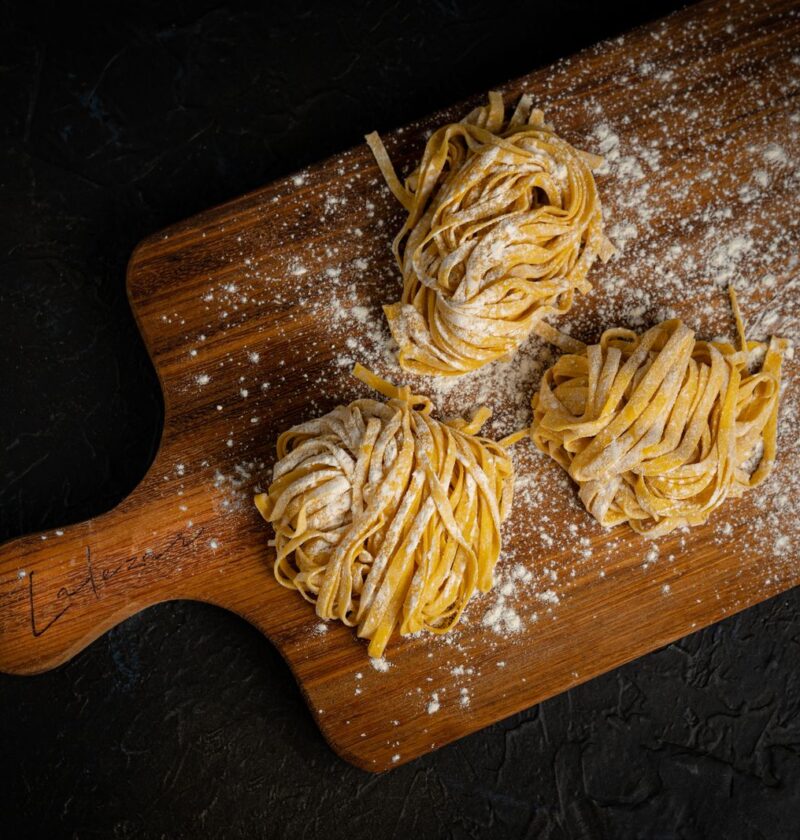
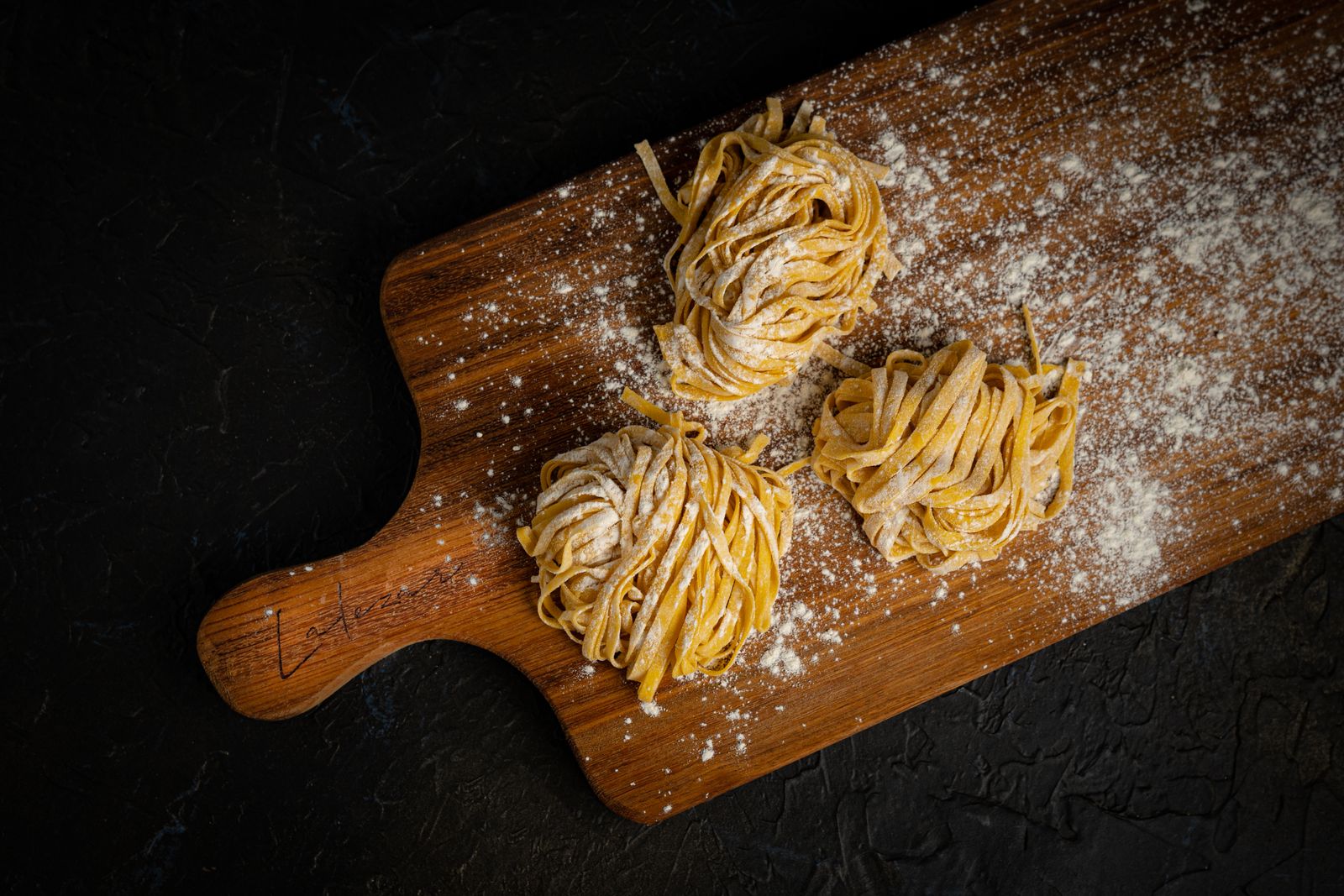
- Tagliatelle: egg pasta ribbons from Emilia-Romagna.
- Ravioli and tortellini: filled pasta.
- Gnocchi: potato dumplings often treated as a pasta.
Buying, tasting and choosing well
Cook pasta in plenty of well-salted boiling water, stirring at the start, and test a minute or two before the time on the packet. Keep a cup of the cooking water to loosen the sauce. Choose bronze-die dried pasta for a rougher surface that grips sauce. Do not rinse cooked pasta unless making a cold salad, since the starch helps the sauce cling.
Did you know?
- Italy has hundreds of pasta shapes.
- Durum wheat semolina is the traditional flour for dried pasta.
- Fresh egg pasta is traditional in the north, dried pasta in the south.
- Pasta Day is celebrated on October 25.
Eating it today
Pasta is one of the world’s simplest and most versatile foods. Seek out regional shapes, and let a good tomato or oil-based sauce shine.
Countries connected to this story
- Italy: the center of pasta culture with hundreds of shapes.
- Sicily: linked to early references to dried pasta in the twelfth century.
- China: with a separate and ancient noodle tradition.
- Arab world: which played a role in spreading dried pasta around the Mediterranean.
- United States: where Italian immigrants shaped pasta cooking and brands.
- Argentina: where Italian immigration made pasta a staple.
Where to try it
- Gragnano (near Naples, Italy): a town famous for its pasta makers.
- Pastificio Di Martino and Pastificio dei Campi (Gragnano, Italy): well-known pasta makers in the area.
- Trattorias of Rome (Rome, Italy): known for classic pastas such as carbonara and cacio e pepe.
These are well-known examples, not paid recommendations or rankings, and places change. Check opening times and details before you travel.
Well-known brands
- Barilla: an Italian company founded in Parma in 1877, one of the largest pasta makers.
- De Cecco: an Italian pasta brand from Abruzzo, founded in 1886.
- Garofalo: a pasta maker from Gragnano.
- Rummo: an Italian pasta brand from Benevento.
- Buitoni: a well-known Italian-origin brand, now owned by Nestlé.
Brands are named as widely known examples of makers, not as endorsements.
Related: Spaghetti and pasta and Spaghetti Carbonara.
Many food origins are disputed. This story summarizes commonly cited accounts as an introduction, not the final word.
Photo credits: Kemal Can on Pexels; Kaboompics.com on Pexels; Tara Winstead on Pexels. Free stock photos shown as illustrations only.