

Ratatouille is a stew of eggplant, zucchini, peppers, tomatoes, onion and garlic, cooked slowly in olive oil with herbs. It comes from Provence in southern France, and is closely linked with the city of Nice.
The name seems to come from the French verb touiller, meaning to stir or toss. Originally, “ratatouille” was a rough, humble dish of peasants and farm workers, made from the vegetables ripening in summer gardens.
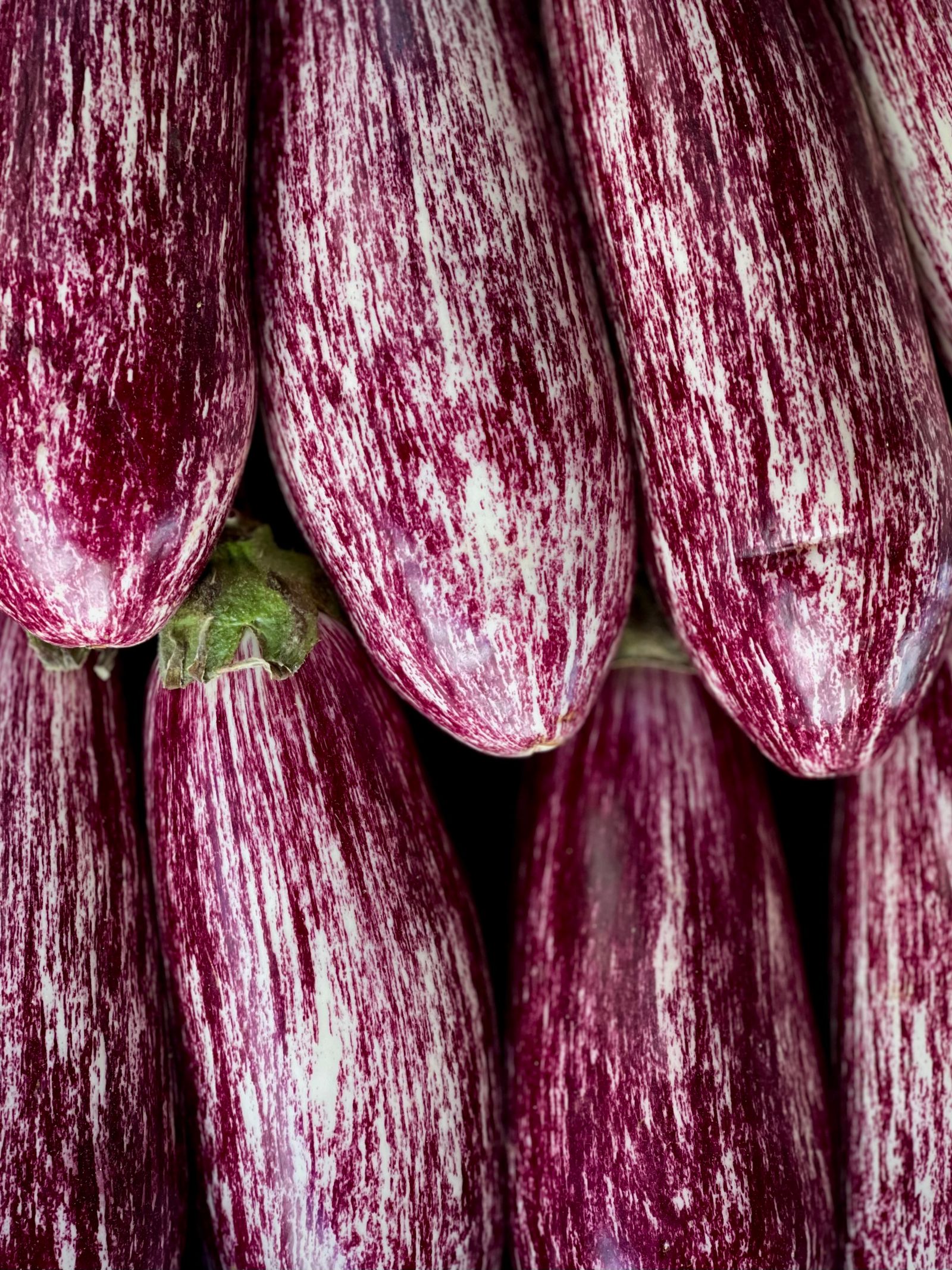
Many of its key ingredients are not native to Europe. Tomatoes and peppers came from the Americas, and eggplant came from Asia via the Arab world. The dish could not have existed in its current form before these ingredients arrived and became common in Mediterranean gardens.
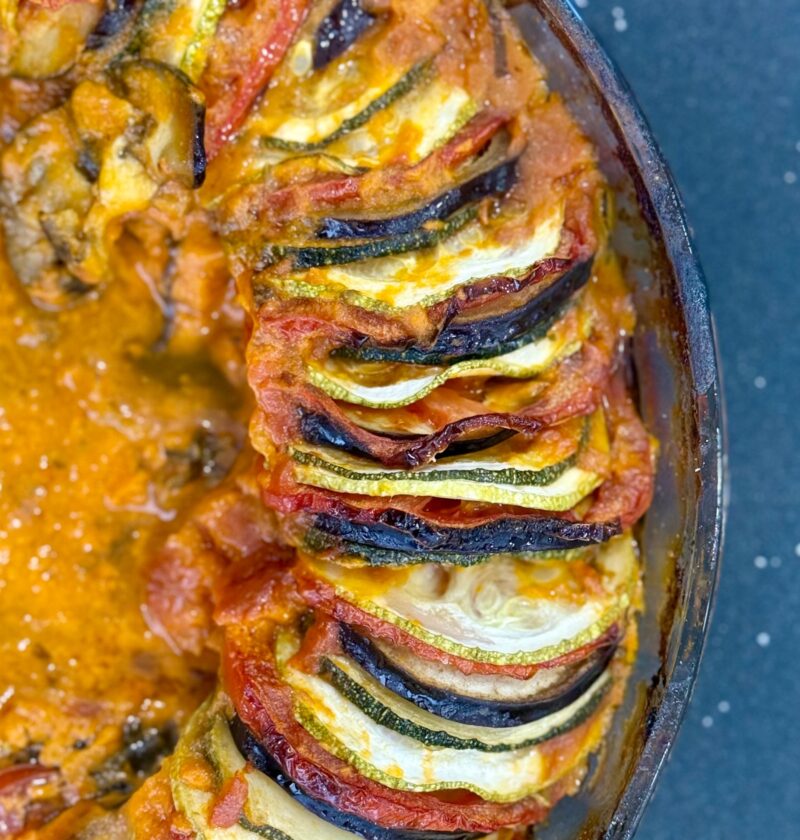
A refined layered version, sometimes called confit byaldi, is usually credited to the chef Michel Guérard in the 1970s. It became widely known after the 2007 animated film “Ratatouille”, which featured a similar dish.
Cooks argue about whether to cook the vegetables separately or together, but all agree on using good olive oil and ripe summer produce. It can be eaten hot, warm or cold, and tastes better the next day.
The story in more depth
Provence, with its sun, olive oil and herbs, is a natural home for a dish based on summer vegetables. Variations include the Niçoise approach of cooking each vegetable separately and combining them at the end, to preserve distinct flavors, and the more rustic approach of cooking everything together in one pot. Some cooks add black olives, capers or a splash of red wine vinegar.
The dish belongs to a larger family of Mediterranean vegetable stews: piperade in the Basque country, with peppers, tomatoes and eggs; pisto in Spain; ciambotta in southern Italy; briam in Greece; and tian, the Provençal baked casserole of vegetables sliced and arranged in layers. The shared logic is simple: slow-cooked vegetables in olive oil with garlic.
In recent years, ratatouille has appeared in world-famous kitchens and popular culture. The 2007 Pixar film “Ratatouille” brought it to a global audience, using a version of confit byaldi designed by the American chef Thomas Keller. The dish’s comfort lies in its humble character: cheap, seasonal, healthy and delicious, whether served hot or cold, with bread, rice or grilled meats.
A timeline
- 1500s and 1600s: Tomatoes, peppers and eggplants arrive and slowly enter Mediterranean gardens.
- 1700s: The word “ratouille” is used for a rough stew in France.
- 1800s: The dish is documented as a Provençal and Niçoise specialty.
- 1970s: The chef Michel Guérard develops confit byaldi, a refined version.
- 2007: The film “Ratatouille” brings the dish to a global audience.
- Today: Ratatouille is a popular vegetarian dish worldwide.
Regional styles and variations
- Niçoise: vegetables cooked separately and combined.
- Rustic: all cooked in one pot.
- Tian: sliced vegetables baked in layers.
- Confit byaldi: thinly sliced vegetables arranged in a spiral.
- Piperade: Basque stew of peppers and tomatoes.
- Pisto: a Spanish version.
Buying, tasting and choosing well
Choose firm, ripe summer vegetables, and cook them slowly in good olive oil. Salting eggplant lightly can help it brown. Add herbs such as thyme and basil. Let the stew rest, since it improves with time. Serve warm or cold, as a side dish, with bread, or topped with an egg.
Did you know?
- The dish was originally a peasant meal.
- It is traditionally a summer dish when vegetables are plentiful.
- It can be eaten hot, warm or cold.
- It freezes well.
Eating it today
Ratatouille is a delicious way to use garden vegetables. Make a big pot, and eat it all week in different ways.
Countries connected to this story
- France: the home of ratatouille, particularly Provence and Nice.
- Spain: where pisto is a similar vegetable stew.
- Italy: with ciambotta and caponata, related vegetable dishes.
- Greece: with briam, a baked vegetable dish.
- Turkey: where similar vegetable stews are known as türlü.
- United States: where the dish gained fame through film and chefs such as Thomas Keller.
Where to try it
- Cours Saleya market (Nice, France): a market in Old Nice with seasonal produce and Niçoise food.
- La Petite Maison (Nice, France): a restaurant known for Provençal cuisine.
- Aix-en-Provence markets (Provence, France): markets with summer vegetables.
These are well-known examples, not paid recommendations or rankings, and places change. Check opening times and details before you travel.
Well-known brands
- Le Creuset: a French cookware company known for enameled cast-iron pots, founded in 1925.
- Staub: a French cookware brand known for cocottes.
- Maille: a French brand known for mustard and vinegars.
- Bonne Maman: a French brand known for jams and preserves.
Brands are named as widely known examples of makers, not as endorsements.
Related: Ratatouille recipe and eggplant.
Many food origins are disputed. This story summarizes commonly cited accounts as an introduction, not the final word.
Photo credits: Merve Gülhan on Pexels; Edita Brus on Pexels; Alena Evseenko on Pexels. Free stock photos shown as illustrations only.