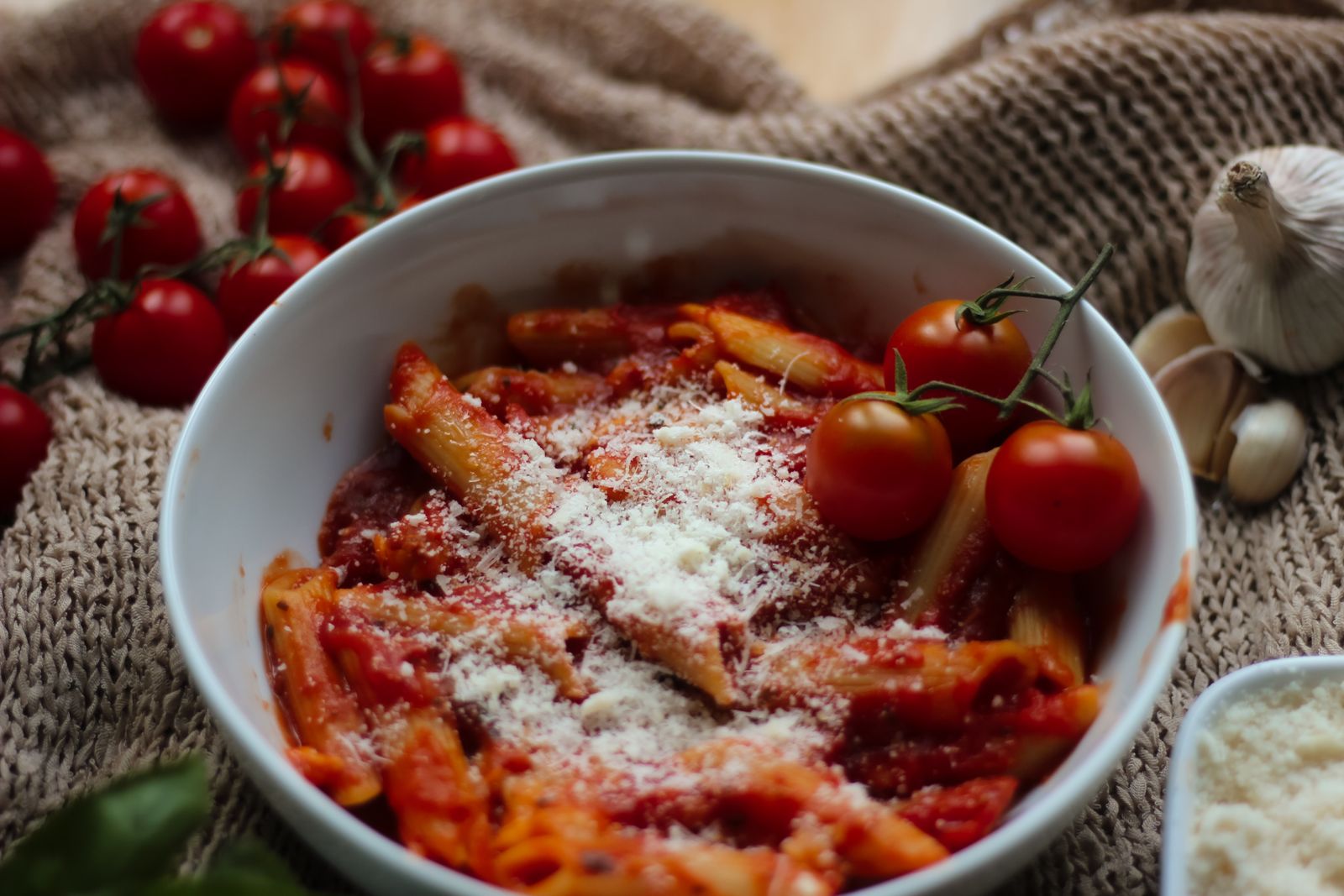
Parmigiano Reggiano is a hard, granular cheese from northern Italy, often called the “king of cheeses”. It is made from raw cow’s milk, salt and rennet, with no additives, and aged for at least twelve months, often longer.
Its history is said to go back around nine hundred years, to Benedictine and Cistercian monks in the Middle Ages who made large, long-lasting cheeses in the area between Parma and Reggio Emilia. The cheese appears in the writings of Giovanni Boccaccio in the fourteenth century, in the Decameron, which mentions a mountain of grated Parmesan on which people did nothing but make pasta and gnocchi.
Today, the cheese can only carry the name if it is made in a defined zone, which includes the provinces of Parma, Reggio Emilia, Modena, and parts of Bologna and Mantua, according to strict rules. The name is protected under European law as a PDO.
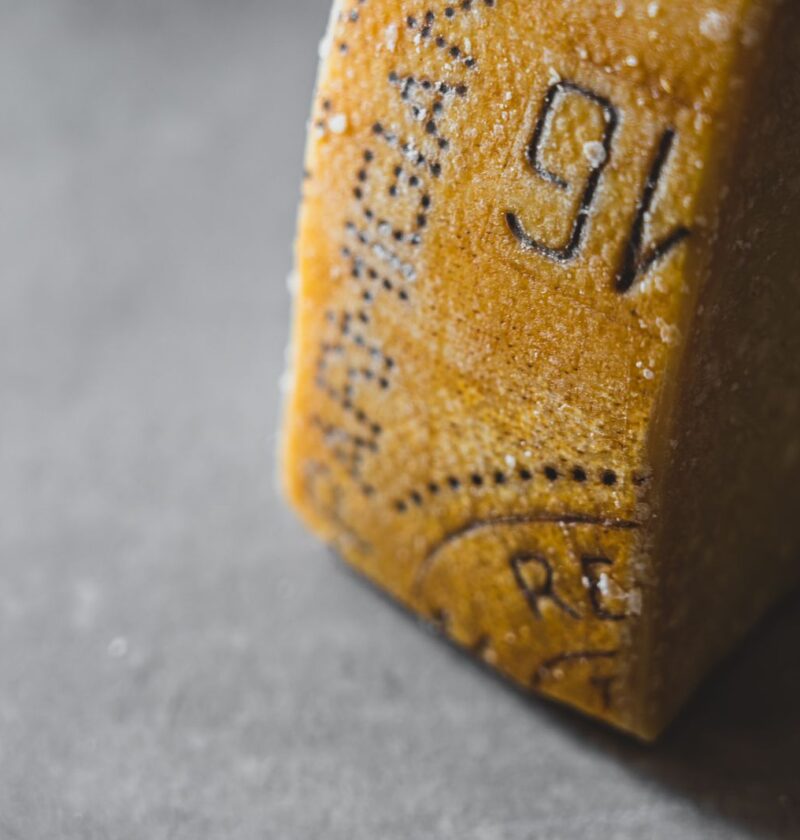
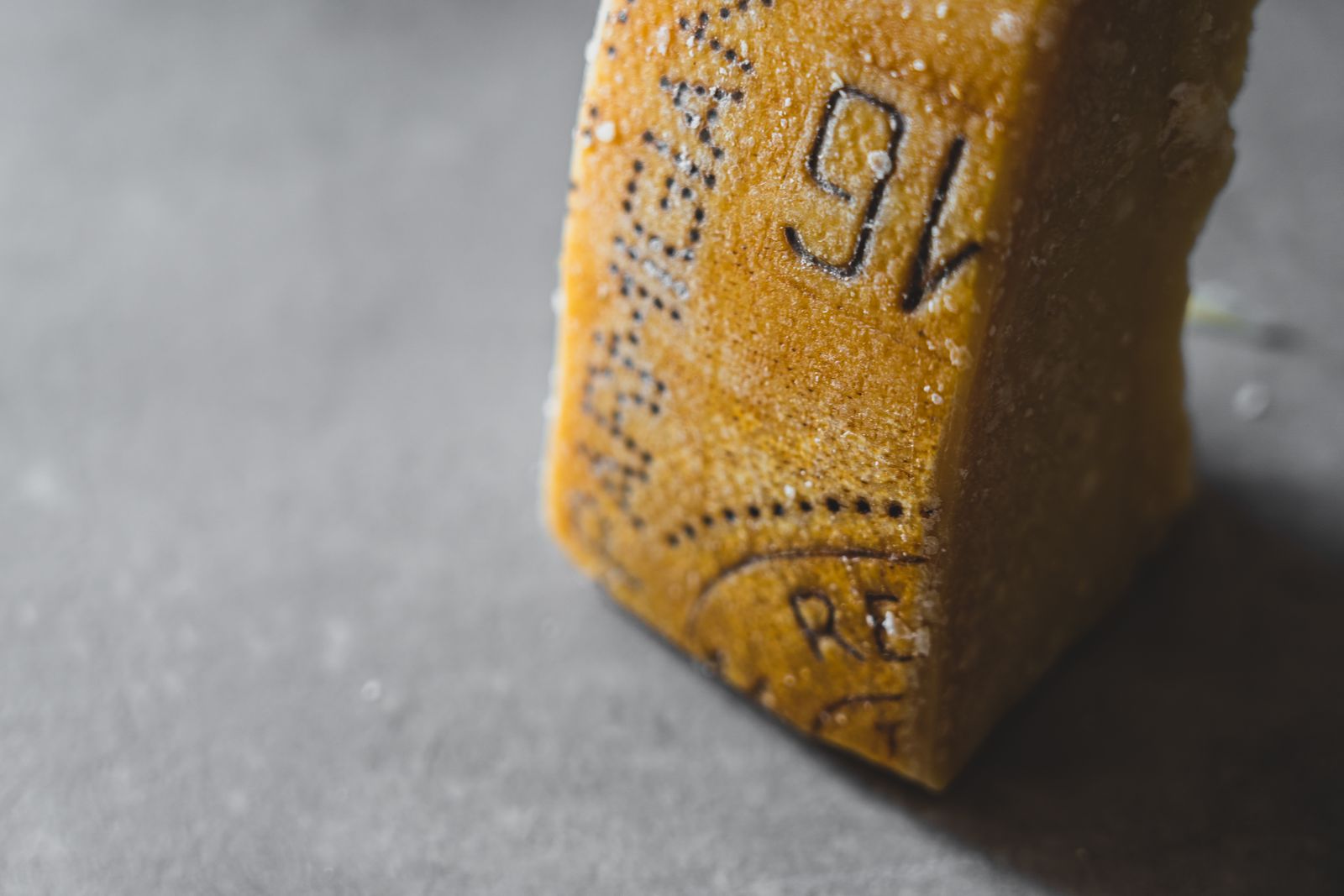
A single wheel weighs roughly forty kilograms and takes the milk of many cows to make. Wheels are stamped with the name and aged on wooden shelves, and inspectors tap them to check for flaws.
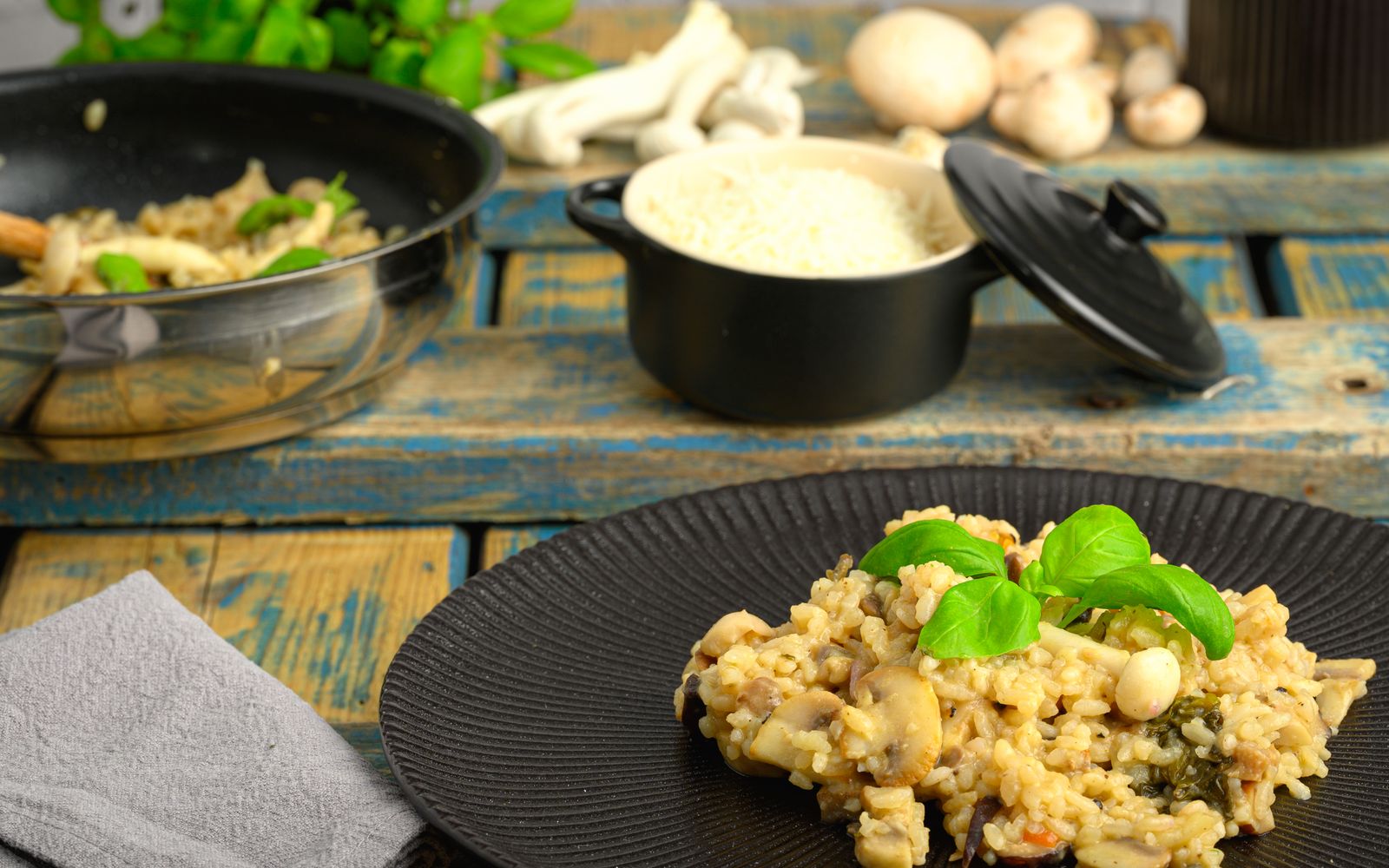
In the kitchen, Parmesan is grated over pasta and risotto, shaved over salads or eaten with fruit and balsamic vinegar. The rind can flavor soups. It is a good example of how place, tradition and time define a food.
The story in more depth
Making Parmigiano Reggiano is a daily craft. Fresh milk from cows fed on local hay and grass is mixed with whey starter, and curdled in copper vats. The curd is cooked, broken into grains, and gathered in a cloth to form one large mass that is cut into two wheels. They spend a few days in molds, then are soaked in brine for around twenty days, and then rest in aging rooms for at least twelve months. Wheels are checked and, if they pass, are branded with the Parmigiano Reggiano mark.
Different ages bring different flavors: at 12 months, the cheese is milder; at 24 months, it has a rich, nutty flavor and a granular texture; at 36 months or more, it is sharper and has crunchy crystals of amino acids. The rind is not waxed and can be added to soups and stews for flavor.
The cheese has also been a form of wealth. In recent years, some Italian banks, such as Credito Emiliano, have accepted aging wheels of Parmigiano as collateral for loans to cheesemakers. Grana Padano, a related cheese from a larger area in northern Italy, is made with similar methods but is slightly milder and usually aged less.
A timeline
- 1100s: Monks near Parma and Reggio make large aged cheeses.
- 1300s: Boccaccio mentions Parmesan in the Decameron.
- 1934: The Consorzio del Formaggio Parmigiano-Reggiano is established.
- 1996: The name receives protected designation of origin status in the EU.
- Today: Wheels are marked, aged and inspected by the consortium.
Regional styles and variations
- 12 months: young, milder and grassy.
- 24 months: rich, nutty and granular.
- 36 months: sharper, with crystals.
- Vacche rosse: made from the milk of the Reggiana breed.
- Grana Padano: a related, milder cheese.
- Parmesan-style cheeses: imitations in other countries.
Buying, tasting and choosing well
Buy a wedge cut from the wheel, with the rind and the stamped marks, and avoid pre-grated cheese when possible. Good Parmigiano should be granular, with a savory, sweet and nutty flavor. Store it wrapped in parchment and foil in the refrigerator, and keep the rind for soups. Taste by breaking, not cutting, to see the crystals.
Did you know?
- A wheel weighs around 38 to 40 kilograms.
- The cheese contains little lactose, because of the long aging.
- Rennet is animal-derived.
- The cheese is made without any additives.
Eating it today
Parmigiano Reggiano is a pleasure when eaten in small pieces, with balsamic vinegar or fruit, or grated over pasta. It is an example of how time and place create flavor.
Countries connected to this story
- Italy: the only country where Parmigiano Reggiano can be made.
- United States: where “parmesan” is a generic name for various hard cheeses.
- Argentina: where large Italian communities produce “reggianito”.
- Germany and France: large importers of Italian cheeses.
- Australia and Canada: known for cheeses inspired by Italian styles.
Where to try it
- Parma and Reggio Emilia dairies (Emilia-Romagna, Italy): many caseifici (cheese dairies) welcome visitors for tours.
- Museo del Parmigiano Reggiano (Soragna, Italy): a museum about the cheese.
- Parma food markets (Parma, Italy): where visitors can buy cheese and cured meats.
- Mercato Centrale (Florence, Italy): a food hall with Italian specialties.
These are well-known examples, not paid recommendations or rankings, and places change. Check opening times and details before you travel.
Well-known brands
- Parmigiano Reggiano Consorzio: the consortium that protects the cheese name and mark.
- Grana Padano: a related protected cheese.
- BelGioioso: an American cheese company that makes Italian-style cheeses.
- Kraft: a food company known for grated “parmesan” in the United States.
- Boar’s Head: an American deli brand that sells imported cheeses.
Brands are named as widely known examples of makers, not as endorsements.
Related: Parmesan and Mushroom Risotto.
Many food origins are disputed. This story summarizes commonly cited accounts as an introduction, not the final word.
Photo credits: Castorly Stock on Pexels; nikki awal on Pexels; Jana Ohajdova on Pexels. Free stock photos shown as illustrations only.