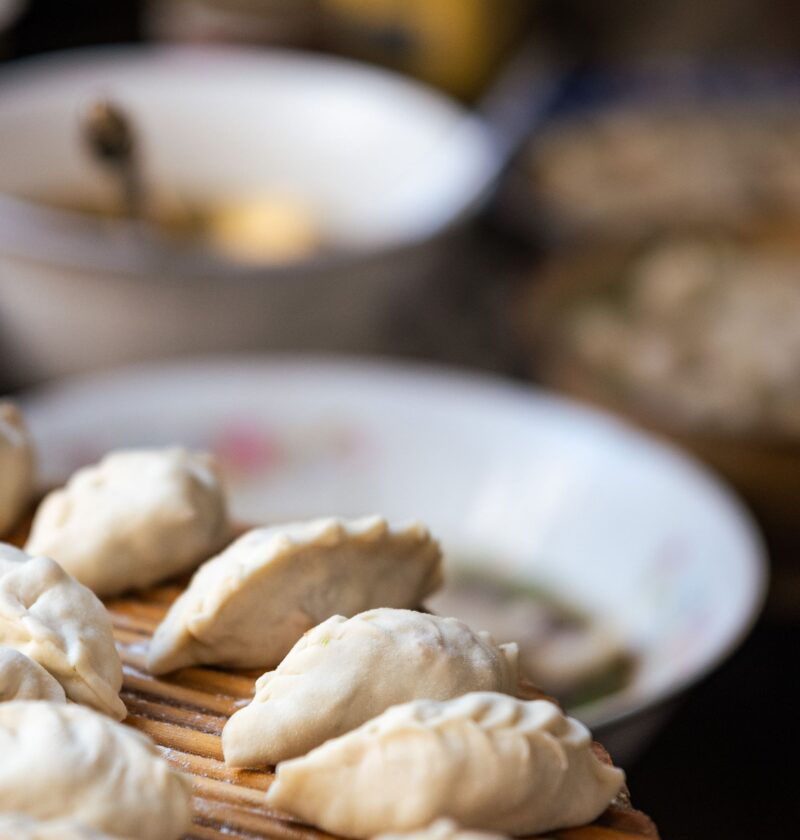
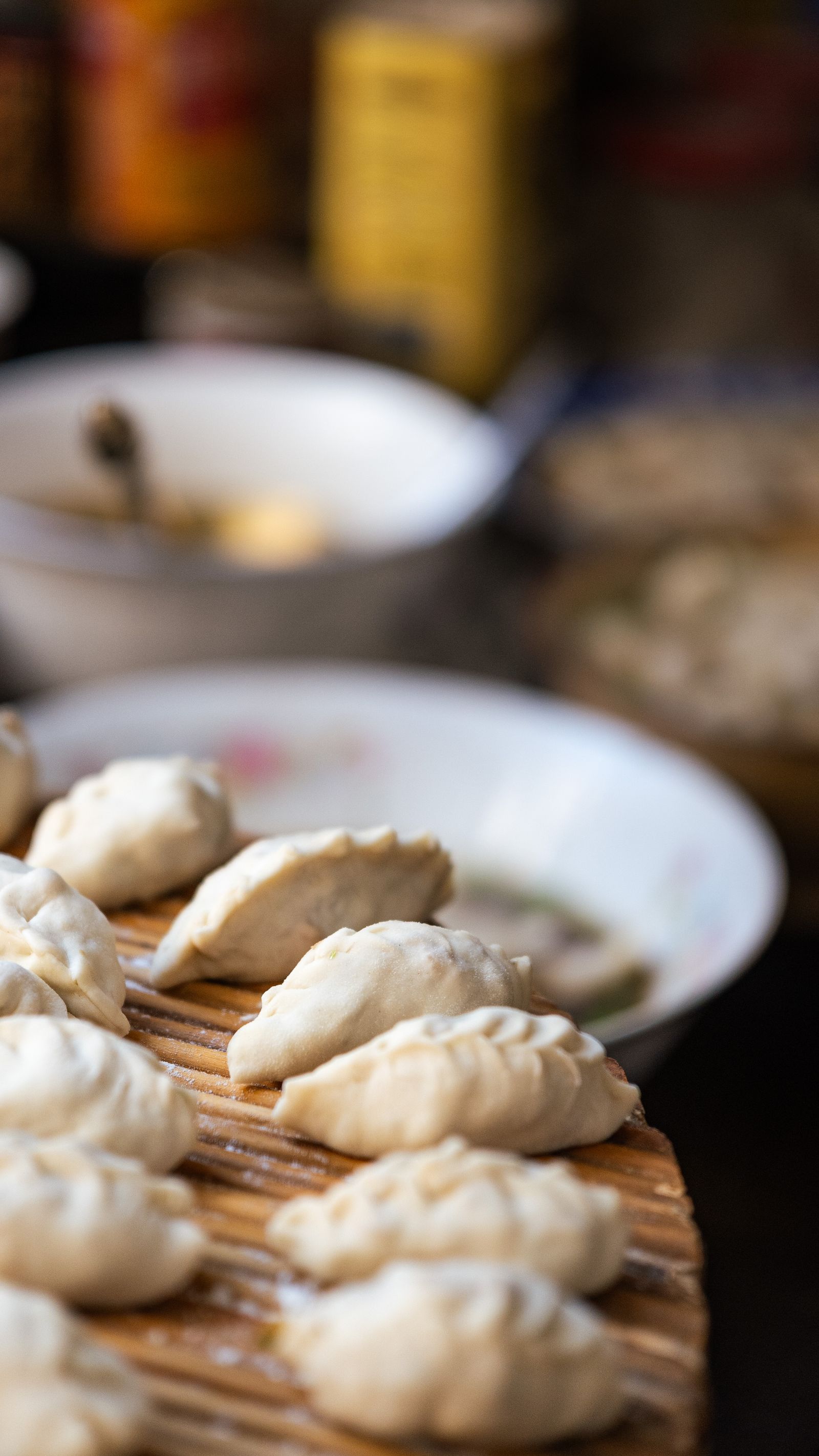
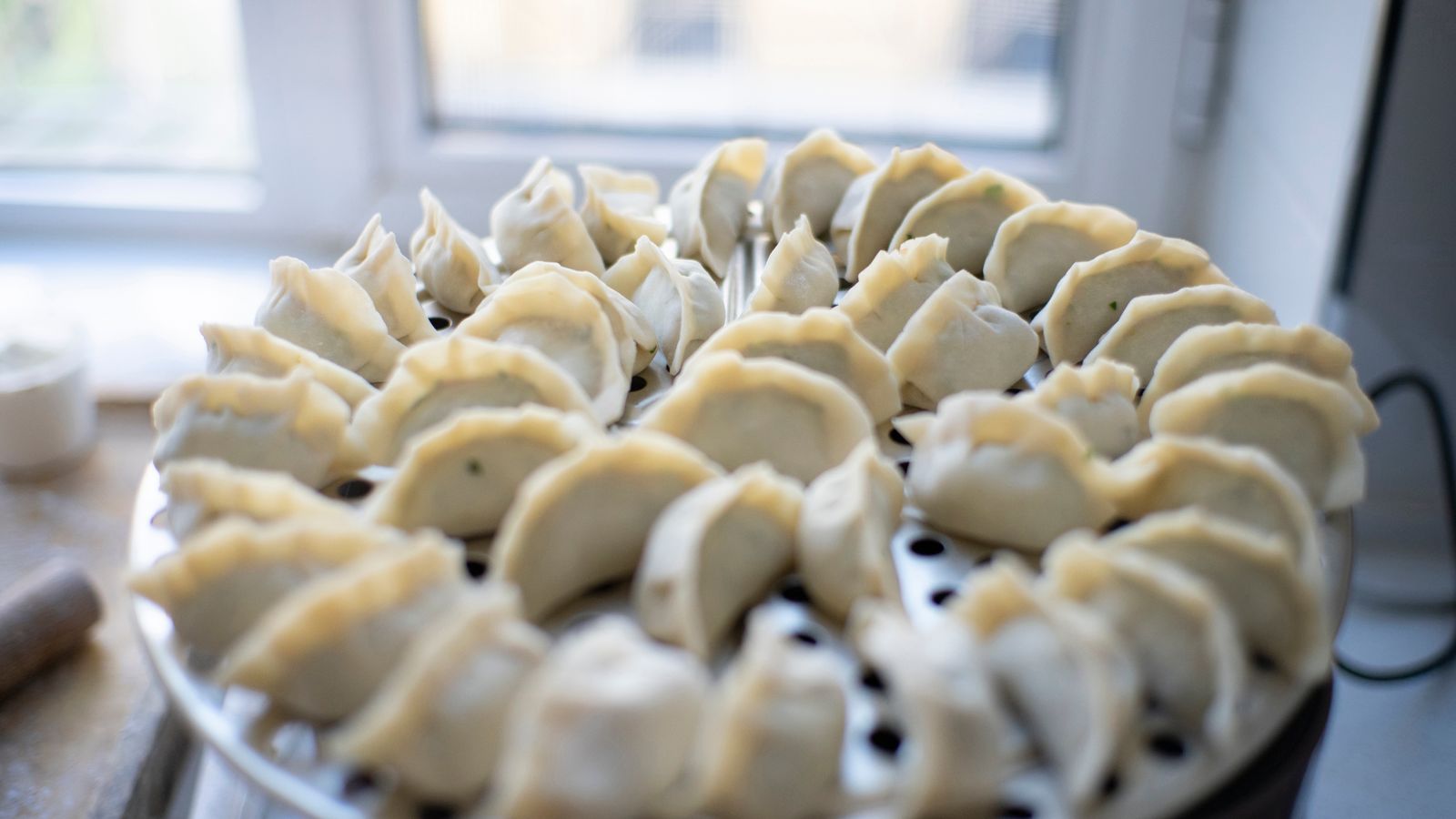
Almost every culture has dumplings: dough wrapped around a filling, then boiled, steamed, baked or fried. The idea is simple and endlessly adaptable, which may explain why it appears across Asia, Europe, the Middle East and the Americas.
In China, jiaozi are eaten especially at the Lunar New Year, when their crescent shape is said to resemble old gold ingots. A story, probably a legend, credits the physician Zhang Zhongjing of the Han dynasty with creating a dumpling soup to help people with frostbitten ears in winter. Archaeologists have found preserved dumplings in tombs in Xinjiang, in northwest China, dating back more than a thousand years.
Dumplings traveled along the Silk Road and with migrants. In Korea they became mandu, in Japan gyoza, in Nepal and Tibet momo, in Turkey and Central Asia manti, in Russia pelmeni, in Poland pierogi, and in Italy ravioli and tortellini. Each has its own folds, fillings and dipping sauces. The Japanese gyoza became popular after the Second World War, when returning settlers from Manchuria brought a taste for pan-fried jiaozi.
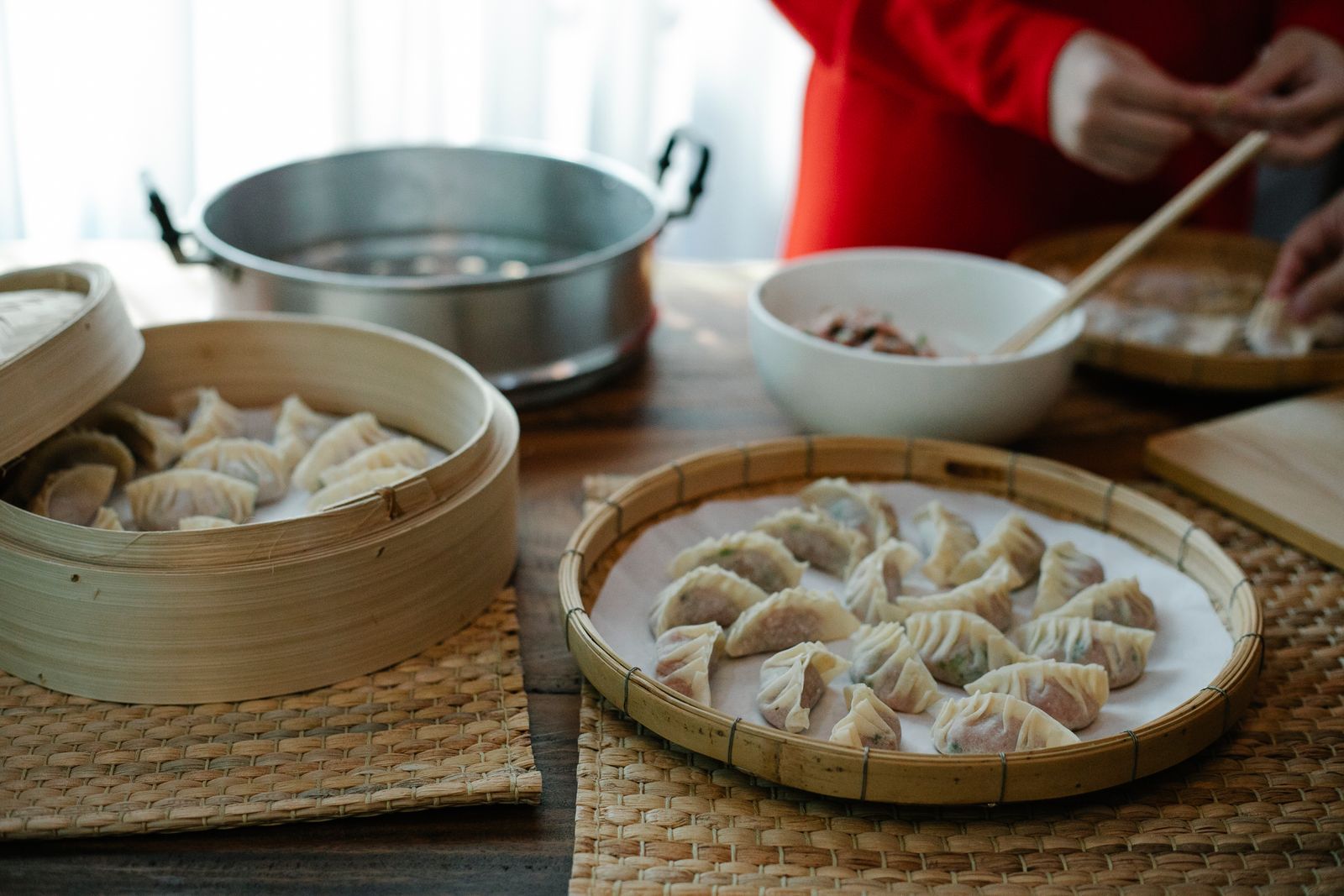
Fillings reflect local ingredients: pork and cabbage in northern China, shrimp in Cantonese dishes, lamb in Central Asia, potato and cheese in Poland, mutton or vegetables in Tibet and Nepal, and sweet fruit in some Eastern European varieties. In many families, making dumplings is a communal activity, with each person rolling, filling and folding.
The story in more depth
Dumplings can be boiled, steamed, fried or baked, and the technique changes the texture. Boiled jiaozi are tender and juicy; potstickers are fried on one side until crisp and then steamed; xiaolongbao have a thin wrapper that holds hot soup; momos are often steamed and served with a spicy tomato chutney; and pelmeni are small and boiled, then served with sour cream or butter.
They are often a food of celebration. In China, families gather to fold dumplings at New Year; in Poland, pierogi are a traditional dish at Christmas Eve; in Nepal and Tibet, momo are eaten at festivals; and in Turkey, tiny manti can be a sign of a cook’s skill, with the number that fit on a spoon being a measure of care.
A timeline
- Over 1,000 years ago: Dumplings are buried in tombs in Xinjiang, China.
- Han dynasty: The legend of Zhang Zhongjing’s dumpling soup is set in this period.
- Middle Ages: Filled pasta spreads through Italy and the Middle East.
- 1900s: Gyoza become popular in Japan after the Second World War.
- Today: Dumplings are enjoyed in nearly every country.
Regional styles and variations
- Jiaozi: Chinese crescent-shaped dumplings.
- Xiaolongbao: soup dumplings from Shanghai.
- Gyoza: Japanese pan-fried dumplings.
- Mandu: Korean dumplings.
- Momo: Himalayan dumplings.
- Pierogi: Polish filled dumplings.
- Pelmeni: Russian meat dumplings.
- Ravioli: Italian filled pasta.
Buying, tasting and choosing well
Good dumplings have a thin but sturdy wrapper, a juicy, well-seasoned filling and a balanced dipping sauce. For homemade, seal the edges well and do not overfill. Cook in batches without crowding, and test one for doneness. A simple dipping sauce is soy sauce, vinegar and chili oil. Freeze uncooked dumplings on a tray before bagging, and cook from frozen.
Did you know?
- In many Chinese families, a coin is hidden in one dumpling at New Year for luck.
- Dumplings may be boiled, steamed or fried.
- Fillings range from pork and cabbage to cheese, potatoes and fruit.
- Dumplings are among the oldest portable foods.
Eating it today
Making dumplings with friends or family is a joyful activity. Try a new style, and compare wrappers and sauces.
Countries connected to this story
- China: the home of jiaozi, baozi and xiaolongbao.
- Japan: where gyoza are a popular side with ramen.
- Korea: where mandu are eaten in soups and fried.
- Nepal and Tibet: famous for momo.
- Poland: known for pierogi.
- Italy: with ravioli, tortellini and other filled pasta.
- Turkey and Central Asia: where manti are a classic.
- Russia and Ukraine: known for pelmeni and vareniki.
Where to try it
- Nan Xiang Steamed Bun Restaurant (Shanghai, China): a famous restaurant at Yuyuan Garden known for xiaolongbao.
- Din Tai Fung (Taipei, Taiwan and worldwide): known for xiaolongbao.
- Utsunomiya gyoza shops (Utsunomiya, Japan): a city famous for its gyoza.
- Manti restaurants in Kayseri (Kayseri, Turkey): a city known for its manti.
These are well-known examples, not paid recommendations or rankings, and places change. Check opening times and details before you travel.
Well-known brands
- Ajinomoto: a Japanese company known for frozen gyoza.
- Bibigo (CJ): a Korean food brand known for mandu.
- Mrs. T’s Pierogies: an American brand of pierogi.
- Wei-Chuan: a Taiwanese-American frozen food brand.
Brands are named as widely known examples of makers, not as endorsements.
Related: Fresh Spring Rolls and flour.
Many food origins are disputed. This story summarizes commonly cited accounts as an introduction, not the final word.
Photo credits: Mark Chen on Pexels; tom L on Pexels; Angela Roma on Pexels. Free stock photos shown as illustrations only.