Pad Thai, meaning “Thai-style stir-fry”, is among the most famous Thai dishes abroad. Its story is closely tied to modern Thai history rather than ancient tradition.
Stir-fried noodles came to Thailand through Chinese influence, and noodle dishes were already common in the region. In the late 1930s and early 1940s, the government of Prime Minister Plaek Phibunsongkhram promoted a strong sense of national identity. Part of that effort encouraged people to eat noodles, partly to reduce rice consumption at a time of shortages and floods, and to give the nation a shared dish.
Accounts differ on exactly who created the recipe and how much the government wrote it. Some say officials promoted a standard version, and that street vendors helped spread it. What is clear is that pad thai became a household and street-food favorite in Thailand.
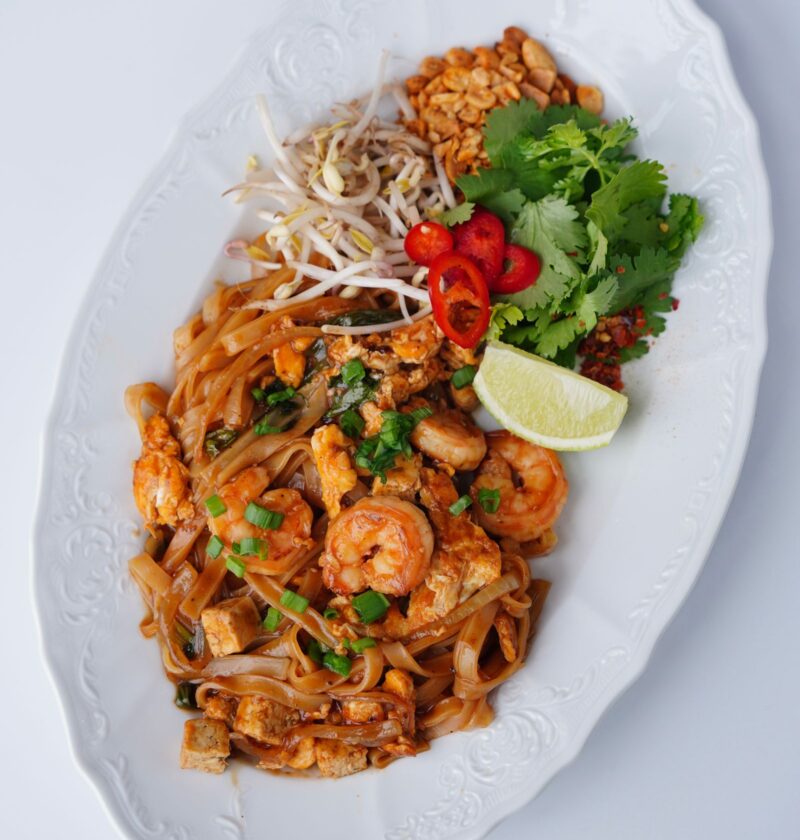
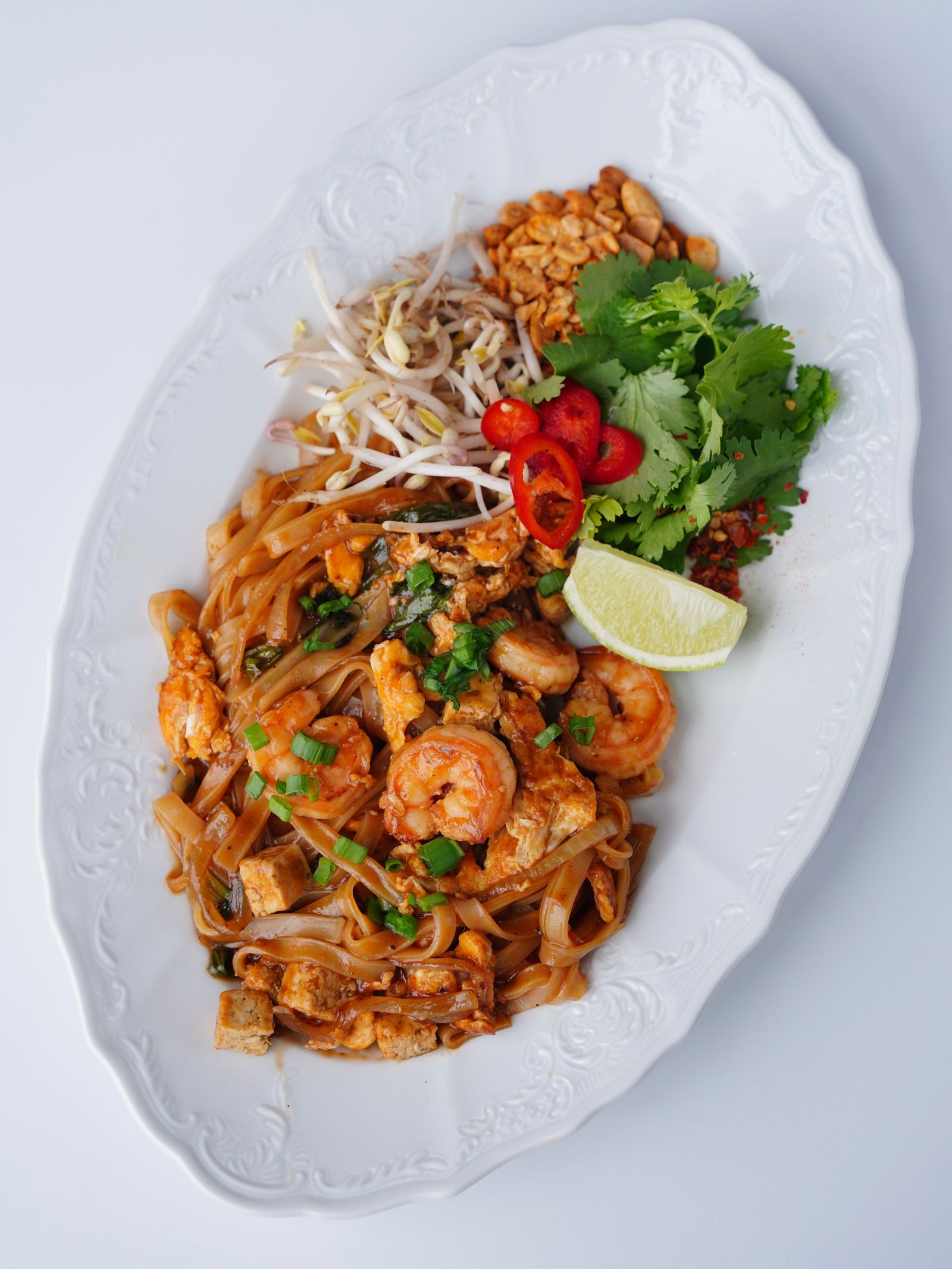
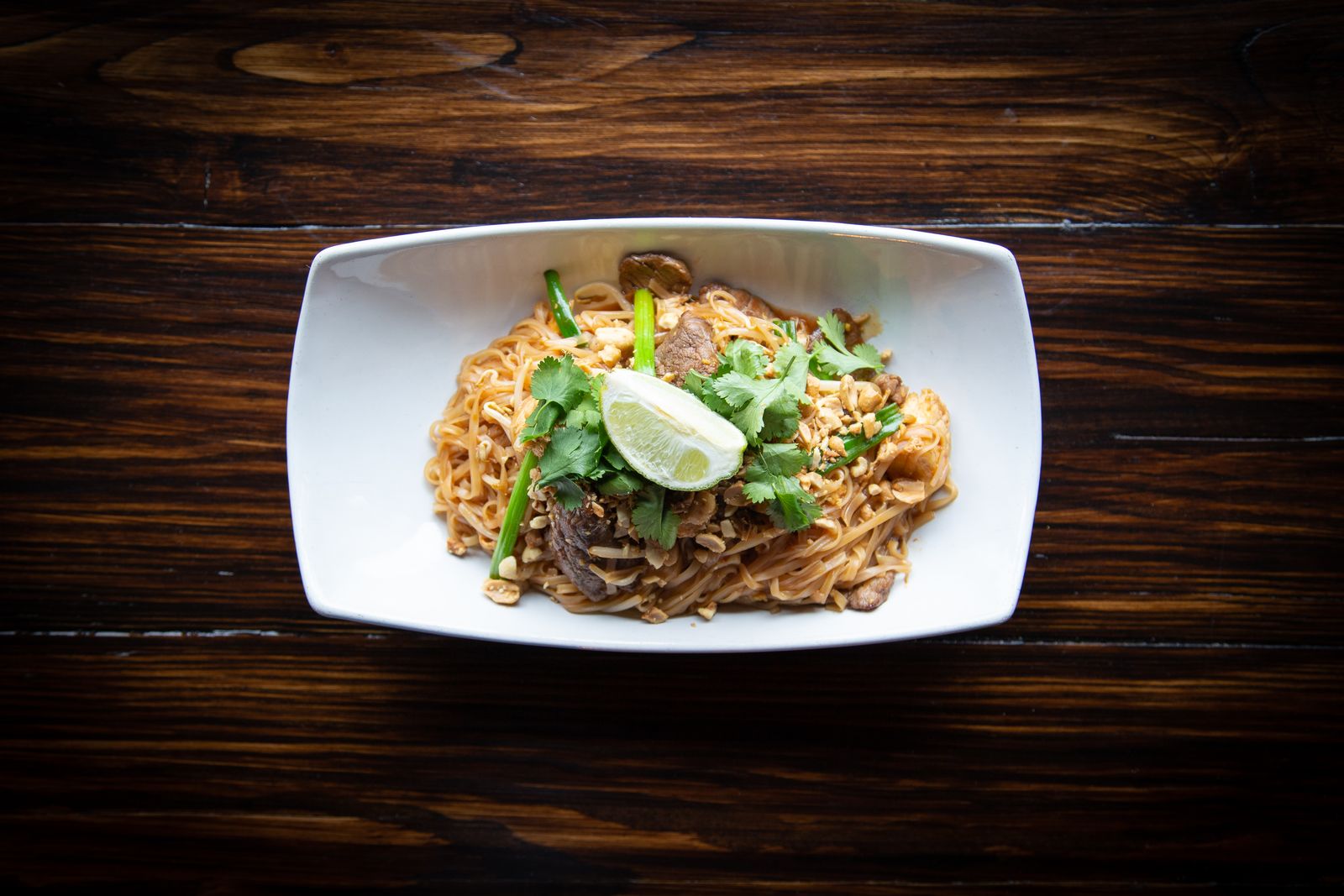
Classic pad thai uses rice noodles, tamarind for sourness, fish sauce for saltiness and palm sugar for sweetness. It is often served with peanuts, lime, bean sprouts and chives, so each person can adjust the balance.
After the Second World War, Thai restaurants overseas adapted pad thai for local tastes, and it became a gateway dish to Thai cuisine for many people around the world.
The story in more depth
Thai cooks of the early twentieth century were already familiar with stir-fried noodles through the large Chinese community in Bangkok, and noodle sellers were common. The 1930s and 1940s campaigns to promote noodles gave the dish a patriotic flavor. Some accounts say the name “pad Thai” was chosen to stress that the dish was Thai, and the dish itself became a way for people to feel part of a modern nation.
Street vendors across Thailand adapted pad thai to their own tastes, adding dried shrimp, pickled radish, tofu and chives. The balance of sour tamarind, salty fish sauce and sweet palm sugar became the signature of the dish, and diners are expected to adjust it at the table with chili flakes, sugar, lime and crushed peanuts.
In 2001, the Thai government launched a program known as “Global Thai” to promote Thai food overseas and encourage the opening of Thai restaurants. Pad thai became one of the best-known dishes of that movement. Today it is served from Bangkok street carts to restaurants in New York, London and Sydney, though versions outside Thailand are often sweeter.
A timeline
- Before the 1930s: Chinese immigrants in Siam sell stir-fried and soup noodles in Bangkok and other cities.
- 1938: Plaek Phibunsongkhram becomes prime minister of Siam.
- 1939: Siam is renamed Thailand, strengthening a nationalist identity.
- 1940s: Noodle dishes are encouraged as a patriotic food, and pad thai becomes widely known.
- 1960s and 1970s: Thai migrants and students open Thai restaurants overseas.
- 2001: The Thai government launches the “Global Thai” program to promote Thai restaurants abroad.
- Today: Pad thai is served in street stalls, restaurants and home kitchens in many countries.
Regional styles and variations
- Pad thai goong: with shrimp, perhaps the best-known version.
- Pad thai gai: with chicken.
- Pad thai jay: a vegetarian version, often with tofu and no fish sauce.
- Pad thai in an egg wrap (hor khai): noodles wrapped in a thin omelette, popular in restaurants.
- Southern Thai style: sometimes with different sauces and more chili.
Buying, tasting and choosing well
Good pad thai is a balance of sour, sweet, salty and a little spicy. Tamarind gives it its sour backbone, so look for a version that tastes tangy and not just sweet. The noodles should be chewy, not mushy, and the dish is served with lime, crushed peanuts, chili flakes and fresh sprouts so that you can adjust it at the table. Many restaurants outside Thailand make it sweeter and use ketchup, which traditionalists avoid.
Did you know?
- The noodles are made from rice flour and are usually soaked and not boiled before stir-frying.
- The dish is cooked fast, in small batches, in a very hot wok.
- Dried shrimp and preserved radish give extra savory depth in traditional recipes.
- Thailand’s tourist authorities have promoted pad thai as a national dish.
Eating it today
Pad thai remains an easy way to taste Thai cooking. Whether bought from a Bangkok street cart or cooked at home with tamarind paste, fish sauce and palm sugar, it shows how a dish created with a clear purpose, to unite and to feed people, became a global favorite.
Countries connected to this story
- Thailand: the home of pad thai, where it is sold at street stalls and in restaurants.
- China: the source of stir-fried noodle traditions in Southeast Asia, brought by Chinese immigrants.
- Laos, Cambodia and Vietnam: neighbors with their own stir-fried rice noodle dishes.
- United States: where Thai restaurants multiplied from the 1970s and pad thai became a favorite.
- Australia and the United Kingdom: countries with large numbers of Thai restaurants and takeaways.
Where to try it
- Thip Samai (Bangkok, Thailand): a famous pad thai restaurant near the Golden Mount, often mentioned in guidebooks.
- Pad Thai Fai Ta Lu (Bangkok, Thailand): a well-known shop near Sao Ching Cha, known for pad thai cooked over charcoal.
- Bangkok street stalls (Bangkok, Thailand): pad thai is one of the most common street foods in the city, cooked fresh in a wok.
These are well-known examples, not paid recommendations or rankings, and places change. Check opening times and details before you travel.
Well-known brands
- Mae Ploy: a widely sold Thai brand of curry pastes and sauces.
- Thai Kitchen: a brand of Thai-style sauces and noodles sold in North America and elsewhere.
- Maesri: a Thai brand of curry pastes and canned products.
- Chantaboon rice noodles: a type of dried rice noodle from Chanthaburi, Thailand, sold under several brands.
Brands are named as widely known examples of makers, not as endorsements.
Related: Learn about rice, the base of rice noodles.
Many food origins are disputed. This story summarizes commonly cited accounts as an introduction, not the final word.
Photo credits: Nadin Sh on Pexels; Scott McNiel on Pexels; Valeria Boltneva on Pexels. Free stock photos shown as illustrations only.