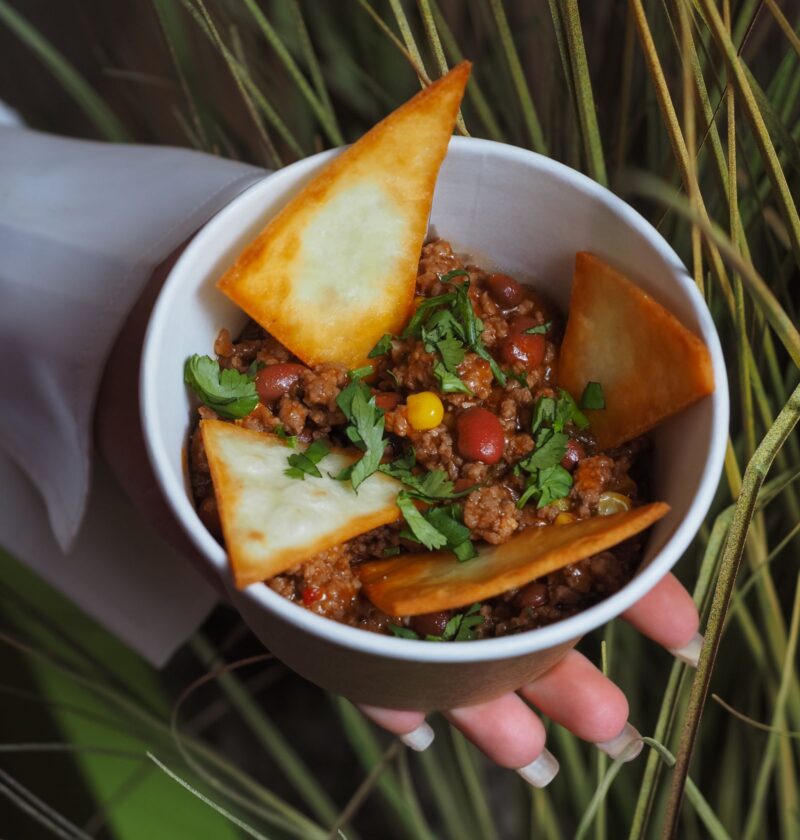
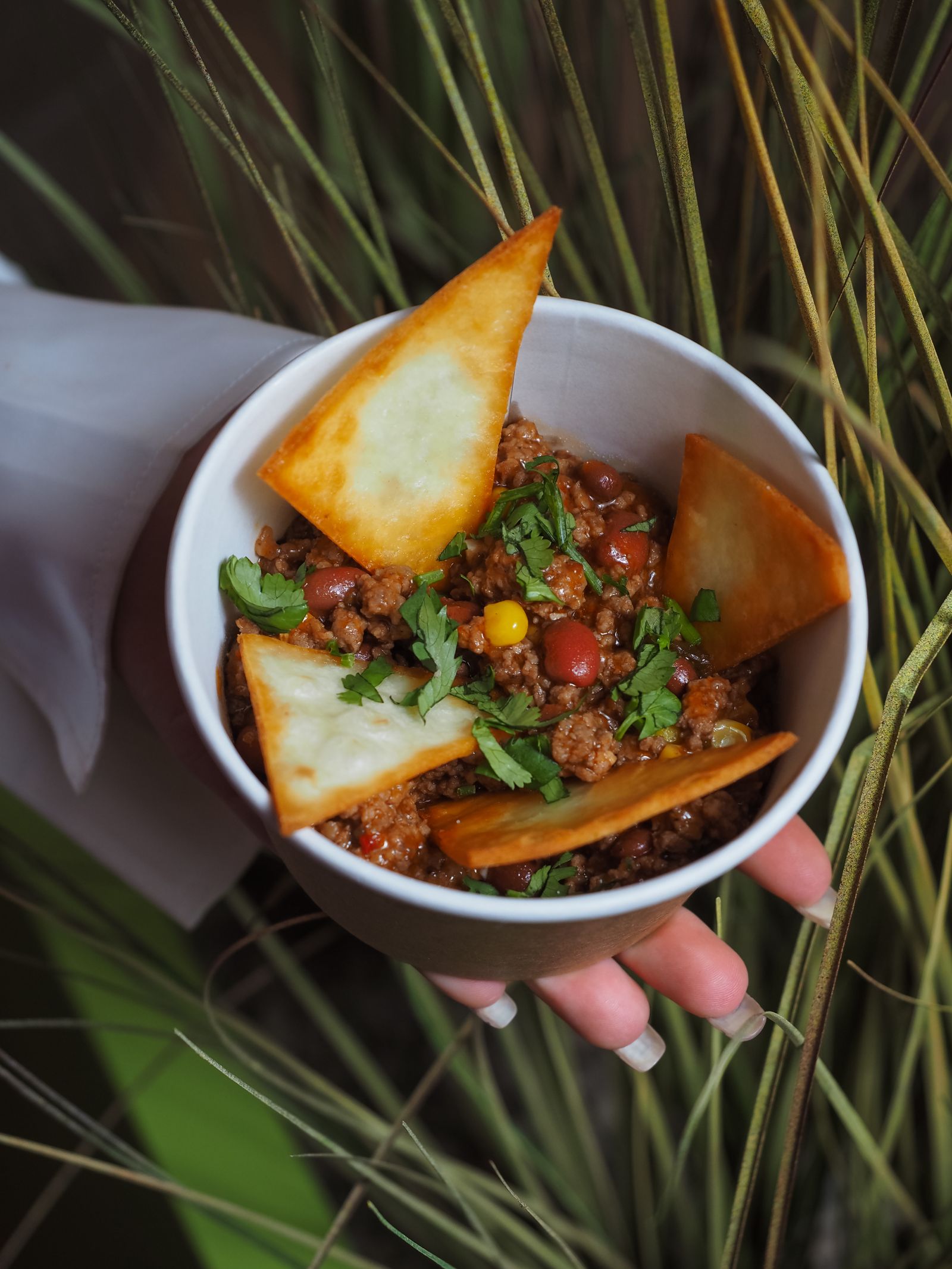
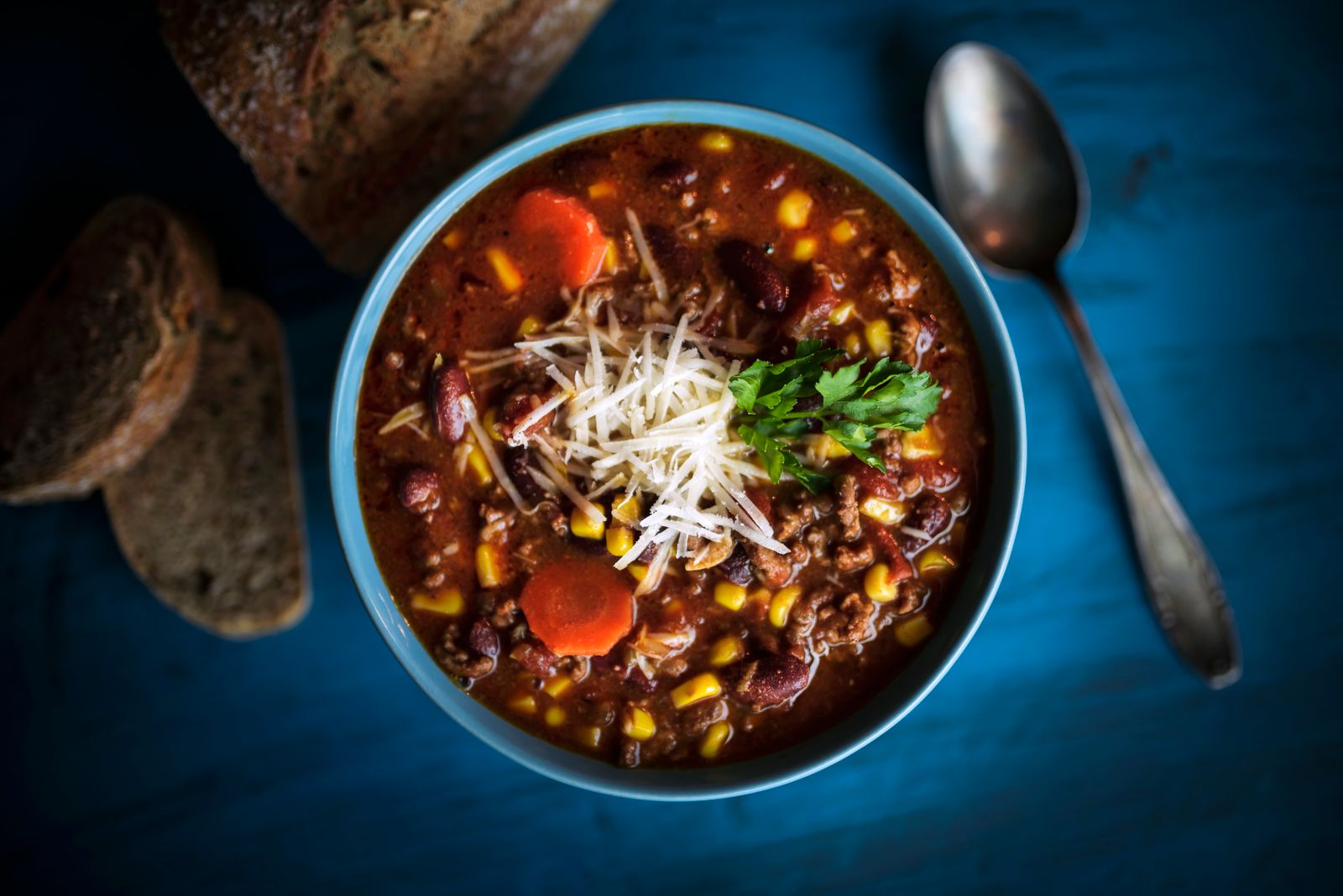
Chili con carne, meaning chili with meat, is a spicy stew of meat and chilies that is deeply linked with Texas. Its exact origins are unclear, and food historians often describe it as a Tex-Mex dish developed in the United States rather than a traditional dish from Mexico.
One of the best-known chapters in its story belongs to the “chili queens” of San Antonio, Texas. In the nineteenth century, Mexican-American women sold bowls of chili from stalls in the city’s plazas in the evenings, lit by lanterns. The scene drew visitors and was celebrated in newspapers.
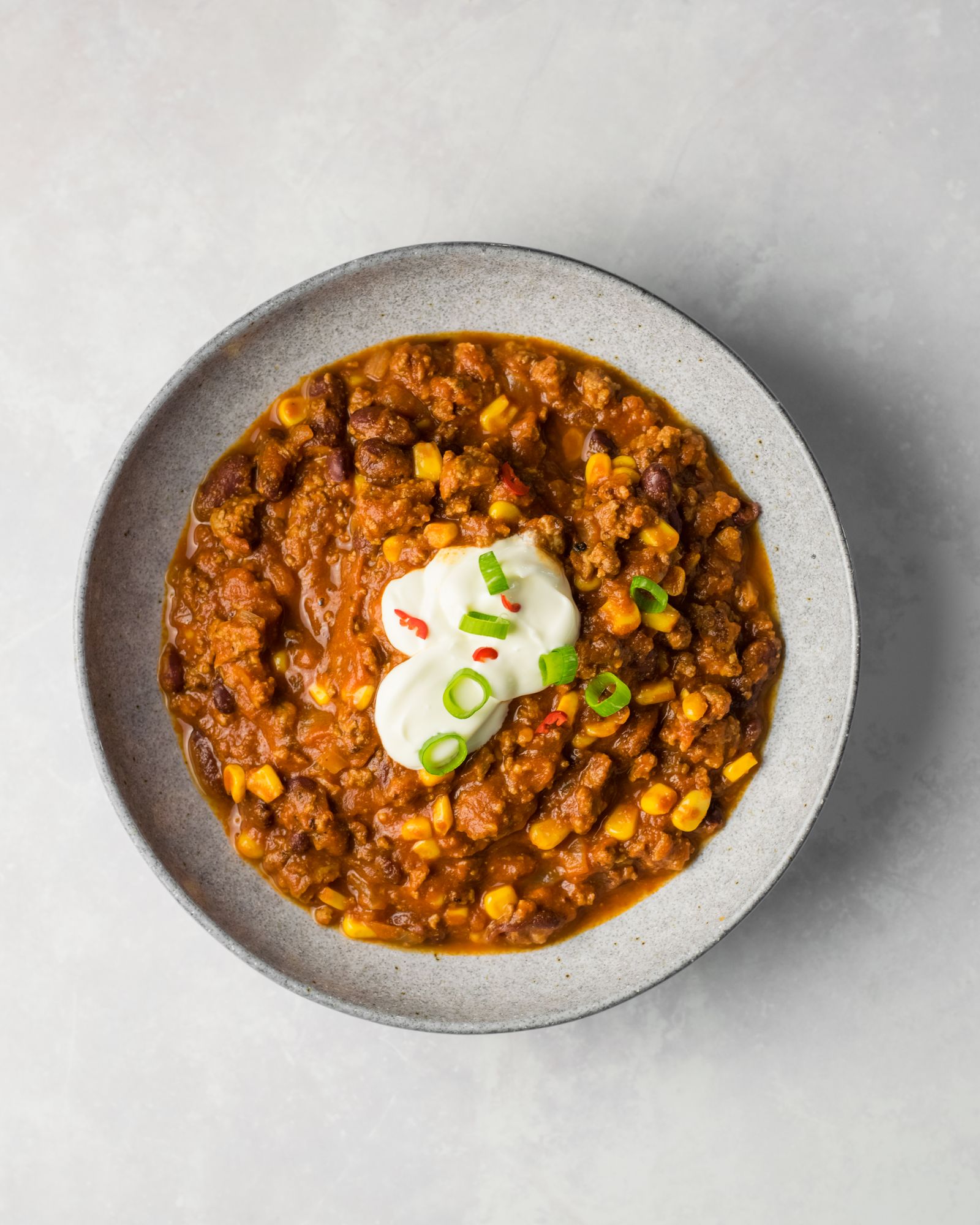
Chili spread through the American West on cattle trails and in mining camps, where spicy, hearty stews could be made from tough cuts of meat. At the 1893 World’s Columbian Exposition in Chicago, a San Antonio chili stand introduced the dish to a wide audience.
The Texas legislature named chili the official state dish in 1977. Purists in Texas often say that real chili has no beans, while elsewhere beans, tomatoes and corn are common. Cincinnati chili, which is served over spaghetti with sweet spices, is a regional style of its own.
Chili cook-offs have been held across the United States since the 1960s. A pot of chili remains a popular dish for game days and cold evenings, and a good example of food that is shaped by migration and local taste.
The story in more depth
Early chili is often linked to the cooking of cowboys, trail cooks and settlers in the nineteenth-century American Southwest, using inexpensive beef, dried chilies and cumin. San Antonio’s chili stands, run by women who set up their tables in the city plazas, became a tourist attraction, but in the 1930s, health regulations pushed them away, and the city later brought back a version for tourists.
In the twentieth century, chili became widely commercialized. Canned chili, chili powder, and chili parlors appeared; William Gebhardt, a German immigrant in Texas, started selling chili powder in the 1890s, and Gebhardt’s Eagle Brand Chili Powder is often said to have been the first widely sold chili powder. Chili cook-offs, such as the Terlingua International Chili Championship begun in 1967, celebrate a contest between Texas rivals.
Variations around the United States include Cincinnati chili, served on spaghetti with cinnamon and chocolate flavors; green chili stew of New Mexico, with roasted Hatch chilies; white chicken chili; and vegetarian chili. In many homes, chili is served with cornbread, beans, cheese and sour cream. Debates about beans in chili are a favorite food argument.
A timeline
- 1700s: Spanish-speaking settlers from the Canary Islands arrive in San Antonio, in one origin theory.
- 1880s: Chili queens sell chili in San Antonio plazas.
- 1893: A San Antonio chili stand appears at the Chicago World’s Fair.
- 1894: William Gebhardt begins selling chili powder in Texas.
- 1967: The first Terlingua chili cook-off is held.
- 1977: Texas names chili its official state dish.
- Today: Chili is eaten across the United States.
Regional styles and variations
- Texas red: meat and chili sauce, without beans.
- Cincinnati chili: served over spaghetti with sweet spices.
- Green chili: made with New Mexico green chilies.
- White chicken chili: made with chicken and white beans.
- Vegetarian chili: with beans and vegetables.
- Chili mac: chili combined with macaroni.
Buying, tasting and choosing well
Good chili should have deep, layered flavor, not just heat. Toast spices, brown the meat well and simmer for a long time. Toppings like cheese, onion, sour cream and cornbread add balance. Many cooks say chili tastes better the next day, after flavors have mingled.
Did you know?
- The word chili refers to the pepper, but chili con carne means “chili with meat”.
- Cook-offs are held across the United States.
- Chili powder is a mix of ground chilies, cumin, garlic and oregano.
- Debate over beans in chili is a classic argument.
Eating it today
Chili is a flexible dish for crowds. Adjust the heat to your taste and make it your own.
Countries connected to this story
- United States: the home of chili con carne, especially Texas.
- Mexico: where chilies and stews with chilies have deep roots, though chili con carne itself is considered Tex-Mex.
- Spain and the Canary Islands: sometimes credited, in one theory, with early migrants who settled in Texas in the 1700s.
- Canada and Australia: where chili is a common comfort food.
- United Kingdom: where chili con carne is a popular home dish.
Where to try it
- Terlingua Chili Championship (Terlingua, Texas, USA): a yearly chili cook-off held in the Texas desert.
- Market Square (El Mercado) (San Antonio, Texas, USA): an area associated with the chili queens’ history.
- Skyline Chili (Cincinnati, Ohio, USA): a chain known for Cincinnati-style chili.
- Hatch Chile Festival (Hatch, New Mexico, USA): a yearly festival celebrating green chilies.
These are well-known examples, not paid recommendations or rankings, and places change. Check opening times and details before you travel.
Well-known brands
- Gebhardt’s: a historic Texan chili powder brand.
- Wolf Brand Chili: a Texas brand of canned chili from the 1890s.
- Hormel: an American food company that sells canned chili.
- Bush’s Best: an American brand of beans.
- McCormick: an American spice company that sells chili seasoning.
Brands are named as widely known examples of makers, not as endorsements.
Related: Classic Beef Chili recipe and kidney beans.
Many food origins are disputed. This story summarizes commonly cited accounts as an introduction, not the final word.
Photo credits: Nadin Sh on Pexels; Piotr Arnoldes on Pexels; Julias Torten und Törtchen on Pexels. Free stock photos shown as illustrations only.