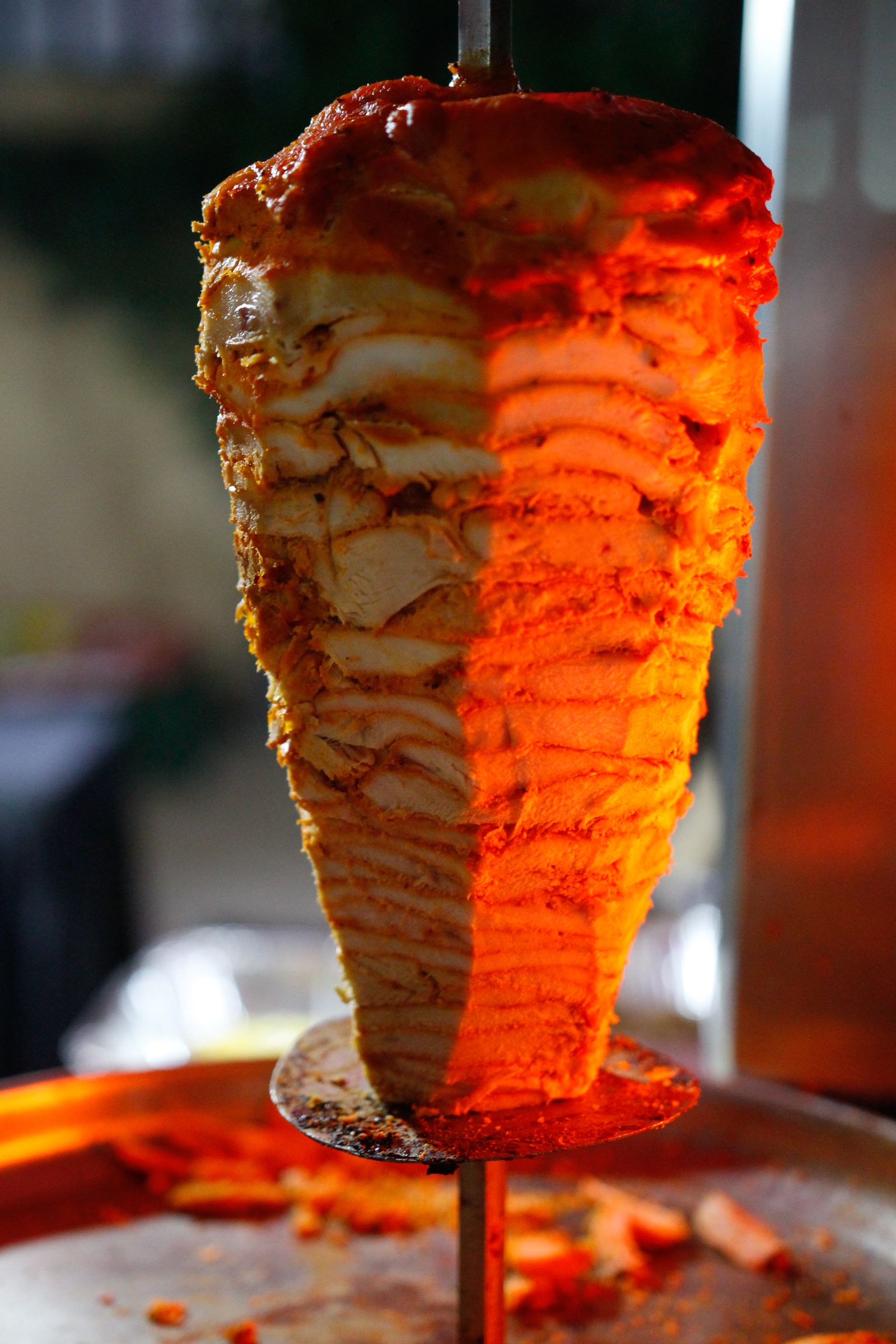
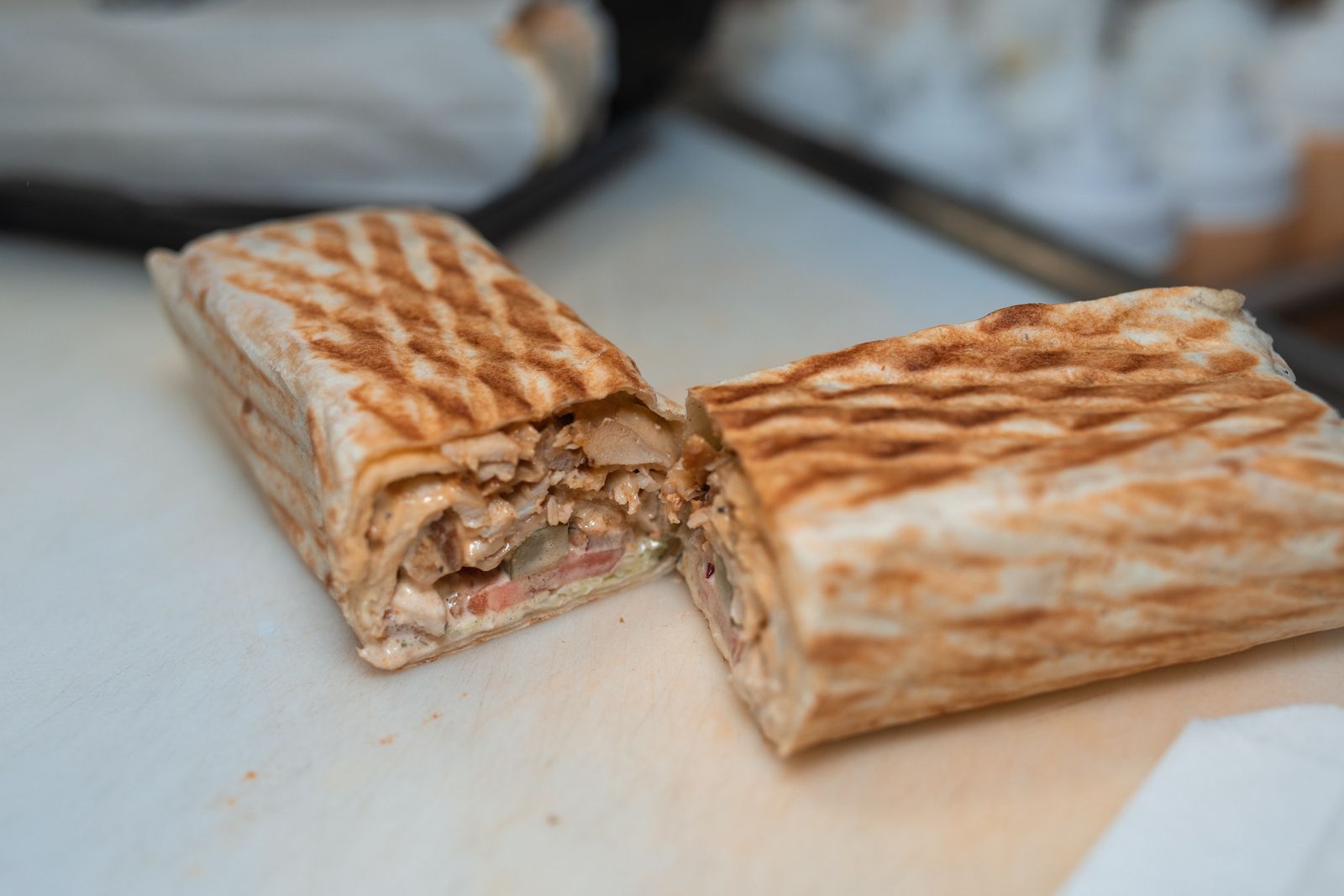
The doner kebab, thin slices of seasoned meat shaved from a rotating spit and served in bread, is one of the world’s most widespread street foods. The Turkish word döner means “turning”. Related dishes are shawarma in the Levant and gyros in Greece.
Cooking meat on a spit is ancient, and in the Ottoman Empire, kebabs were usually grilled on a horizontal spit. Accounts say that a cook named Iskender Efendi in Bursa in the 1860s began cooking meat on a vertical spit, which allowed the cooked outside to be sliced off. This is a commonly told story, though firm evidence is limited.
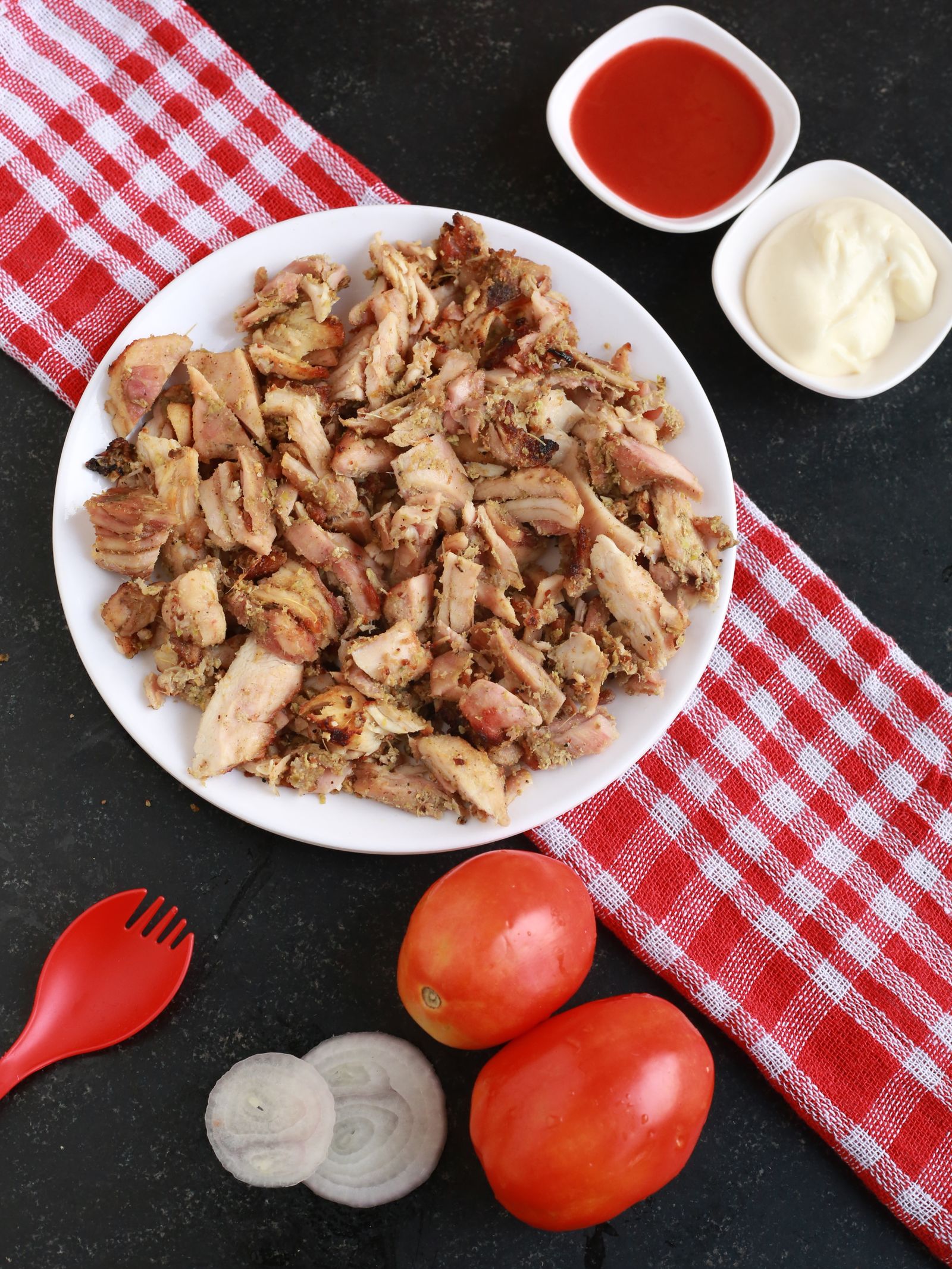
The doner as a sandwich in bread was popularized in Germany. A common account names Kadir Nurman, a Turkish immigrant in Berlin, who is said to have sold the first doner in bread in 1972. Other vendors have made similar claims, and the exact origin is disputed.
Turkish “guest workers” had come to West Germany from the 1960s, and their food became part of the cities where they lived. Today, Germany has many thousands of doner shops, and the sandwich has been called a symbol of the country’s multicultural life.
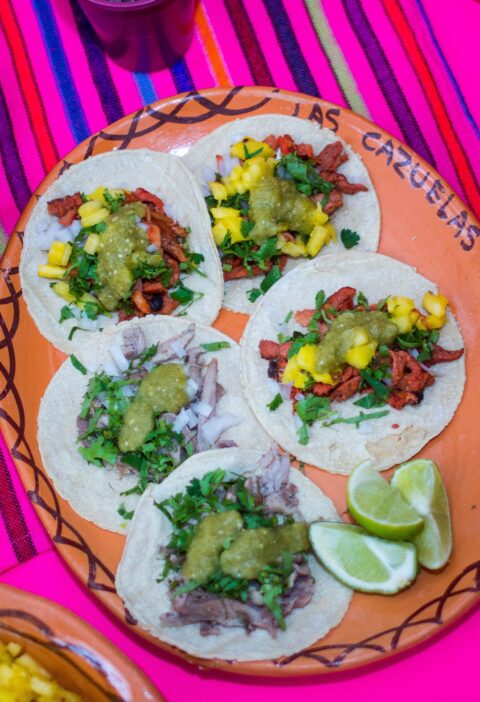
Meanwhile, similar spit-roasted meats evolved in other places: shawarma in the Levant, gyros in Greece and tacos al pastor in Mexico. These share a common thread of travel, trade and migration.
The story in more depth
Kebab culture is vast. In Turkey, kebabs include the Adana kebab, a spicy minced meat kebab; the Urfa kebab, milder and made from lamb; the shish kebab, with chunks of meat on skewers; and the iskender kebab, a doner served over bread with tomato sauce and yogurt. In the Levant, shawarma may be made from lamb, chicken or beef, with garlic sauce and pickles in thin bread.
In Berlin, the doner has become part of the city’s identity. Doner is traditionally made from lamb or beef, though chicken doner is also very common. The doner is typically served in flatbread or dürüm wrap, with salad and sauces.
Doner has traveled worldwide. In the United Kingdom, it became a late-night staple. In Australia, the “halal snack pack” has become a national fast food. Meanwhile, in Mexico, tacos al pastor, and in Greece, gyros, are the descendants of the same technique. Doner symbolizes migration, entrepreneurship and shared food.
A timeline
- 1800s: Kebabs are grilled on skewers in Ottoman cities.
- 1860s: Iskender Efendi of Bursa is credited with vertical spit cooking.
- 1960s: Turkish workers migrate to West Germany.
- 1972: A Berlin vendor is said to have popularized doner in bread.
- 1980s: Doner spreads across Germany and Europe.
- Today: Doner is one of Europe’s most popular fast foods.
Regional styles and variations
- Doner in bread: served in flatbread with salad and sauces.
- Dürüm: doner in a wrap.
- Iskender: sliced doner over bread with tomato sauce and yogurt.
- Shawarma: Levantine spit-roasted meat.
- Gyros: Greek pork or chicken on a spit.
- Halal snack pack: an Australian dish of doner over chips.
Buying, tasting and choosing well
Look for a spit with real slices of meat stacked, not a smooth, uniform cone, and for fresh bread and salad. The meat should be carved thin and crisp at the edges. Ask for sauces such as garlic, herb or chili. Make sure the shop is clean and busy, which suggests turnover and freshness.
Did you know?
- Doner means “turning” in Turkish.
- Germany has thousands of doner shops.
- The vertical spit allows meat to cook evenly.
- Many shops make their own sauces.
Eating it today
Doner is both a late-night snack and a symbol of cultural exchange. Try different versions, and look for places where the spit is turning, the bread is fresh and the salad is crisp.
Countries connected to this story
- Turkey: the home of the doner kebab and many other kebab styles.
- Germany: where the doner sandwich in bread became hugely popular.
- Greece: with gyros and souvlaki.
- Lebanon, Syria and the Levant: where shawarma is a street food.
- Mexico: where the technique inspired tacos al pastor.
- United Kingdom and Australia: with kebab shops and the halal snack pack.
Where to try it
- Mustafa’s Gemüse Kebap (Berlin, Germany): a famous street stand known for its vegetable doner, with long queues.
- Imren Grill (Berlin, Germany): a well-known doner restaurant in Berlin.
- Hamdi Restaurant (Istanbul, Turkey): a famous kebab restaurant near the Spice Bazaar.
- Kebapçı İskender (Bursa, Turkey): the restaurant linked to the iskender kebab tradition.
These are well-known examples, not paid recommendations or rankings, and places change. Check opening times and details before you travel.
Well-known brands
- Pınar: a Turkish food company that makes dairy and meat products.
- Sütaş: a Turkish dairy brand known for ayran, the yogurt drink often served with kebabs.
- Ülker: a large Turkish food and snack brand.
Brands are named as widely known examples of makers, not as endorsements.
Related: Chicken Shawarma recipe and yogurt.
Many food origins are disputed. This story summarizes commonly cited accounts as an introduction, not the final word.
Photo credits: Mouktik Joshi on Pexels; RDNE Stock project on Pexels; Studio D7 on Pexels. Free stock photos shown as illustrations only.