Sourdough is made by fermenting flour and water with wild yeasts and bacteria, forming a starter that makes bread rise. This is likely the oldest way of leavening bread.
Evidence from ancient Egypt shows that people were making leavened loaves more than four thousand years ago. For most of history, bakers kept a bit of dough or starter from one batch to start the next. Commercial baker’s yeast only became widespread in the nineteenth century.

Sourdough has a special place in San Francisco. During the California Gold Rush of the 1840s and 1850s, prospectors carried starters and baked sour loaves. Boudin Bakery, founded in 1849, is often linked to this tradition. In 1970, scientists identified a bacterium in San Francisco sourdough starters and later named it Lactobacillus sanfranciscensis.
Beyond California, sourdough traditions exist across the world, from German rye breads and Russian kvass-based loaves to Ethiopian injera and Indian dosa and idli batters, which also rely on natural fermentation.
Sourdough interest rose sharply during the early 2020s, when many people began baking at home. A starter needs regular feeding, warmth and patience, and each starter develops its own character.
The story in more depth
For most of human history, bread meant sourdough or something similar, because there was no other leavening. Roman bakers used a piece of fermented dough from the previous day, and in medieval Europe, bakers often passed starters from one generation to another. The introduction of brewer’s yeast, and later commercial yeast in the nineteenth century, made bread faster and more predictable, and sourdough became less common except in certain regions.
Sourdough survived in places such as Germany, where rye bread is traditionally sourdough; in Italy, where the panettone is made with a mother dough; in Finland and Russia; and in San Francisco. Scientists have studied sourdough starters and found that they contain a community of wild yeasts and lactic acid bacteria. The bacteria give sourdough its tang, and fermentation can make the bread keep longer.
A revival began in the 1990s and 2000s as bakers such as Chad Robertson of Tartine in San Francisco and Lionel Poilâne’s family in Paris popularized long-fermented, crusty loaves. In the spring of 2020, interest surged as people baked at home. Sourdough has been described as both the oldest and the newest trend in bread.
A timeline
- About 4,000 to 5,000 years ago: Leavened bread is made in ancient Egypt.
- Roman era: Bakers use fermented dough from a previous batch.
- 1849: Boudin Bakery is founded in San Francisco.
- 1800s: Commercial baker’s yeast spreads, reducing sourdough use in many places.
- 1971: Lactobacillus sanfranciscensis is identified in San Francisco sourdough.
- 2000s: Artisan bakers revive long-fermented loaves.
- 2020: A surge of home baking brings sourdough to many kitchens.
Regional styles and variations
- San Francisco sourdough: tangy, with a crisp crust.
- German Roggenbrot: a dense rye sourdough.
- Pain au levain: a French sourdough loaf.
- Panettone: an Italian festive bread made with a mother dough.
- Injera: an Ethiopian fermented flatbread.
- Idli and dosa: South Indian fermented rice and lentil foods.
Buying, tasting and choosing well
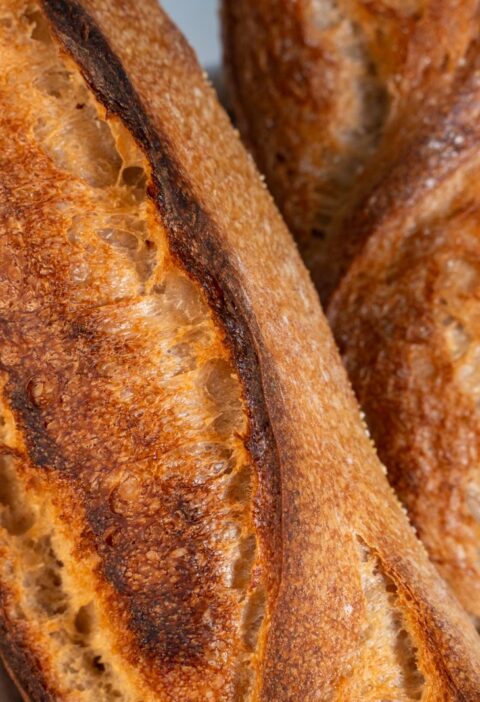
A good loaf should have a deep brown crust, an open crumb and a balanced tang, not too sour or flat. To keep a starter healthy, feed it regularly with flour and water and keep it at a stable temperature. Longer, cooler fermentation can give a milder, more complex flavor. If your starter smells like nail polish remover, it needs feeding.
Did you know?
- A sourdough starter is a living community of wild yeast and lactic acid bacteria.
- Some starters are passed down for generations and have names.
- The long fermentation can make bread easier for some people to digest, but sourdough made with wheat still contains gluten.
- Rye breads rely on sourdough because rye flour needs acidity to bake well.
Eating it today
Sourdough is a good lesson in patience. Many bakers describe their starters as pets, and sharing a spoonful of starter with a friend is a way to pass along a tradition. Buy from local bakers when you can, and ask how long their dough ferments.
Countries connected to this story
- Egypt: where evidence of leavened bread has been found from over 4,000 years ago.
- Germany: known for sourdough rye breads such as Roggenbrot.
- France: with pain au levain and the Poilâne tradition.
- Italy: with panettone and other mother-dough breads.
- United States: home of San Francisco sourdough and a modern bakery revival.
- Ethiopia: where injera is made from fermented teff batter.
- India: where idli and dosa depend on natural fermentation.
Where to try it
- Boudin Bakery (San Francisco, USA): a bakery that dates its sourdough to 1849.
- Tartine Bakery (San Francisco, USA): a bakery led by Chad Robertson that helped popularize modern artisan sourdough.
- Poilâne (Paris, France): a famous bakery known for its large round sourdough miche.
- St. John Bakery (London, England): a bakery connected to the St. John restaurant, known for bread.
These are well-known examples, not paid recommendations or rankings, and places change. Check opening times and details before you travel.
Well-known brands
- King Arthur Baking Company: an American flour and baking company with roots in 1790.
- Bob’s Red Mill: an American brand of whole grains and flours.
- Shipton Mill: a British organic flour miller.
- Doves Farm: a British flour company known for organic and gluten-free flours.
Brands are named as widely known examples of makers, not as endorsements.
Related: No-Knead Dutch Oven Bread and yeast.
Many food origins are disputed. This story summarizes commonly cited accounts as an introduction, not the final word.
Photo credits: Ece Ebrar TOYCU on Pexels; Lucian Anton on Pexels; Tara Winstead on Pexels. Free stock photos shown as illustrations only.