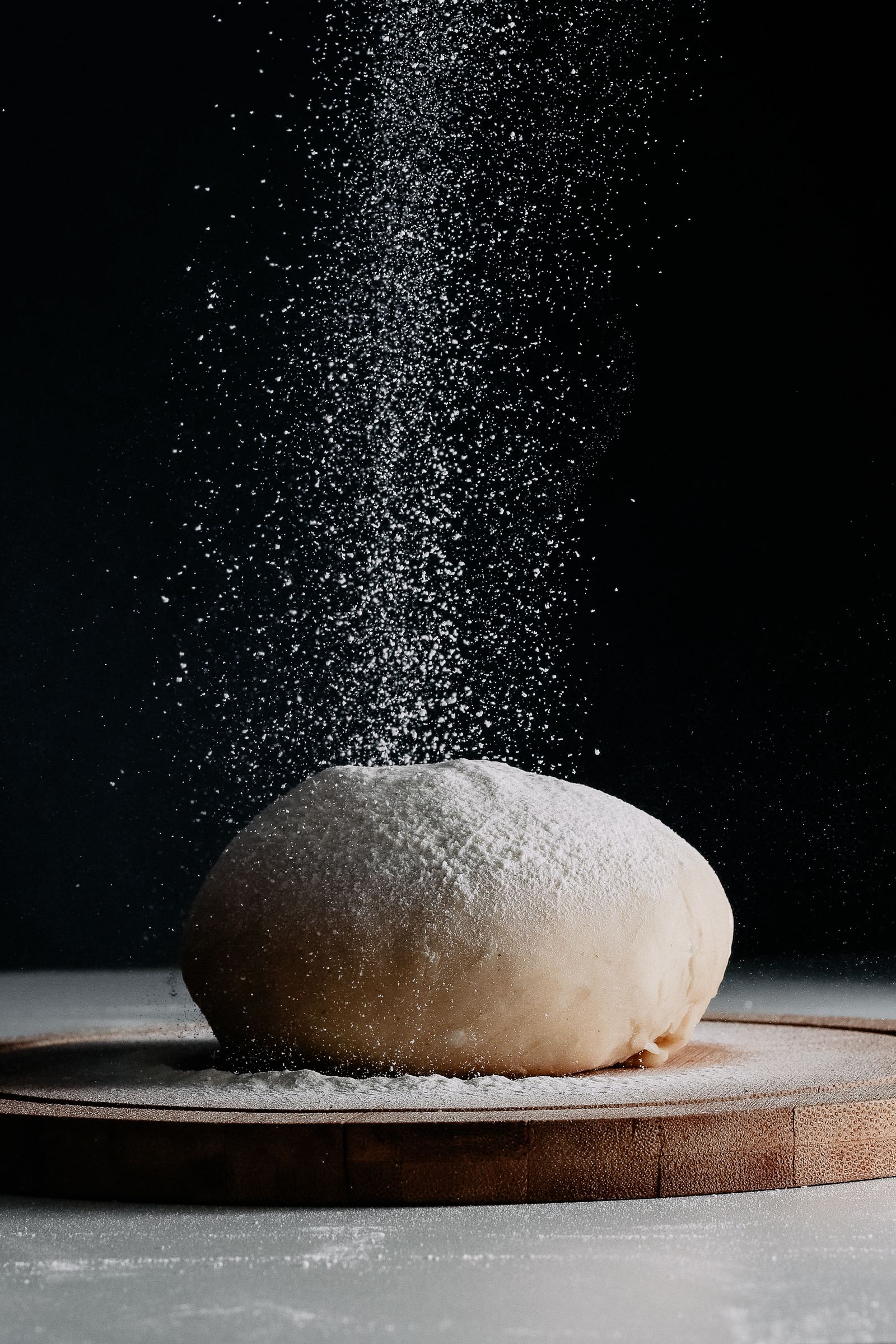
Yeast is a tiny living fungus that ferments sugars and releases gas, which makes bread dough and pizza dough rise and gives them flavor.
- Organism
- Saccharomyces cerevisiae
- Forms
- Instant, active dry, fresh
- Role
- Leavening and flavor
- Activated by
- Warmth and moisture
- Also used in
- Brewing and winemaking
History
Yeast has been used for fermenting bread and drinks for thousands of years, with evidence from ancient Egypt. People kept sourdough starters long before the microorganism was identified. Commercial yeast arrived in the nineteenth century.
Where it comes from
Wild yeasts live on grains, fruit and in the air. The baker’s yeast strain is cultivated worldwide.
Where it is used most
Breads and pizza around the world, including naan, baguettes, focaccia and no-knead loaves. Also in brewing, winemaking and some batter-based foods.
Varieties and types
Instant yeast can be mixed straight into flour. Active dry yeast is usually dissolved in warm water first. Fresh (cake) yeast is common in professional kitchens. Sourdough uses wild yeast and bacteria.
Flavor and how to use it
Use water that is warm, not hot; water that is too hot kills yeast. A long, slow rise develops more flavor, which is the idea behind no-knead breads.
Buying, storing and substitutes
Keep unopened packets in a cool, dry place; once opened store in the refrigerator or freezer. Quantities differ between yeast types, so check the packet.
Recipes that use it
Photo credit: Alexandr Kozlenko on Pexels.