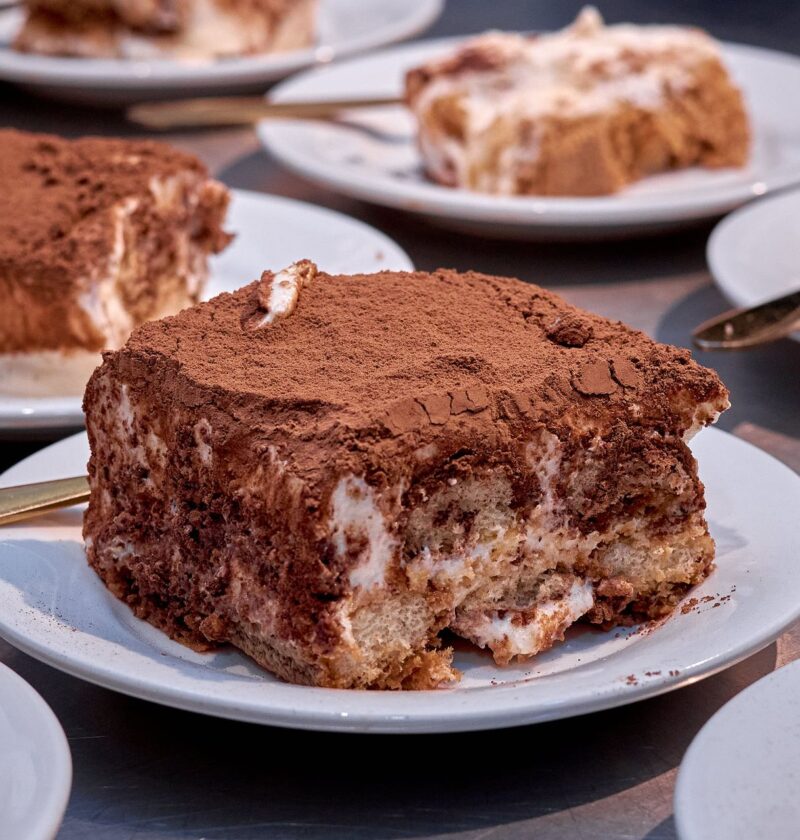
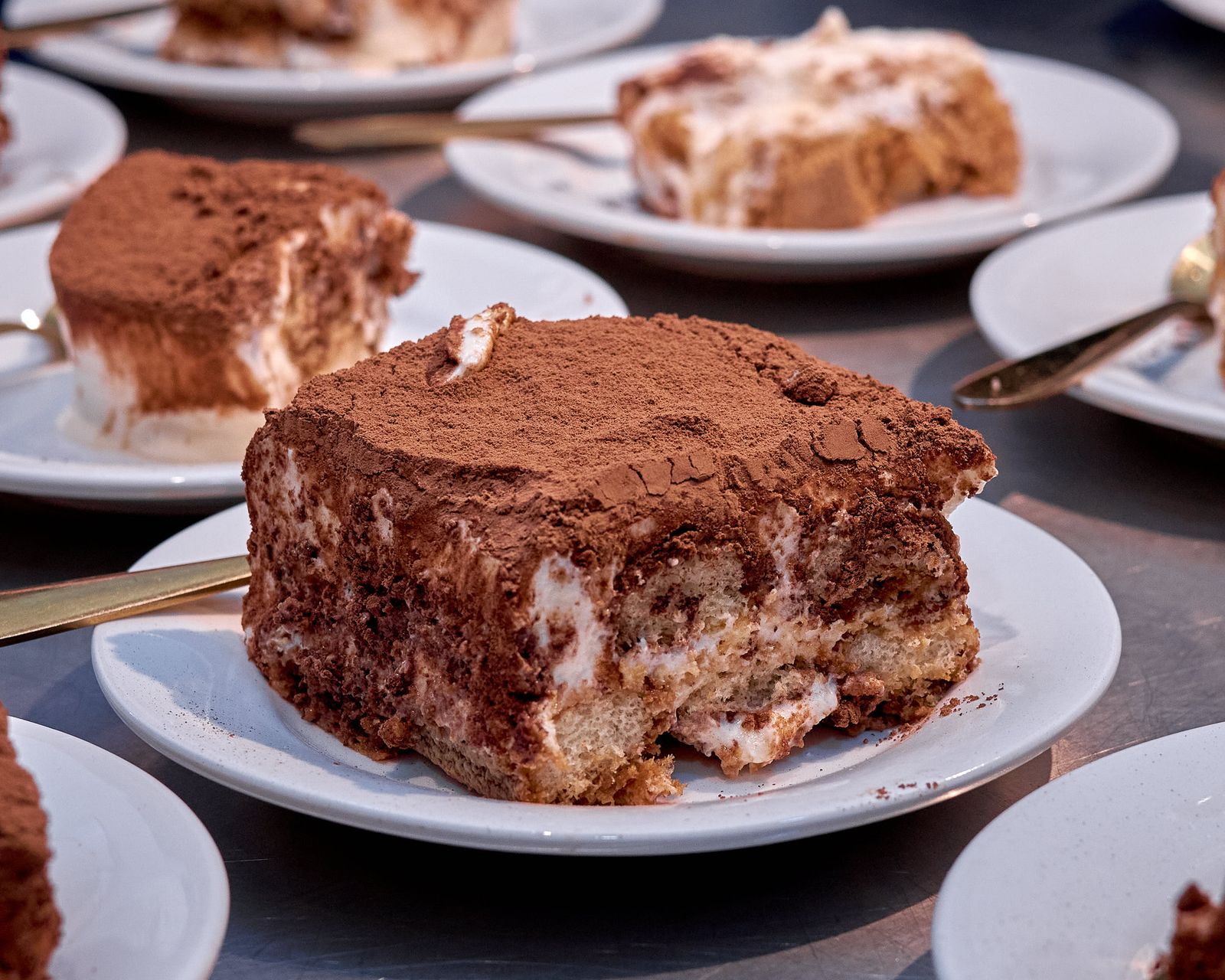
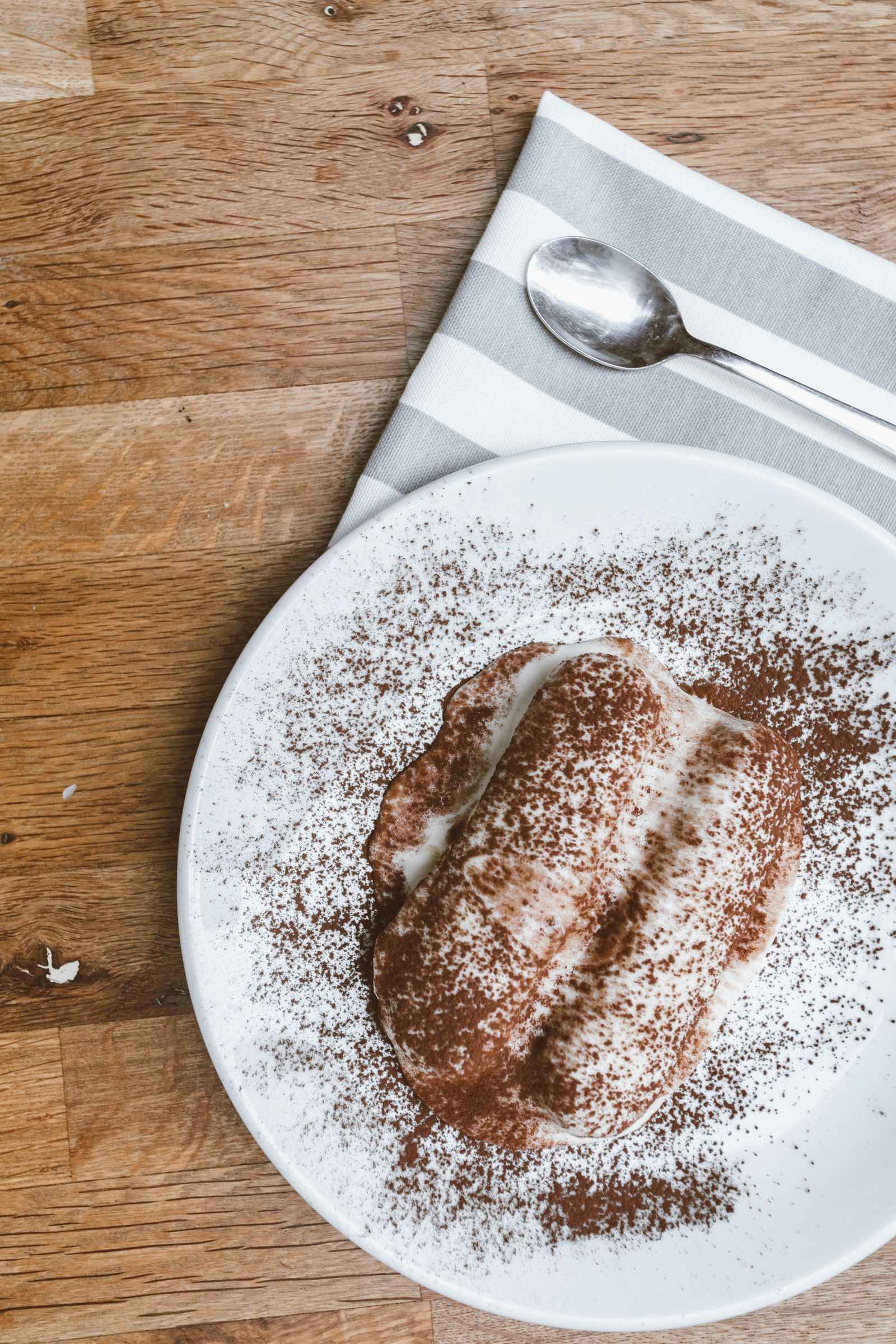
Tiramisu is a layered dessert of coffee-soaked ladyfinger biscuits and a cream of mascarpone, eggs and sugar, dusted with cocoa. Its name means “pick me up” or “lift me up” in Italian, referring to the energy of coffee and sugar.
It is a relatively recent dessert. Most accounts place its origin in the Veneto region of northeastern Italy in the 1960s or 1970s. The restaurant Le Beccherie in Treviso is often named, together with the pastry chef Roberto Linguanotto and the restaurateur Alba Campeol. Another claim comes from Friuli-Venezia Giulia, which registered tiramisu as a traditional regional product, and some cooks suggest earlier versions existed in nearby towns.
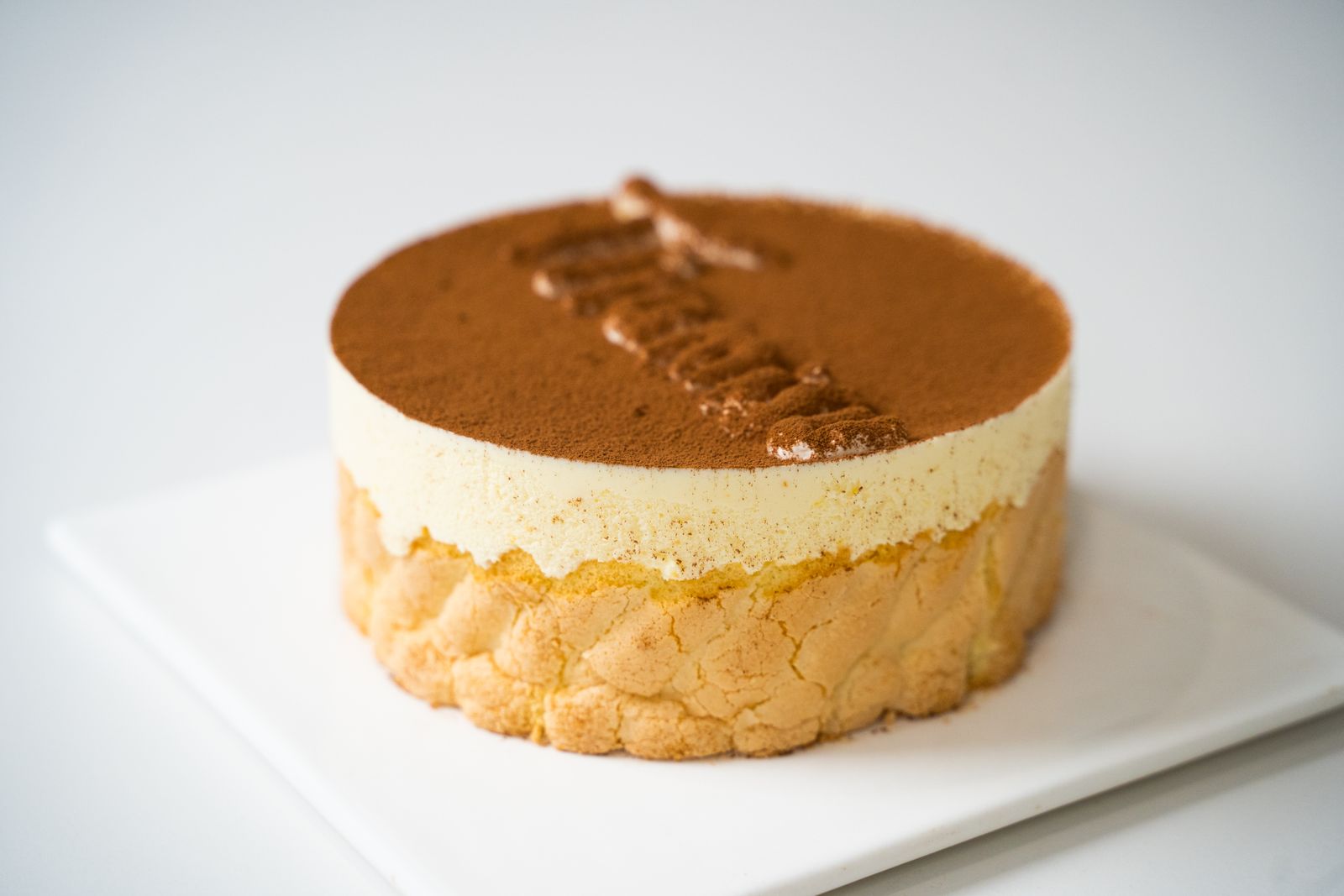
Tiramisu belongs to a tradition of spoon desserts and sweet creams made with eggs and cheese, such as zabaglione, and to the northern Italian tradition of using savoiardi, the dry sponge biscuits. Mascarpone, the soft, rich cheese central to tiramisu, comes from Lombardy.
In the 1980s, tiramisu became fashionable in Italy and then abroad, appearing on restaurant menus from New York to Tokyo. Cooks have since made countless versions with strawberries, matcha, pistachio and other flavors, but the classic uses just a few ingredients, strong coffee and a light hand.
The story in more depth
The ingredients tell part of the story. Mascarpone, from Lombardy, is a fresh cream cheese made with cream and an acid, and savoiardi, also called ladyfingers, have been made since the Savoy court in the fifteenth century. Strong espresso, often with a splash of Marsala or rum, soaks the biscuits, and eggs and sugar are whisked into a rich cream. The final dusting of cocoa gives a bitter contrast.
Tiramisu is also a way to see how food changes through immigration, marketing and social media. Home cooks and restaurants adapt recipes: some use raw eggs, others make a cooked custard; some skip alcohol. Food safety guidance suggests using pasteurized eggs for raw cream, especially for children, older people and pregnant people. Tiramisu has influenced many desserts, from tiramisu cakes to ice cream and coffee drinks.
A timeline
- 1960s and 1970s: Tiramisu is said to be created in the Veneto region.
- 1980s: It becomes popular across Italy.
- 1990s: Tiramisu appears on restaurant menus worldwide.
- 2017: Friuli-Venezia Giulia registers tiramisu in its list of traditional products.
- Today: Tiramisu is among the world’s best-known Italian desserts.
Regional styles and variations
- Classic: coffee, savoiardi, mascarpone, eggs and cocoa.
- With Marsala or rum: spirits added for flavor.
- Egg-free: with whipped cream.
- Fruit versions: with strawberries or lemon.
- Matcha tiramisu: a Japanese-inspired version.
- Tiramisu in a glass: individual servings.
Buying, tasting and choosing well
A good tiramisu should be light, creamy and not soggy, with biscuits dipped briefly in coffee so they keep some structure. Resting for several hours in the refrigerator lets the flavors blend. Use good espresso and fresh mascarpone, and dust with cocoa just before serving. If using raw eggs, use pasteurized eggs to reduce risk.
Did you know?
- Tiramisu means “pick me up”.
- Mascarpone is a soft cream cheese.
- The dessert is usually made without baking.
- It is traditionally served chilled.
Eating it today
Tiramisu is easy to make at home and always a crowd favorite. Make it a day ahead for the best flavor.
Countries connected to this story
- Italy: the home of tiramisu, with competing claims by Veneto and Friuli-Venezia Giulia.
- United States: where tiramisu became a restaurant staple in the 1980s and 1990s.
- Japan: where tiramisu is a popular café dessert.
- Germany and the United Kingdom: where it is widely sold in supermarkets and restaurants.
- Australia: with a large Italian-influenced dessert scene.
Where to try it
- Le Beccherie (Treviso, Italy): a restaurant often linked to the origin of tiramisu.
- Pompi (Rome, Italy): a famous Roman dessert shop known for tiramisu.
- Italian pasticcerie and trattorias (Throughout Italy): where each region has its own version.
These are well-known examples, not paid recommendations or rankings, and places change. Check opening times and details before you travel.
Well-known brands
- Galbani: an Italian dairy brand known for mascarpone.
- Vicenzi: an Italian maker of savoiardi biscuits.
- Lavazza: an Italian coffee brand.
- Balocco: an Italian bakery brand.
Brands are named as widely known examples of makers, not as endorsements.
Related: Eggs and cocoa powder.
Many food origins are disputed. This story summarizes commonly cited accounts as an introduction, not the final word.
Photo credits: Tochukwu Ekeh on Pexels; ROMAN ODINTSOV on Pexels; Cats Coming on Pexels. Free stock photos shown as illustrations only.