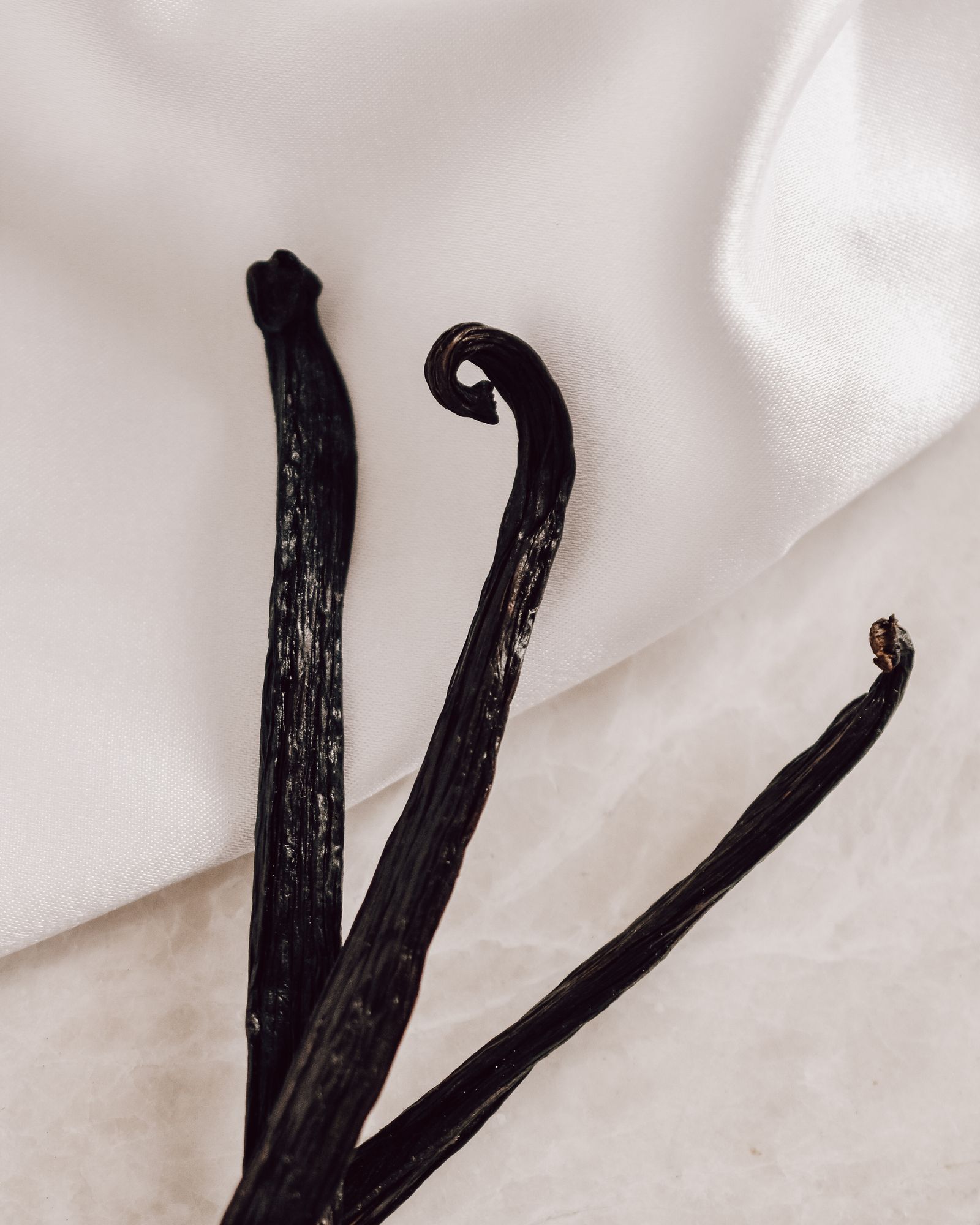
Vanilla comes from the long pods of an orchid, Vanilla planifolia. Its sweet, creamy, floral aroma is the world’s favorite flavoring for baking, custards and ice cream.
History
Vanilla was first used by the Totonac people of what is now Mexico, and later by the Aztecs, who flavored chocolate drinks with it. Spanish explorers brought it to Europe in the 16th century. For hundreds of years it could only be grown in Mexico, because the native insects that pollinate the flowers live there. In 1841 a young enslaved boy named Edmond Albius on the island of Réunion discovered how to pollinate the flowers by hand, which made vanilla farming possible elsewhere.
Where it comes from
The orchid is native to Mexico. Madagascar is now the world’s largest producer, with Indonesia and others also growing it.
Flavor and how to use it
Use whole pods for custards, sauces and syrups: split the pod, scrape out the tiny seeds and add the pod to the liquid. Vanilla extract and paste are easier for cakes, cookies, pancakes and crepes.
Good to know
Vanilla is one of the most expensive spices because each flower must be pollinated by hand and the pods are cured slowly for months. Imitation vanilla is made from vanillin and is cheaper but has a simpler flavor.
Buying and storing
Keep pods in an airtight container in a cool, dark place. Store extract and paste away from heat and light.
Recipes that use it
- Berry Yogurt Parfait
- Classic Chocolate Chip Cookies
- Fluffy Pancakes
- Fudgy Cocoa Brownies
- Moist Banana Bread
In kitchens and traditions
Vanilla is a natural flavoring that gives its name to a flavor, but real vanilla is a complex spice with hundreds of aroma compounds. In Mexico, vanilla is used in chocolate drinks and in the Day of the Dead bread, and in Tahiti, vanilla tahitensis scents sweet dishes. In France, crème brûlée, custards and crème pâtissière are built on vanilla.
Vanilla is also an ingredient in perfumes, and its scent is often described as comforting. Many bakers keep a jar of sugar with vanilla pods, which scent the sugar gently over time. Because vanilla is costly, imitation vanillin is much more common.
Good pairings and ideas
- Split a pod and scrape the seeds into custard, ice cream or panna cotta.
- Add a few drops of extract to pancake batter or cookies.
- Infuse milk with a pod for rice pudding.
- Add to fruit compote, such as stewed plums or strawberries.
Frequently asked questions
Can I reuse vanilla pods?
Yes. Rinse and dry used pods, then add to sugar or to a jar of extract.
Which type should I buy?
Pure vanilla extract, labeled as such, is best for most baking. Paste gives specks of seed.
Why is vanilla expensive?
The orchids must be hand pollinated, and the pods take months to cure.
This page is general information, not medical advice. If you have allergies, a medical condition or are pregnant, check with a qualified professional before using any food in larger amounts than usual.
Photo credit: Qwirki & Co. on Pexels.