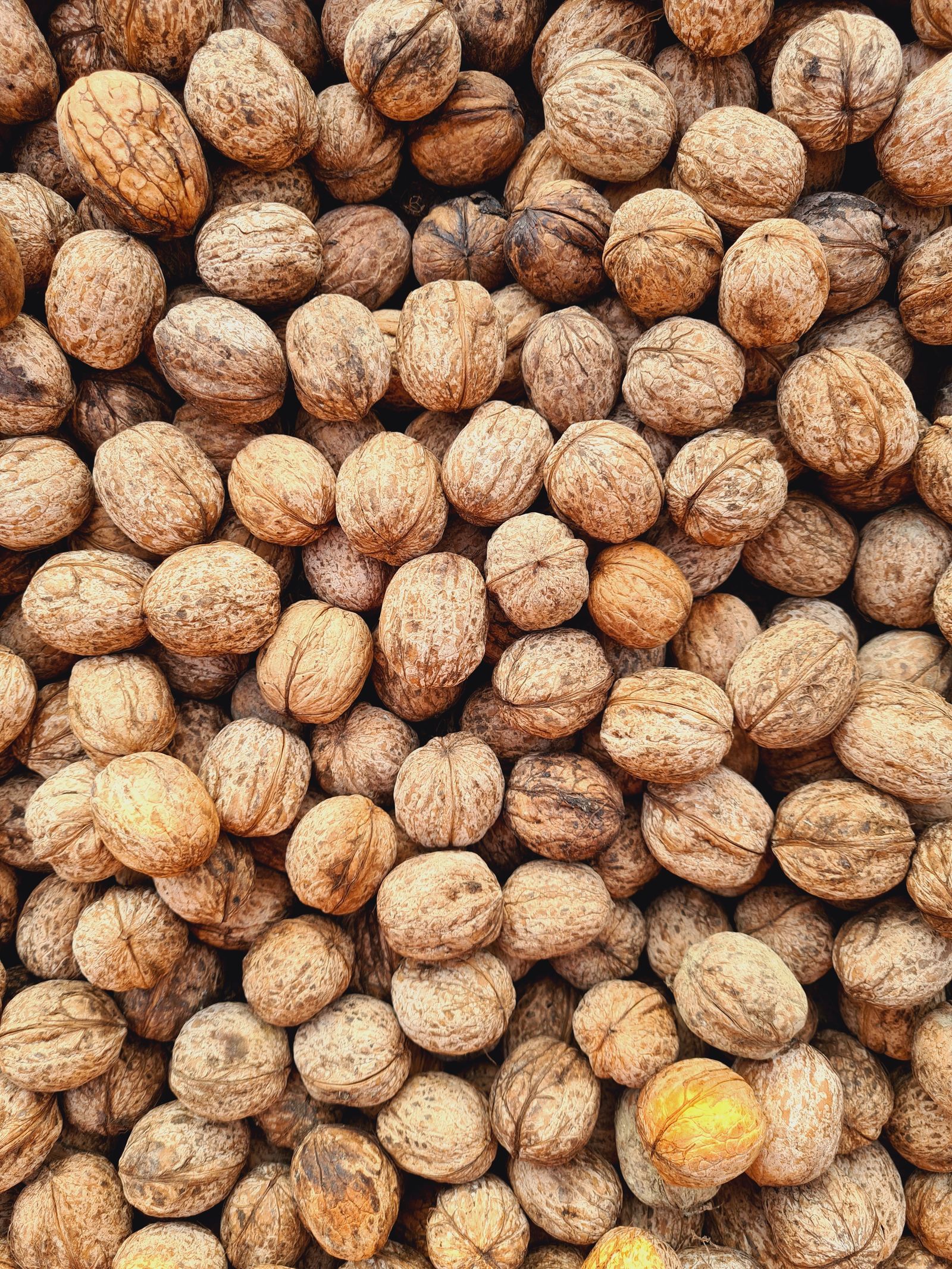
Walnuts are the seeds of Juglans regia, the Persian or English walnut. They are rich, slightly bitter and tender, with a brain-like shape that makes them easy to recognize.
History
Walnuts have been eaten for thousands of years. They were spread by the Romans across Europe, and the name “English walnut” comes from their being carried around the world on English merchant ships.
Where it comes from
The tree is native to a region stretching from Persia and Central Asia to the Himalayas. China and the United States are the largest producers.
Flavor and how to use it
Add walnuts to baked goods, salads, pasta, pesto and sauces, or eat them as a snack. Toasting them softens their slight bitterness. They pair well with banana, apple, cheese and chocolate.
Good to know
Tree nuts are a common allergen. Always check labels, and ask before serving nuts to guests.
Buying and storing
Walnuts are high in oil and go rancid quickly. Keep them in the fridge or freezer in an airtight container.
Recipes that use it
In kitchens and traditions
Walnuts are one of the oldest tree foods, with a history in Persia, Greece, Rome and China. The name “walnut” comes from an old English phrase meaning “foreign nut”. They grow in cool climates, from Central Asia to Europe and North America, and China and the United States are leading producers.
Walnuts appear in Georgian satsivi sauce, Persian fesenjan stew, French walnut cakes and oil, Italian salsa di noci, and American brownies and banana bread. Walnut oil is used in dressings.
Good pairings and ideas
- Toast and sprinkle on salads with blue cheese and pears.
- Grind into pasta sauces and pestos.
- Bake into brownies, breads and cookies.
- Pickle unripe green walnuts, as some traditions do.
Frequently asked questions
Why do walnuts taste bitter?
The papery skin and old oil can taste bitter. Fresh walnuts and light toasting help.
How long do they keep?
Several months in the refrigerator or a year in the freezer.
Allergens?
Yes. Tree nuts are a major allergen. Anyone with a nut allergy should avoid them and check labels carefully.
This page is general information, not medical advice. If you have allergies, a medical condition or are pregnant, check with a qualified professional before using any food in larger amounts than usual.
Photo credit: Merve Sezer on Pexels.