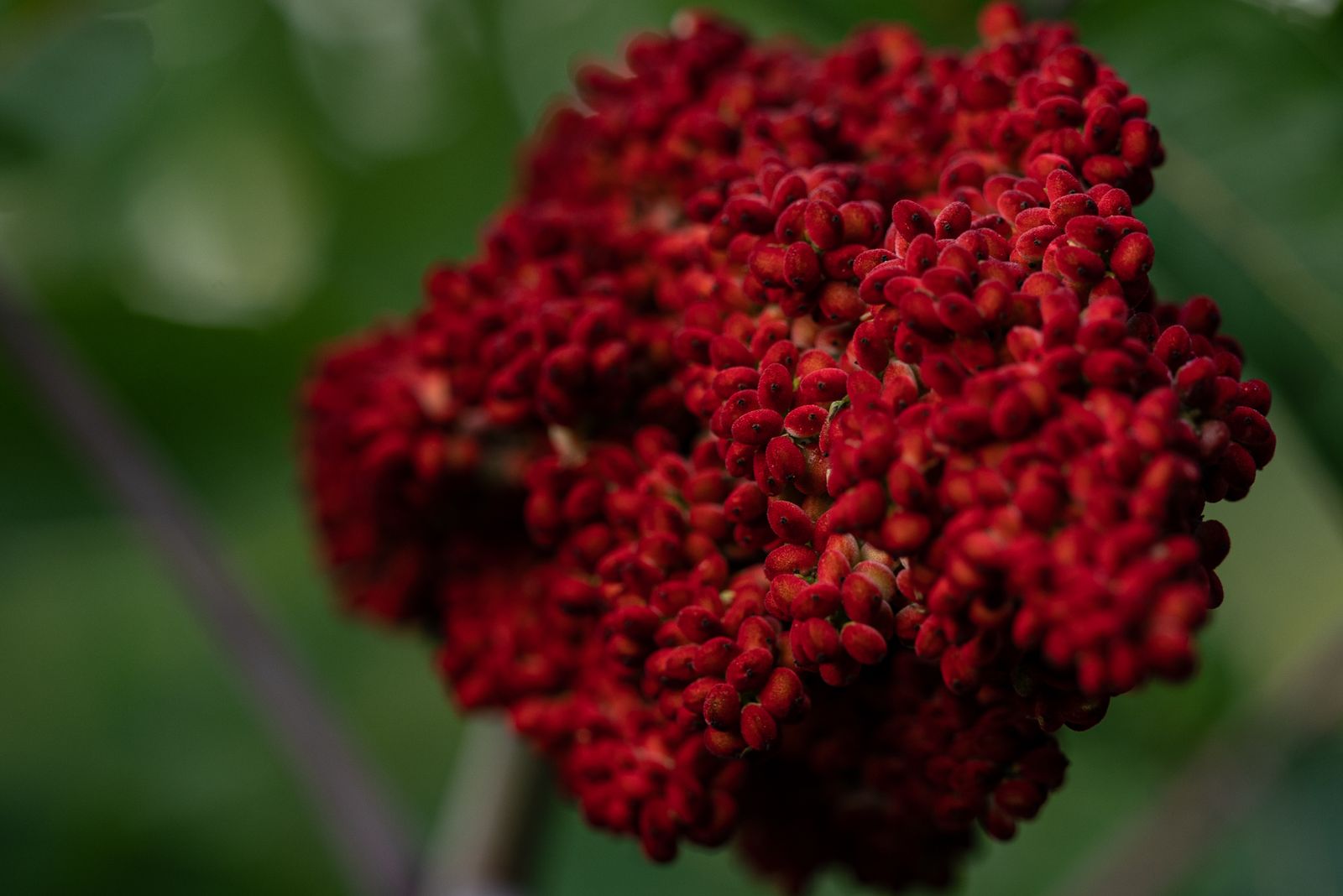
Sumac is a tangy, deep-red spice made by drying and grinding the berries of the shrub Rhus coriaria. It tastes sour and fruity, like lemon with a hint of berry, without the wetness of juice.
History
Sumac has been used for thousands of years around the Mediterranean and Middle East. It is often said that, before lemons were widely available, cooks in the region used sumac for their sourness. It remains a staple of Levantine, Turkish and Iranian cooking.
Where it comes from
The shrub grows wild across the Mediterranean, the Middle East and Iran.
Flavor and how to use it
Sprinkle sumac on kebabs, grilled fish, rice, salads such as fattoush, hummus, yogurt and roasted vegetables. It is also one of the main ingredients in the spice blend za’atar.
Good to know
Culinary sumac is not the same as poison sumac, which is a different plant with white berries. Do not forage for it; buy it ground from a shop.
Buying and storing
Keep ground sumac in an airtight jar away from light. It is best within about a year.
Recipes that use it
In kitchens and traditions
Sumac is a tart, deep red spice made from dried and ground berries of the Rhus coriaria shrub, native to the Mediterranean and Middle East. Before lemons became common, sumac was the souring agent in many Mediterranean kitchens, and it is still used in Lebanese, Syrian, Turkish, Iranian and Palestinian cooking.
Sumac is a key part of za’atar, the spice blend of thyme, sesame and sumac. In Iran, it is sprinkled over rice and kebabs, and in Turkey it is added to onion salads. In Palestinian cuisine, musakhan, a dish of chicken and onions on flatbread, is flavored with sumac.
Good pairings and ideas
- Sprinkle over hummus, salads and grilled fish.
- Toss with sliced red onions and parsley.
- Mix with olive oil and za’atar for flatbread.
- Sprinkle on roasted vegetables or yogurt.
Frequently asked questions
Is this the same as poison sumac?
No. Edible sumac is a different species from the poisonous plant. Buy culinary sumac from reputable sources.
What does it taste like?
Tangy and fruity, like lemon, with less sharpness.
Can I replace it with lemon?
Lemon zest with a pinch of salt is a rough substitute.
This page is general information, not medical advice. If you have allergies, a medical condition or are pregnant, check with a qualified professional before using any food in larger amounts than usual.
Photo credit: Chris F on Pexels.