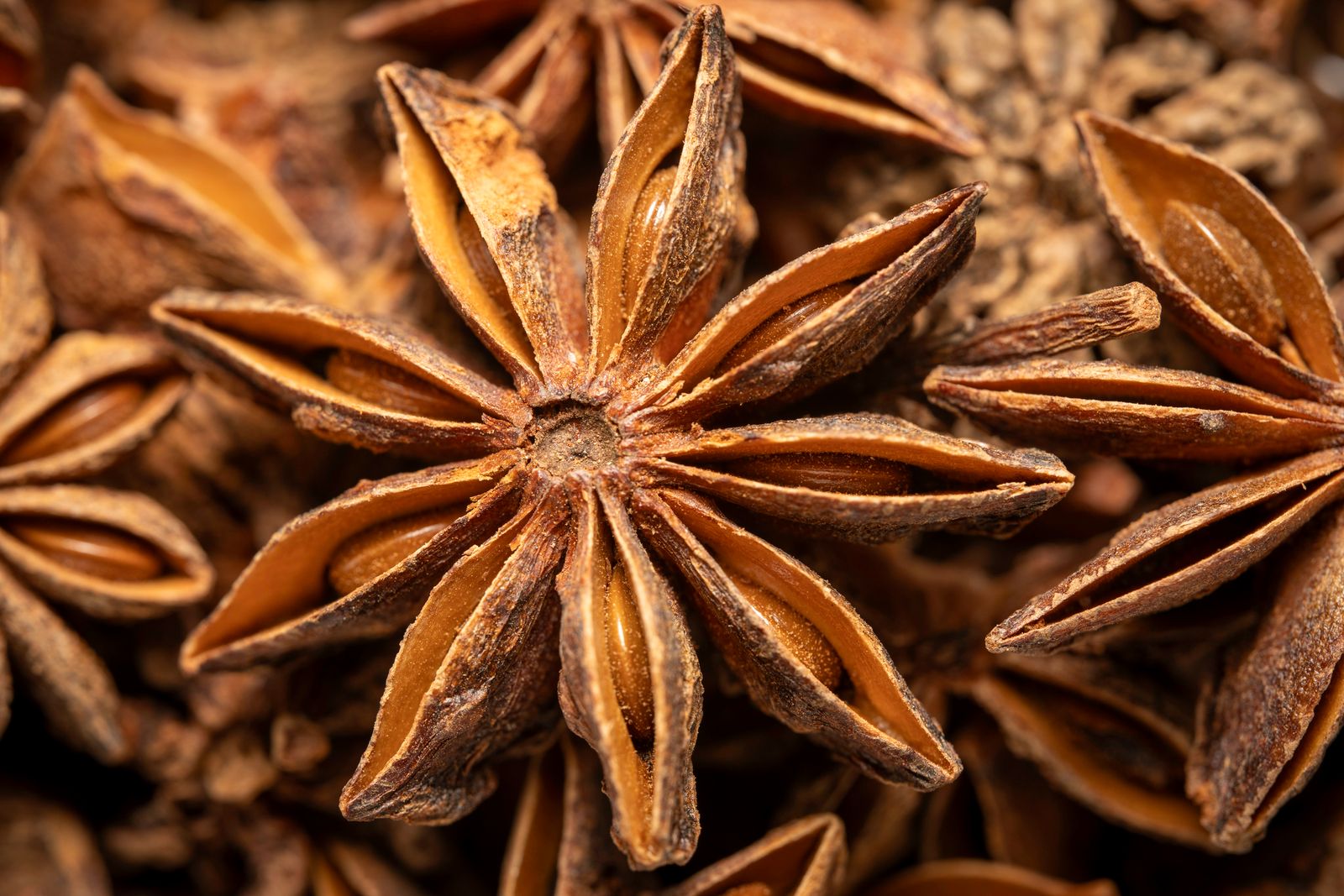
Star anise is the dried, star-shaped fruit of the tree Illicium verum. Each of its eight points holds a shiny seed. It tastes of licorice and is warm, sweet and fragrant.
History
Star anise has been used in Chinese cooking and medicine for centuries and spread west along the spice trade routes. It reached Europe in the 16th century and became a popular flavoring for desserts and drinks.
Where it comes from
It is native to southwestern China and northern Vietnam, which remain major producers.
Flavor and how to use it
Star anise is one of the spices in Chinese five-spice powder, and it flavors Vietnamese pho, braised dishes, biryani, chai and mulled wine. Add one or two whole stars to a simmering pot and take them out before serving.
Good to know
Do not confuse true star anise with Japanese star anise (Illicium anisatum), which is toxic and not used in cooking. Buy from a reliable source.
Buying and storing
Keep whole stars in an airtight jar away from light. Whole pods hold their aroma much longer than ground star anise.
In kitchens and traditions
Star anise is the dried fruit of an evergreen tree (Illicium verum) native to southern China and Vietnam. Its distinctive eight-pointed shape is a symbol of luck in some places. Its licorice-like flavor comes from anethole, the same compound found in fennel and anise.
Star anise is an essential part of Chinese five-spice powder and Vietnamese pho broth, and it scents red-braised dishes in China. In India, it appears in garam masala and biryani, and in Europe it flavors mulled wine, liqueurs and some baked goods. Shikimic acid from star anise has also been used to make some medicines.
Good pairings and ideas
- Simmer one star in broth for pho or ramen.
- Add to poached pears or mulled wine.
- Use in braised pork, duck or beef.
- Add to tea with cinnamon and ginger.
Frequently asked questions
Is star anise safe?
Chinese star anise used in cooking is safe in normal amounts. Japanese star anise (shikimi) is toxic and should not be eaten, so buy from reliable sources.
Is it the same as anise?
No, though the flavors are similar. They are from different plants.
How much should I use?
Usually one or two stars for a pot of soup or stew.
This page is general information, not medical advice. If you have allergies, a medical condition or are pregnant, check with a qualified professional before using any food in larger amounts than usual.
Photo credit: Raul Ling on Pexels.