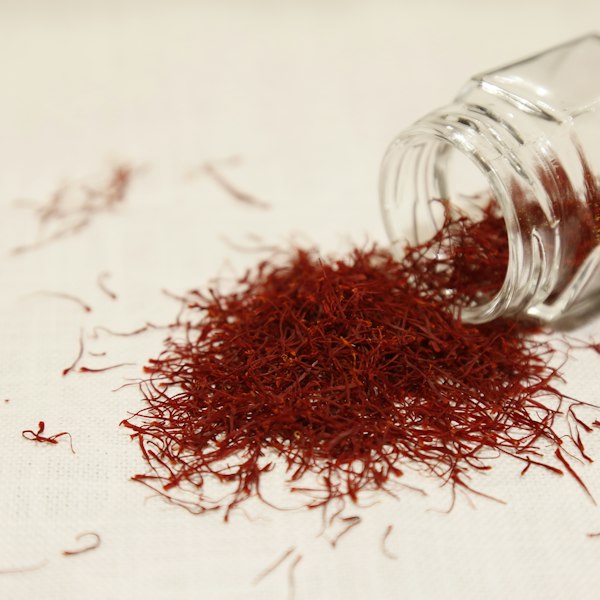
Saffron (Hindi: Kesar) is the dried red threads (stigmas) of the Crocus sativus flower. Each flower produces only three, picked by hand.
Origin and history
Likely first cultivated in the Middle East. Today Iran produces most of the world’s saffron. In India it is grown in Kashmir, mainly in the Pampore area. It takes many thousands of flowers to make a kilogram, which is why it is the most expensive spice by weight.
Flavor and how to use it
Delicate, honeyed and floral, with a golden color. Soak a pinch of threads in warm milk or water for 10 minutes before adding to biryani, kheer or desserts. A little goes a long way.
Buying and storing
Buy threads, not powder, from a trusted source. Store airtight, away from light.
More history and where it is used
Saffron comes from the dried stigmas of Crocus sativus. Each flower yields only three threads, which are picked by hand, so the spice is one of the most expensive in the world by weight. It has been used for thousands of years as a seasoning, dye, perfume and medicine, and was traded from Persia to Greece, Rome, India and China.
Where it is used: Iran (rice, tahdig and desserts), Spain (paella), Italy (risotto alla Milanese), India (biryani, kheer, kulfi and milk), Morocco (tagines), France (bouillabaisse), Sweden (Lucia buns) and the UK (Cornish saffron cake).
Varieties and types
Saffron is graded by quality, such as negin, sargol and pushal in Iran. Spain, Kashmir, Greece and Morocco also produce it. Threads should be red with little yellow.
Cooking tips
Steep a pinch of threads in 2 to 3 tablespoons of warm water or milk for 15 to 20 minutes, then add both the liquid and threads to the dish. Do not boil it for a long time. Store in an airtight container away from light.
Substitutes
There is no true substitute. Turmeric gives color but not the same flavor, so use it only where color alone is needed.
Recipes on this site that use it
In kitchens and traditions
Saffron has been a sign of luxury for centuries. In Persian culture, it colors celebratory rice, ice cream (bastani) and sweets. In Spanish festivals, large paella pans are cooked over fires. In India, kesar milk is a traditional drink, and saffron goes into wedding sweets. In Sweden, saffron buns (lussekatter) are baked in December for St Lucia’s Day.
Good pairings and ideas
- Steep threads in warm milk and stir into rice pudding.
- Add to buttery rice, couscous or risotto.
- Infuse in hot water and use to flavor syrups and ice cream.
- Add a few threads to bread or cake dough for color and aroma.
Frequently asked questions
How can I tell real saffron from fake?
Real saffron threads are dark red with a slightly lighter tip, smell floral and honeyed, and slowly release golden-yellow color in warm water. Fake saffron may bleed red color quickly or have no aroma.
Why is saffron so expensive?
Each flower produces only three stigmas, which must be hand-picked and dried.
Is saffron safe in pregnancy?
Normal culinary amounts are generally considered fine, but large amounts are not recommended. Ask a healthcare professional.
This page is general information, not medical advice. If you have allergies, a medical condition or are pregnant, check with a qualified professional before using any food in larger amounts than usual.
Recipes that use it
Photo credit: Syed F Hashemi on Unsplash.