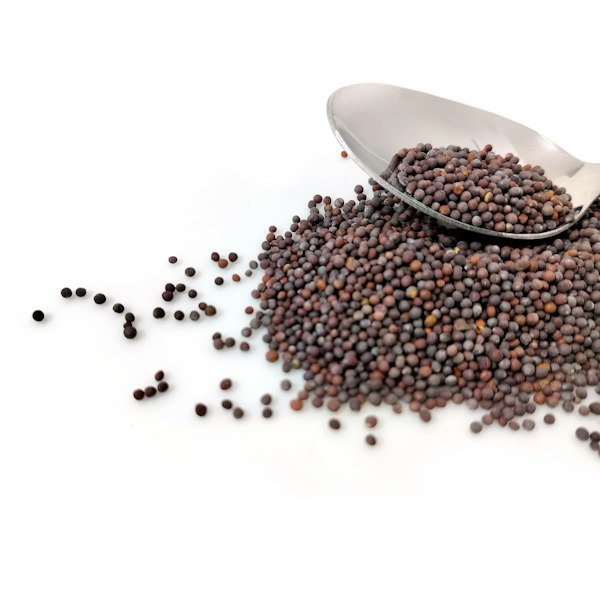
Mustard Seeds (Hindi: Rai / Sarson) is small round seeds from mustard plants. Brown or black seeds (Brassica juncea) are the type used most in Indian cooking.
Origin and history
Mustard has been grown and used in South Asia for thousands of years. It is especially important in Bengali, Maharashtrian and South Indian cuisines, and mustard oil is widely used in eastern and northern India.
Flavor and how to use it
Whole seeds are fried in hot oil until they pop. They turn nutty and mild; raw seeds taste sharp and bitter. They are the first step of many tempering (tadka) dishes, such as upma, poha and sambar.
Buying and storing
Store airtight in a cool place. Seeds last for years if kept dry.
More history and where it is used
Mustard has been used since ancient times, in India, China and Europe. The seeds come in black, brown and yellow (white) types. Romans mixed ground seeds with grape must to make a paste, the origin of the word mustard, and Dijon in France later became famous for it.
Where it is used: India (tempering in South Indian and Bengali cooking, and mustard oil in the north and east), Bangladesh (shorshe fish), Europe (table mustards), North America (yellow mustard), and Nepal and Pakistan (pickles and greens).
Varieties and types
Black and brown seeds are hot and pungent when ground. Yellow seeds are milder. Mustard oil is pungent and distinctive, and in some countries it is sold for external use only, so check the label.
Cooking tips
For tempering, heat oil until it shimmers, add the seeds, and cover the pan for a moment until they stop popping. The seeds turn nutty and sweet. Whole seeds have little aroma until heated or crushed with liquid.
Substitutes
Mustard powder or a little prepared mustard can replace ground seeds, and cumin seeds can replace the popping step in tempering.
Recipes on this site that use it
- Kanda Poha (Indian Flattened Rice Breakfast)
- Rava Upma (South Indian Semolina Breakfast)
- Lemon Rice (South Indian Chitranna)
In kitchens and traditions
In Bengal, mustard paste and mustard oil give fish curries such as shorshe ilish their sharp, nose-tingling bite. In South India, popped mustard seeds are the first sound of a tempering, followed by curry leaves and chilies. In France, Dijon mustard has legal definitions for its ingredients, and in Germany, sweet and hot mustards are eaten with sausages.
Good pairings and ideas
- Pop seeds in hot oil and pour over yogurt rice or lentils.
- Quick-pickle carrots, cauliflower or onions with whole mustard seeds, vinegar and sugar.
- Whisk ground mustard into vinaigrettes for emulsion and tang.
- Add to potato salad or coleslaw dressings.
Frequently asked questions
Why do mustard seeds pop?
Moisture inside the seeds turns to steam when heated, bursting the seed coat.
Is mustard oil safe to eat?
In some countries, it is sold for external use only because of its erucic acid content. Check local labels and guidance.
What gives mustard its heat?
An enzyme reaction between compounds in crushed seeds and water or liquid, which fades with heat and time.
This page is general information, not medical advice. If you have allergies, a medical condition or are pregnant, check with a qualified professional before using any food in larger amounts than usual.
Recipes that use it
- Kanda Poha (Indian Flattened Rice Breakfast)
- Lemon Rice (South Indian Chitranna)
- Rava Upma (South Indian Semolina Breakfast)
Photo credit: Jaspreet Kalsi on Unsplash.