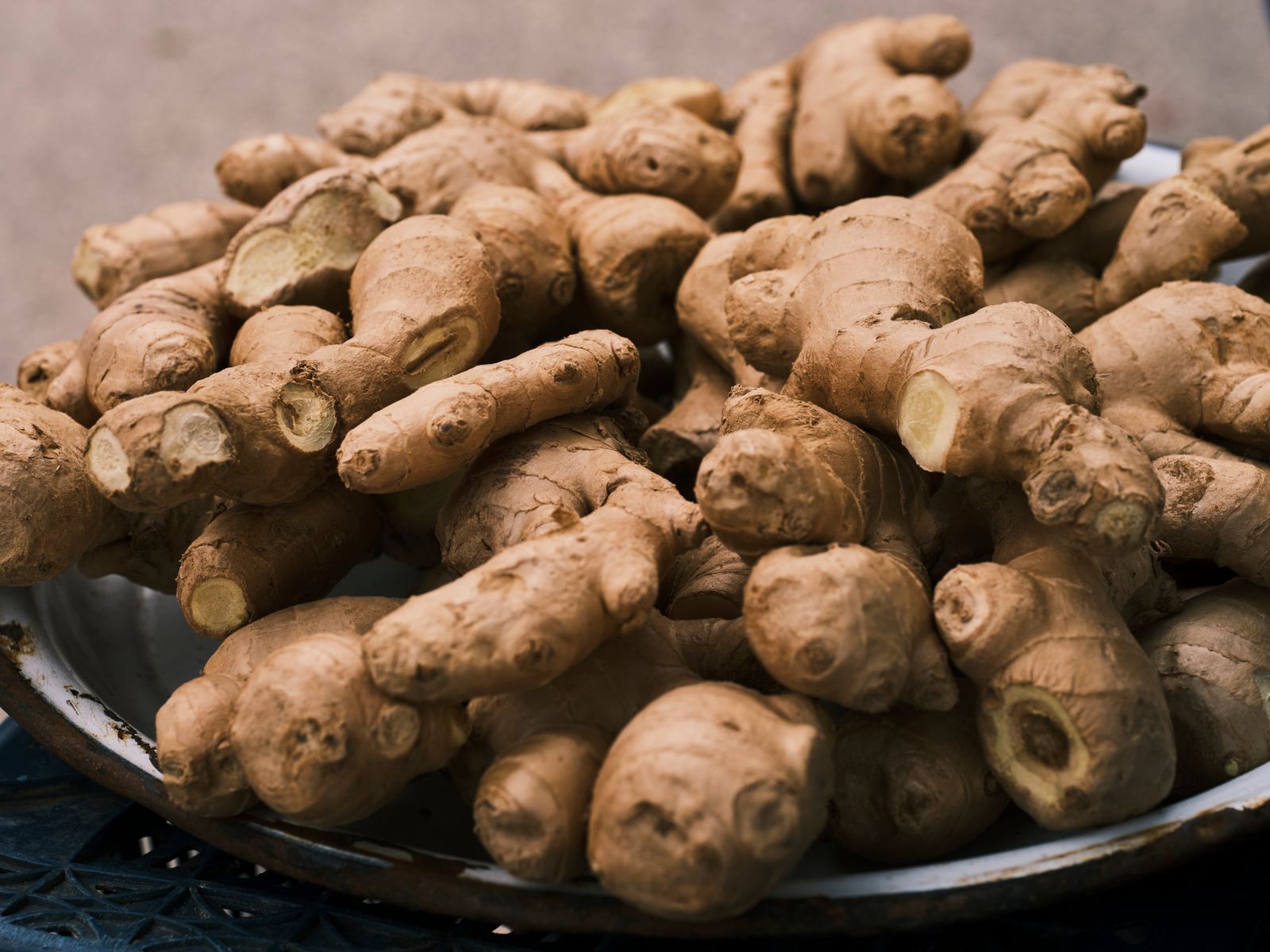
Ginger is the underground stem (rhizome) of the plant Zingiber officinale. Fresh ginger is spicy, bright and citrusy, while dried ground ginger is warmer and sweeter.
History
Ginger has been cultivated in India and China for thousands of years. It was among the first spices to travel to Europe, where it was traded across the Roman Empire. It later became a favorite in baking, from medieval gingerbread to the cookies we still make today.
Where it comes from
Ginger is believed to have originated in tropical Southeast Asia. India, China and Nigeria are major growers today.
Flavor and how to use it
Grate or slice fresh ginger into curries, soups, stir-fries, marinades and tea. Use ground ginger in cakes, cookies and spice blends. Ginger and garlic paste is the base of many Indian curries.
Good to know
Peel fresh ginger with the edge of a spoon, which follows the knobs better than a peeler.
Buying and storing
Keep fresh ginger unpeeled in the fridge for a few weeks, or freeze it whole and grate it from frozen. Store ground ginger in an airtight jar and use it within about a year.
Recipes that use it
- Aloo Gobi (Potato and Cauliflower Curry)
- Classic Gingerbread Cookies
- Easy Egg Drop Soup
- Kung Pao Chicken
- Maafe (West African Peanut Stew)
- Masala Chai (Indian Spiced Milk Tea)
- Misir Wat (Ethiopian Red Lentil Stew)
- Moroccan Chicken Tagine with Olives and Lemon
- Palak Paneer (Spinach and Paneer Curry)
- Rava Upma (South Indian Semolina Breakfast)
In kitchens and traditions
Ginger, the rhizome of Zingiber officinale, has been cultivated in South and Southeast Asia and China for thousands of years. It traveled to the Mediterranean through trade routes, and Romans imported it. In the Middle Ages in Europe, ginger was among the most common spices. Gingerbread, in many countries, is a descendant of this tradition.
In India, fresh ginger is ground with garlic as the base of countless gravies, and dried ginger (sonth) is used in digestive teas and chutneys. In China, ginger is used to flavor stir-fries and soups and to temper fish. In Japan, pickled ginger (gari) is served with sushi. In West Africa and the Caribbean, ginger beer and sorrel drinks are common.
Good pairings and ideas
- Grate fresh ginger into tea with lemon and honey.
- Mince into stir-fries, soups and marinades.
- Pickle thin slices in vinegar and sugar.
- Use dried ground ginger in cakes, cookies and spice blends.
Frequently asked questions
Can I substitute ground ginger for fresh?
Roughly 1/4 teaspoon ground for 1 tablespoon fresh, though the flavor differs.
Do I need to peel ginger?
Young ginger need not be peeled. Mature ginger has a tougher skin that can be scraped off with a spoon.
How should I store it?
Keep fresh ginger in the refrigerator or freezer, and grate it frozen.
This page is general information, not medical advice. If you have allergies, a medical condition or are pregnant, check with a qualified professional before using any food in larger amounts than usual.
Photo credit: Engin Akyurt on Pexels.