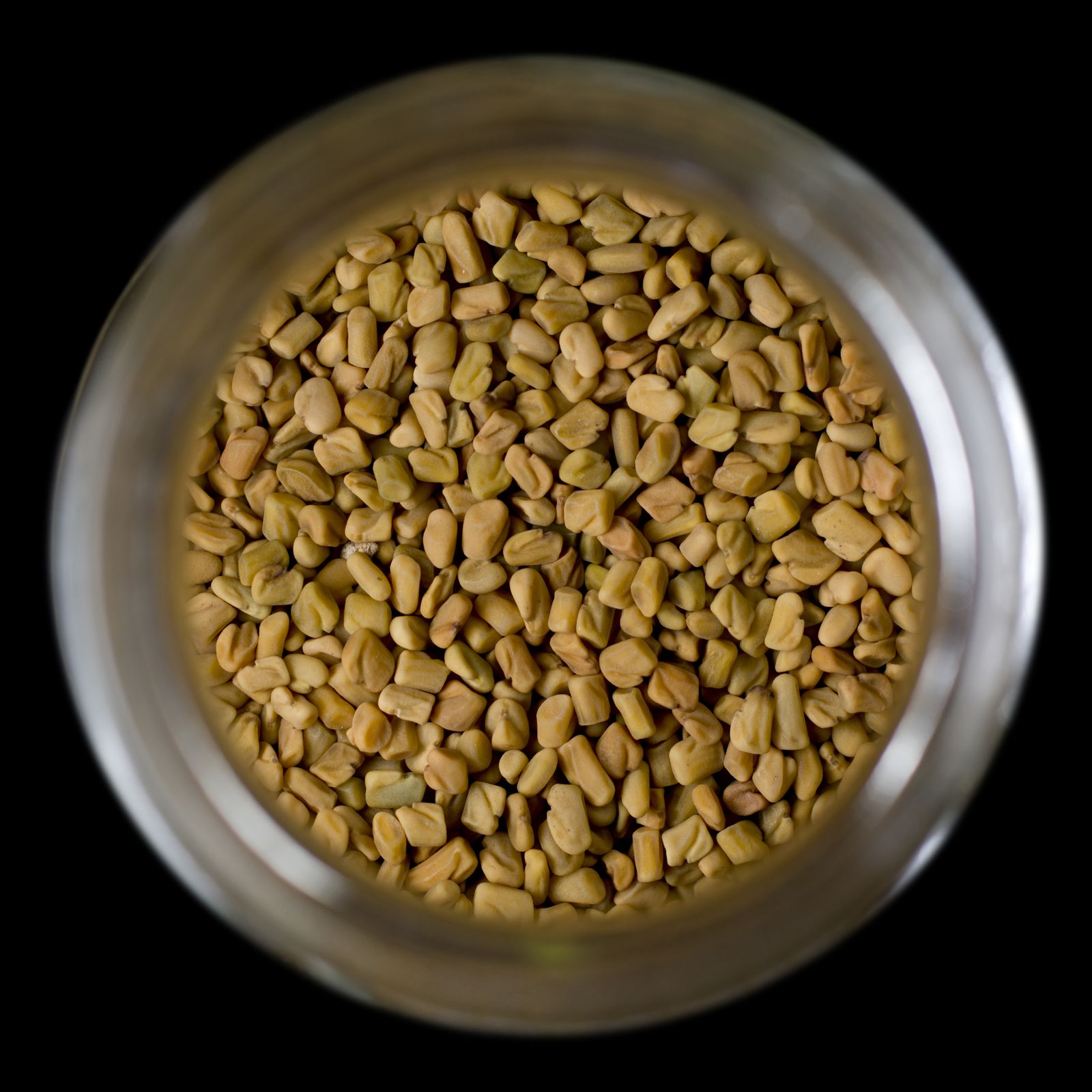
Fenugreek (Hindi: Methi) is trigonella foenum-graecum, a plant in the legume family. The seeds are used as a spice and the leaves as a herb (fresh methi) or dried (kasuri methi).
Origin and history
Native to the Mediterranean and southwest Asia. It has been grown in India for centuries, and Rajasthan is the main growing region. It was also used in ancient Egypt.
Flavor and how to use it
The seeds are bitter and slightly sweet, with a maple-like aroma. Use them in small amounts, since too much turns a dish bitter. Kasuri methi, crushed over curries at the end (as in paneer butter masala), adds a savory, aromatic finish.
Buying and storing
Store seeds and dried leaves airtight, away from moisture and light.
More history and where it is used
Fenugreek is one of the oldest cultivated plants, grown in the Mediterranean and Near East for thousands of years. Seeds were found in the tomb of the Egyptian pharaoh Tutankhamun, and the plant has been used for food and traditional medicine in India, Egypt and Ethiopia.
Where it is used: India (seeds in pickles, spice blends and dals; leaves, called methi, in parathas and curries; dried leaves, kasuri methi, in butter chicken and paneer dishes), Ethiopia (berbere), Iran (ghormeh sabzi), Egypt (bread and tea) and Yemen (hilbeh).
Varieties and types
Seeds are small, golden and bitter. Fresh leaves are mild and slightly bitter. Dried leaves (kasuri methi) are aromatic and used as a finishing spice.
Cooking tips
Use seeds sparingly, since they can turn bitter if over-fried. Dry roast lightly or temper briefly in oil. Crush dried leaves between your palms and add them at the end of cooking.
Substitutes
Fenugreek is hard to replace. A little celery leaf or mustard seed with a pinch of brown sugar gives a rough, different flavor.
Recipes on this site that use it
In kitchens and traditions
Fenugreek is part of the Indian panch phoron and sambar powder blends and is used in Ethiopian berbere. In Egypt, hulba tea made from fenugreek seeds is a traditional drink, and in Georgia (the country), blue fenugreek is a key ingredient in spice mixes such as khmeli-suneli. In India, methi thepla (flatbread with fenugreek leaves) is a favorite for travel and picnics.
Good pairings and ideas
- Add a pinch of seeds to pickles and chutneys.
- Stir crushed kasuri methi into tomato gravies and butter-based sauces.
- Mix fresh methi leaves into paratha dough with salt and ajwain.
- Sprout seeds for a bitter, crunchy salad addition.
Frequently asked questions
Why is fenugreek bitter?
Seeds contain compounds that are bitter, especially when over-roasted. Light toasting or brief tempering reduces bitterness.
Is fenugreek safe in pregnancy?
Large amounts are often not recommended in pregnancy. Ask a healthcare professional if you are unsure.
What does it smell like?
Fenugreek smells like maple syrup, which comes from a compound called sotolon.
This page is general information, not medical advice. If you have allergies, a medical condition or are pregnant, check with a qualified professional before using any food in larger amounts than usual.
Recipes that use it
Photo credit: Marek Ruczaj on Pexels.