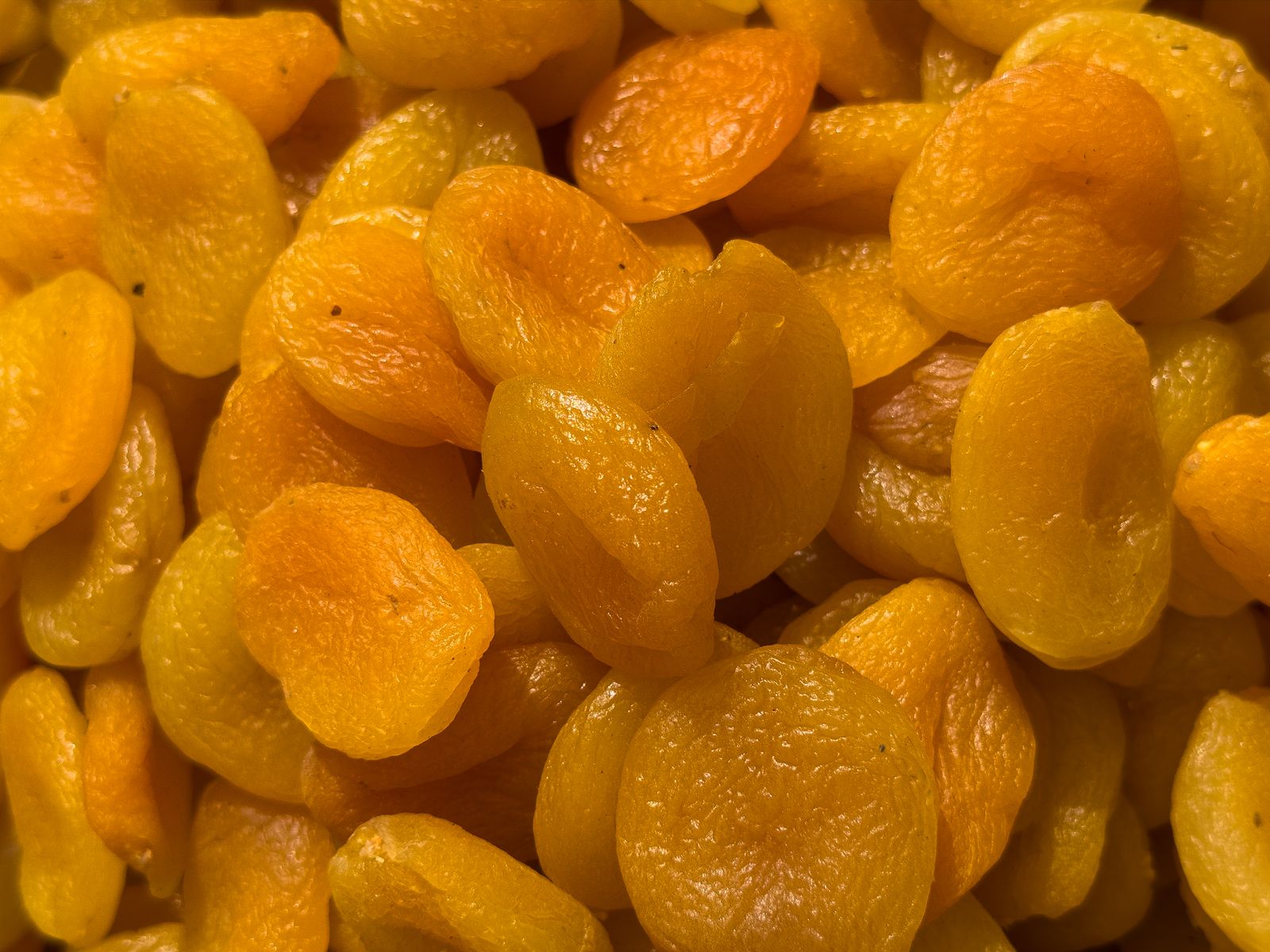
Dried apricots are chewy, tangy-sweet and rich in color. The bright orange kind is usually treated with sulfur dioxide, while untreated apricots are darker brown.
History
Apricots (Prunus armeniaca) were grown in Central Asia and western China for thousands of years and traveled west along the Silk Road to Persia and the Mediterranean. Drying kept the fruit for the long journey.
Where it comes from
Apricots are native to Central Asia and northern China. Turkey, particularly the Malatya region, is the world’s largest producer of dried apricots, with Iran and Uzbekistan also major growers.
Flavor and how to use it
Eat them as a snack, or chop them into granola, baked goods, rice and couscous dishes, stews and tagines. Poach them in syrup or tea for a simple dessert.
Good to know
Orange dried apricots often contain sulfites. If you are sensitive to sulfites, look for unsulfured (brown) apricots.
Buying and storing
Keep in an airtight container in a cool place, or in the fridge. They keep for several months.
In kitchens and traditions
Apricots probably originated in Central Asia or China and spread to Persia, Armenia and the Mediterranean. Turkey is the world’s largest producer of dried apricots, especially from Malatya. In Central Asia and the Himalayas, apricots are a staple, and in Hunza, they are dried on rooftops.
Dried apricots are used in Moroccan tagines, Persian rice, Indian khubani ka meetha (Hyderabadi apricot dessert), Austrian pastries and Russian compotes. Apricot kernels should not be eaten in quantity.
Good pairings and ideas
- Simmer in syrup with cardamom.
- Chop into couscous, rice and stews.
- Blend into jam or leather.
- Pair with almonds and cheese.
Frequently asked questions
Why are some dried apricots orange and others brown?
Orange ones are treated with sulfur dioxide to keep their color. Brown, unsulfured apricots are darker and chewier.
Are apricot kernels edible?
Raw bitter kernels contain compounds that can release cyanide, and should not be eaten in quantity.
How do I rehydrate them?
Soak in warm water or tea for 20 to 30 minutes.
This page is general information, not medical advice. If you have allergies, a medical condition or are pregnant, check with a qualified professional before using any food in larger amounts than usual.
Photo credit: Engin Akyurt on Pexels.