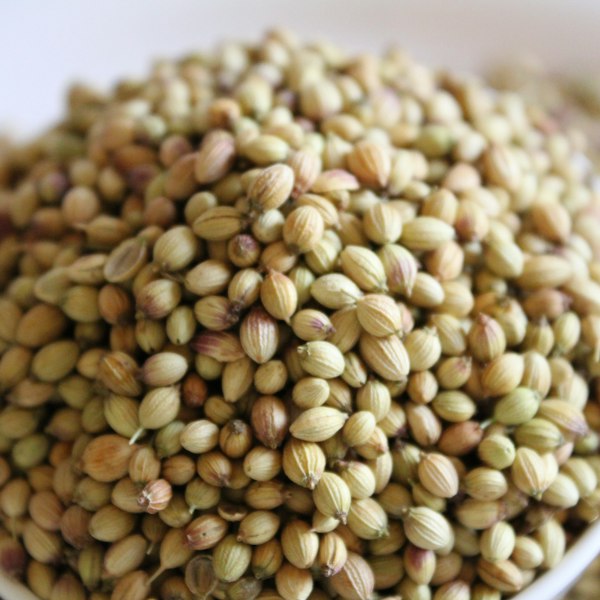
Coriander (Hindi: Dhania) is coriandrum sativum. The seeds are the spice (coriander); the fresh leaves are the herb known as cilantro in the US.
Origin and history
Native to southern Europe, North Africa and southwest Asia. Seeds have been found in ancient Egyptian tombs. It has been grown in India for thousands of years and is one of the most widely used spices in Indian cooking.
Flavor and how to use it
Citrusy, mild and slightly sweet. Ground coriander thickens and rounds out curries and is a base for most masala blends. The fresh leaves taste quite different, so they are not a substitute for each other.
Buying and storing
Buy whole seeds when you can and grind them fresh. Ground coriander loses flavor within months.
More history and where it is used
Coriander is one of the oldest herbs and spices, with seeds found in ancient Egyptian tombs and mentioned in Sanskrit and biblical texts. The same plant gives us two ingredients: the seeds, which are warm and citrusy, and the fresh leaves, called cilantro in North America, which taste bright and herbal. Some people find the leaves taste like soap, a trait linked to genetics.
Where it is used: India (ground coriander is a base of curry powders and masalas), the Middle East (dukkah, falafel), Mexico (salsas and pickles), Thailand (roots, seeds and leaves in curry pastes), Morocco, Ethiopia and Europe, where seeds flavor sausages, pickles and some beers.
Varieties and types
Whole seeds, ground coriander, and fresh leaves each behave differently. Indian cooks often choose seeds that are green and fragrant rather than dull brown.
Cooking tips
Toast whole seeds lightly and grind them for a fresh, citrus-like flavor. Add ground coriander early with onions, and finish dishes with fresh leaves for brightness.
Substitutes
Ground cumin and a little lemon zest can approximate the seeds. Parsley with lime juice can stand in for the fresh leaves.
Recipes on this site that use it
In kitchens and traditions
Coriander seeds feature in Indian pickle masalas, German and Belgian beers, South African boerewors sausage and Middle Eastern spice mixes such as dukkah. The fresh leaves, called cilantro or coriander leaves, finish dishes from Mexican salsa to Thai curry and Indian chutneys. In many places, the whole plant is used: leaves, stems, roots and seeds.
Good pairings and ideas
- Crush seeds lightly and add to pickling brines.
- Blend fresh leaves, green chili, lime and salt into a quick chutney.
- Use coriander roots in Thai-style pastes.
- Mix ground seeds with cumin and turmeric as a base for vegetable curries.
Frequently asked questions
Why does cilantro taste like soap to some people?
Some people carry a genetic variation that makes them more sensitive to aldehyde compounds in the leaves. The seeds taste different, and many people who dislike the leaves still enjoy the seeds.
How do I keep fresh leaves from wilting?
Trim the stems, stand the bunch in a jar of water, cover loosely with a bag and refrigerate.
Can I freeze fresh coriander?
Yes. Chop and freeze in oil or water in ice cube trays.
This page is general information, not medical advice. If you have allergies, a medical condition or are pregnant, check with a qualified professional before using any food in larger amounts than usual.
Recipes that use it
- Aloo Gobi (Potato and Cauliflower Curry)
- Aloo Paratha (Potato Stuffed Flatbread)
- Crispy Falafel
- Easy Chana Masala
- Easy Home-Style Chicken Curry
- Indian Egg Curry
- Matar Paneer
- Palak Paneer (Spinach and Paneer Curry)
- Paneer Butter Masala
- Rajma Masala (Kidney Bean Curry)
Photo credit: Mockupo on Unsplash.