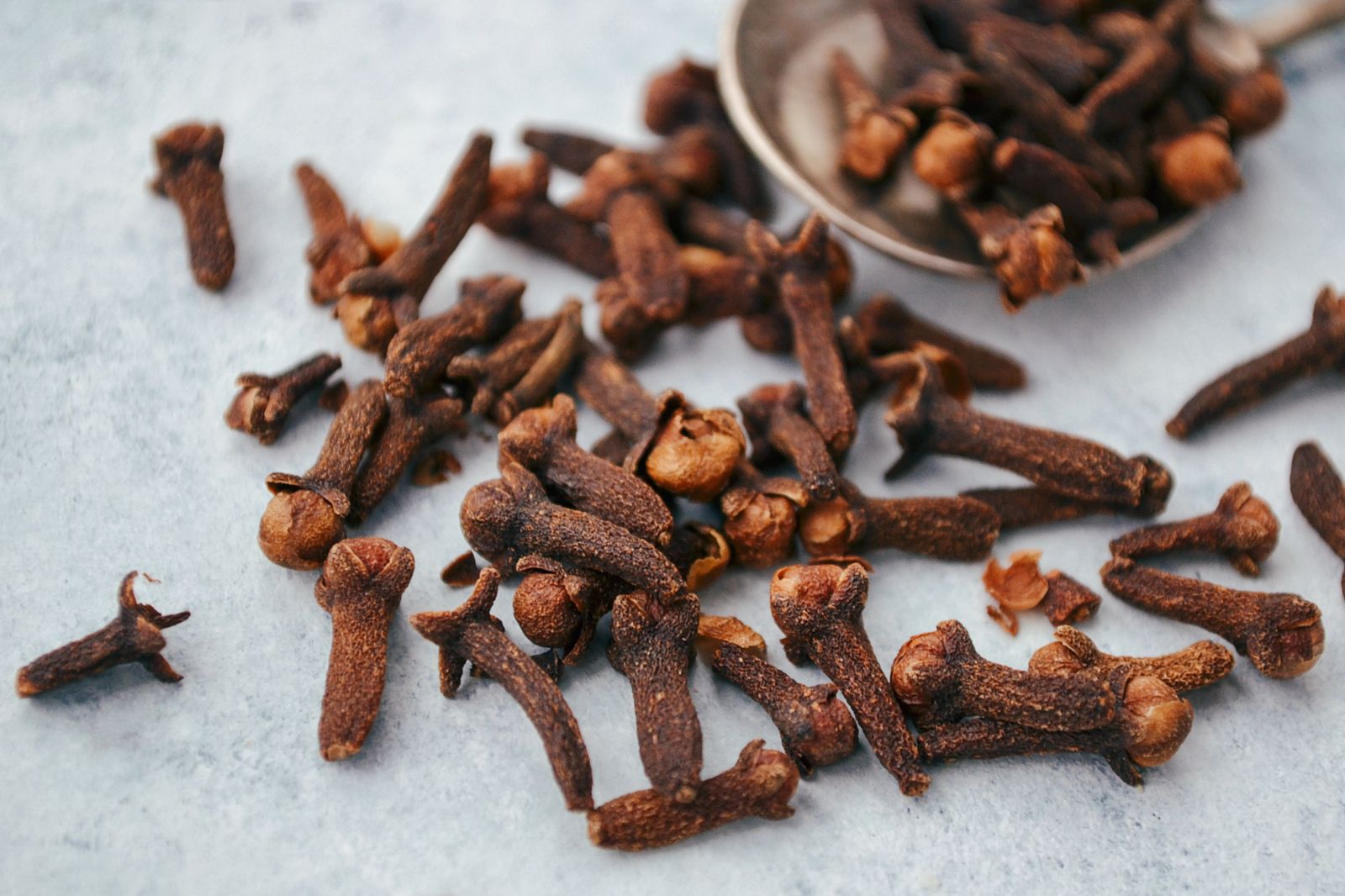
Cloves (Hindi: Laung) is the dried, unopened flower buds of Syzygium aromaticum, an evergreen tree.
Origin and history
Native to the Maluku Islands in Indonesia, once known as the Spice Islands. Cloves were traded to India, the Middle East and Europe more than 2,000 years ago, and archaeologists have found them in a Syrian site dated to about 1700 BCE. They were once among the world’s most valuable spices.
Flavor and how to use it
Intensely warm, sweet and slightly numbing. Use sparingly: 2 to 4 whole cloves are enough for a pot of rice or curry. They appear in garam masala, biryani, pulao and chai. Remove them before eating if you don’t like biting into one.
Buying and storing
Keep whole in an airtight jar. Cloves are strong, so a small amount lasts a long time.
More history and where it is used
Cloves are the dried flower buds of an evergreen tree native to the Maluku Islands in Indonesia, once the only source in the world. They were traded to China, India, the Middle East and Rome, and were among the spices that European powers fought to control.
Where it is used: India (garam masala, biryani, pulao, chai), Indonesia (kretek cigarettes and cooking), Mexico (mole and pickles), Germany and Northern Europe (Christmas baking and mulled wine), France (studding an onion in stocks) and the Middle East (rice and stews). Clove oil is also used in dentistry and traditional medicine.
Varieties and types
Whole cloves are most common. Ground cloves are stronger and lose flavor quickly. Zanzibar and Madagascar are major producers today.
Cooking tips
Use sparingly, since cloves are powerful and can overwhelm a dish. Remove whole cloves before serving, or warn guests. Studding a bay-leaf-and-onion with cloves is a classic technique for stocks.
Substitutes
Allspice or a pinch of nutmeg and cinnamon can stand in for ground cloves.
Recipes on this site that use it
In kitchens and traditions
In Indonesia, clove cigarettes (kreteks) were once a major use of the crop. In Germany and Austria, cloves are part of Christmas gingerbread and Glühwein (mulled wine). In India, a clove is often tucked into a paan (betel leaf packet) and used in the tempering of rice dishes. In some places, clove oil is used for toothache relief as a traditional remedy.
Good pairings and ideas
- Stud an orange or onion with cloves for stocks or mulled drinks.
- Add 2 to 3 cloves to rice with cardamom and a cinnamon stick.
- Use ground cloves in small quantities in gingerbread and pumpkin pie.
- Simmer in tea with ginger and cinnamon.
Frequently asked questions
Are cloves very strong?
Yes. A little goes a long way, and they can numb the tongue if you bite into one.
Can I eat whole cloves?
They are edible but hard and intense, so most cooks remove them before serving.
Is clove oil safe to swallow?
No. Clove oil is concentrated and should not be swallowed. Ask a healthcare professional about any medical use.
This page is general information, not medical advice. If you have allergies, a medical condition or are pregnant, check with a qualified professional before using any food in larger amounts than usual.
Recipes that use it
Photo credit: Irina P on Pexels.