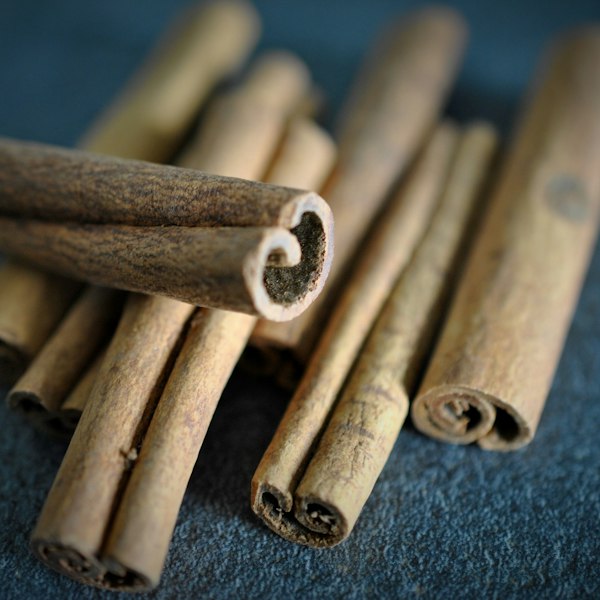
Cinnamon (Hindi: Dalchini) is the dried inner bark of trees in the Cinnamomum genus. True cinnamon (Cinnamomum verum) and the more common cassia are different species.
Origin and history
True cinnamon comes from Sri Lanka and southern India. It was one of the most valuable goods in the ancient spice trade, reaching Egypt and Rome. Cassia comes mainly from China and Vietnam. Many shops in the US and India sell cassia and simply call it cinnamon.
Flavor and how to use it
Sweet and warm. True cinnamon is delicate and layered; cassia is stronger and a little harsher. In Indian cooking a stick is added whole to rice, curries and chai, and ground cinnamon goes into garam masala and baking.
Buying and storing
Sticks keep their flavor far longer than powder. Store airtight in a cool, dark place.
More history and where it is used
True cinnamon (Cinnamomum verum) comes from Sri Lanka and is sold in thin, papery quills, while cassia, sold as “cinnamon” in many countries, is thicker, darker and stronger. Both are the dried inner bark of trees. Cinnamon was prized in ancient Egypt, Rome and medieval Europe, and its trade drove exploration and conflict.
Where it is used: Sri Lanka, India (garam masala and biryani), Mexico (chocolate and horchata, using Ceylon cinnamon), the Middle East (savory stews and rice), the United States (cinnamon rolls and apple pie), Sweden (kanelbullar) and Morocco (tagines and bastilla).
Varieties and types
Ceylon (true) cinnamon is delicate and sweet. Cassia from Indonesia, China and Vietnam is spicy and bold. Sticks and ground forms are both sold.
Cooking tips
Use sticks in simmered dishes, drinks and rice, and remove them before serving. Use ground cinnamon in baking. Cassia contains coumarin, which in large amounts can be harmful, so avoid very heavy daily use.
Substitutes
Allspice or nutmeg, in small amounts, can stand in for cinnamon in baking.
Recipes on this site that use it
- Masala Chai (Indian Spiced Milk Tea)
- Classic Gingerbread Cookies
- Moroccan Chicken Tagine with Olives and Lemon
- Easy Homemade Cranberry Sauce
In kitchens and traditions
In Sri Lanka, cinnamon is a national treasure, and its quills are rolled by hand. In Mexico, canela is used in chocolate and in drinks such as horchata. In Sweden, October 4 is Cinnamon Bun Day (Kanelbullens dag). In the Middle East, cinnamon seasons both sweet and savory dishes, such as lamb stews and rice.
Good pairings and ideas
- Simmer a stick in rice, oatmeal or tea.
- Dust over baked apples, bananas or roasted sweet potatoes.
- Use in savory rubs for lamb or chicken with cumin and paprika.
- Stir into coffee or hot milk.
Frequently asked questions
Is cassia the same as cinnamon?
They are related, both from the Cinnamomum genus, but cassia is stronger and cheaper. Most “cinnamon” in the United States is cassia.
Why do some recipes warn about cassia?
Cassia contains more coumarin than Ceylon cinnamon, and large amounts over time are not recommended.
How do I store cinnamon?
Keep sticks and ground cinnamon in airtight jars away from heat and light.
This page is general information, not medical advice. If you have allergies, a medical condition or are pregnant, check with a qualified professional before using any food in larger amounts than usual.
Recipes that use it
- Chicken Biryani
- Chicken Shawarma
- Classic Gingerbread Cookies
- Easy Homemade Cranberry Sauce
- Easy Vegetable Pulao
- Jamaican Jerk Chicken
- Masala Chai (Indian Spiced Milk Tea)
- Moist Banana Bread
- Moroccan Chicken Tagine with Olives and Lemon
Photo credit: Neil P-A on Unsplash.