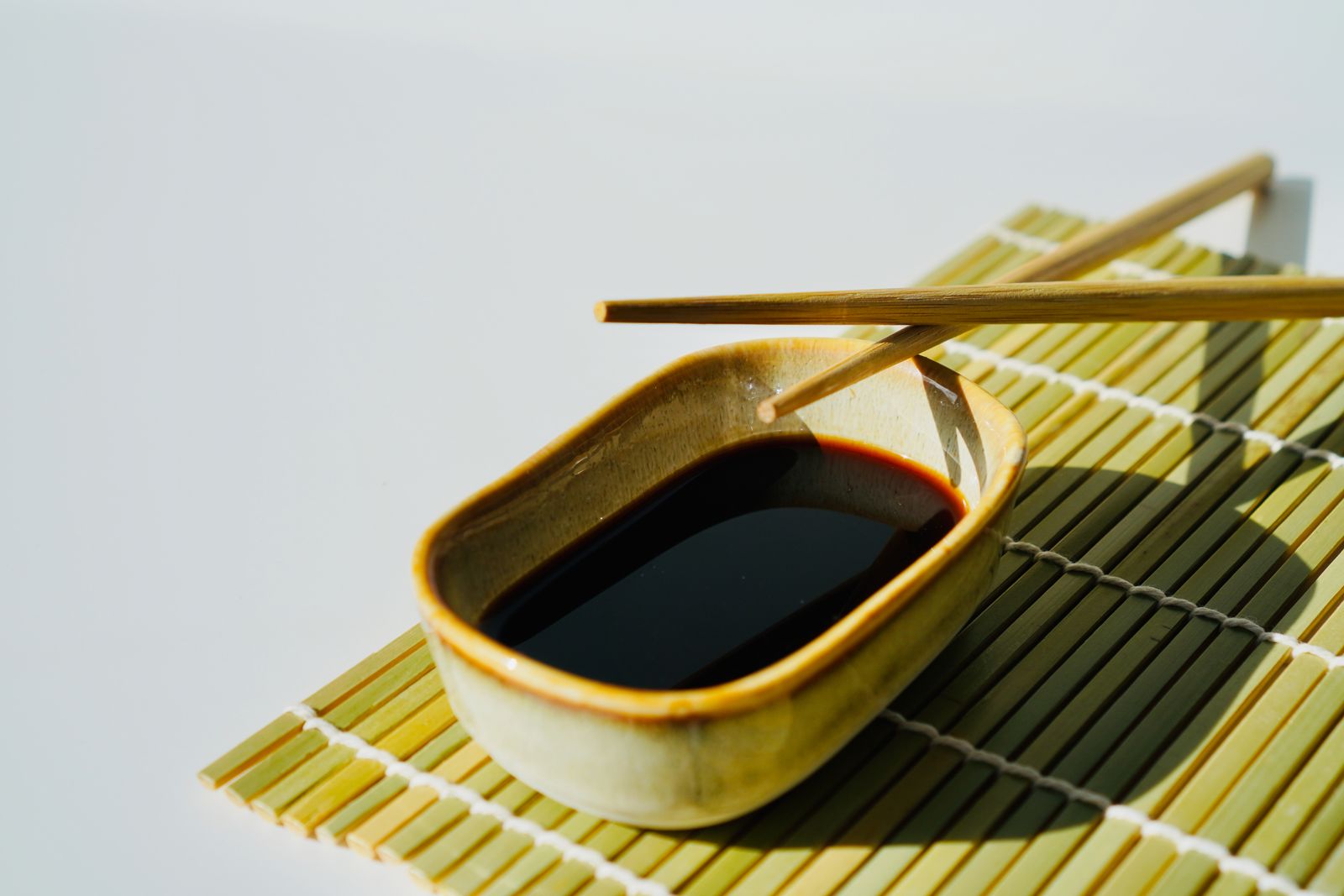
Soy sauce is a salty, savory fermented sauce made from soybeans. It is one of the most important seasonings in East and Southeast Asian cooking.
- Made from
- Soybeans, wheat, salt, water
- Process
- Fermentation and aging
- Flavor
- Salty, umami, slightly sweet
- Origin
- China
- Contains
- Often gluten and soy
History
Soy sauce developed in China more than two thousand years ago from fermented soybean pastes. It spread to Korea and Japan in the following centuries, where distinct styles developed. Europeans encountered it by the seventeenth century.
Where it comes from
China, with major traditions also in Japan, Korea, Indonesia and Thailand.
Where it is used most
Stir fries, marinades, dipping sauces, teriyaki, fried rice, noodles and soups throughout East and Southeast Asia.
Varieties and types
Light soy is salty and used for seasoning. Dark soy is thicker and sweeter for color. Japanese shoyu varies in style. Tamari is typically wheat-free or low in wheat. Low-sodium versions exist.
Flavor and how to use it
Add in small amounts and taste before adding more salt. Stirring it into hot fried rice or glazes caramelizes its sugars.
Buying, storing and substitutes
Store in a cool cupboard; refrigerate after opening for best flavor on larger bottles. Tamari or coconut aminos can substitute for people avoiding wheat.
Good to know
Standard soy sauce contains soy and wheat (gluten). It is high in sodium.
Recipes that use it
- Chicken and Veggie Meal-Prep Bowls
- Chicken Teriyaki
- Chinese Tomato and Egg Stir-Fry
- Easy Egg Drop Soup
- Easy Vegetable Fried Rice
- Jamaican Jerk Chicken
- Kimchi Fried Rice
- Kung Pao Chicken
- Pad Kra Pao (Thai Basil Chicken)
- Sheet-Pan Salmon and Broccoli
- Swedish Meatballs (Köttbullar) with Cream Sauce
- Tamagoyaki (Japanese Rolled Omelette)
- Vegetable Bibimbap
Photo credit: Ivan Vi on Pexels.