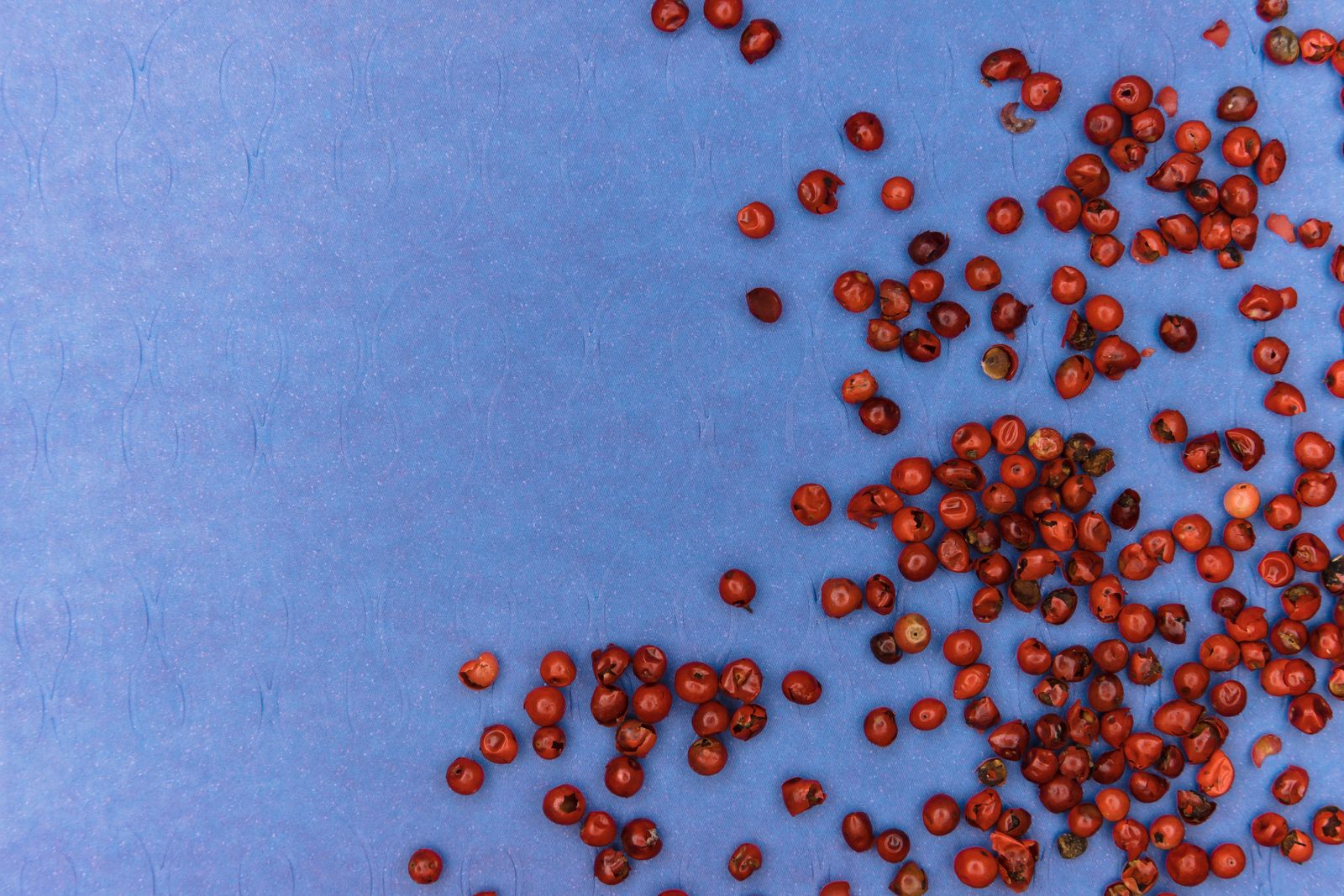
Sichuan peppercorns are the dried husks of a prickly ash tree. They are not related to black pepper or chilies, and they create a tingling, numbing sensation on the tongue.
- Botanical name
- Zanthoxylum species
- Part used
- Dried husks
- Flavor
- Citrusy, floral, numbing
- Sensation
- Tingly (called má in Chinese)
- Related
- Not a true pepper
History
Sichuan pepper has been used in Chinese cooking and medicine for thousands of years, long before chilies arrived from the Americas. It was the main source of heat in Sichuan food until chilies were introduced in the sixteenth to seventeenth centuries, after which the two combined to make the region’s má là flavor.
Where it comes from
Sichuan province and surrounding areas of China, with relatives in Nepal, Bhutan and Japan.
Where it is used most
Mapo tofu, kung pao chicken and hot pot in Sichuan; also in spice mixes such as five-spice powder.
Varieties and types
Red and green Sichuan peppercorns differ in color and aroma. Japanese sansho is a related spice.
Flavor and how to use it
Toast the whole peppercorns in a dry pan until fragrant, then grind and sift out the hard black seeds. Use a small amount.
Buying, storing and substitutes
Keep in a sealed jar away from light. Black pepper with a little lemon zest can approximate the aroma, but not the numbing effect.
Recipes that use it
Photo credit: Markus Winkler on Pexels.