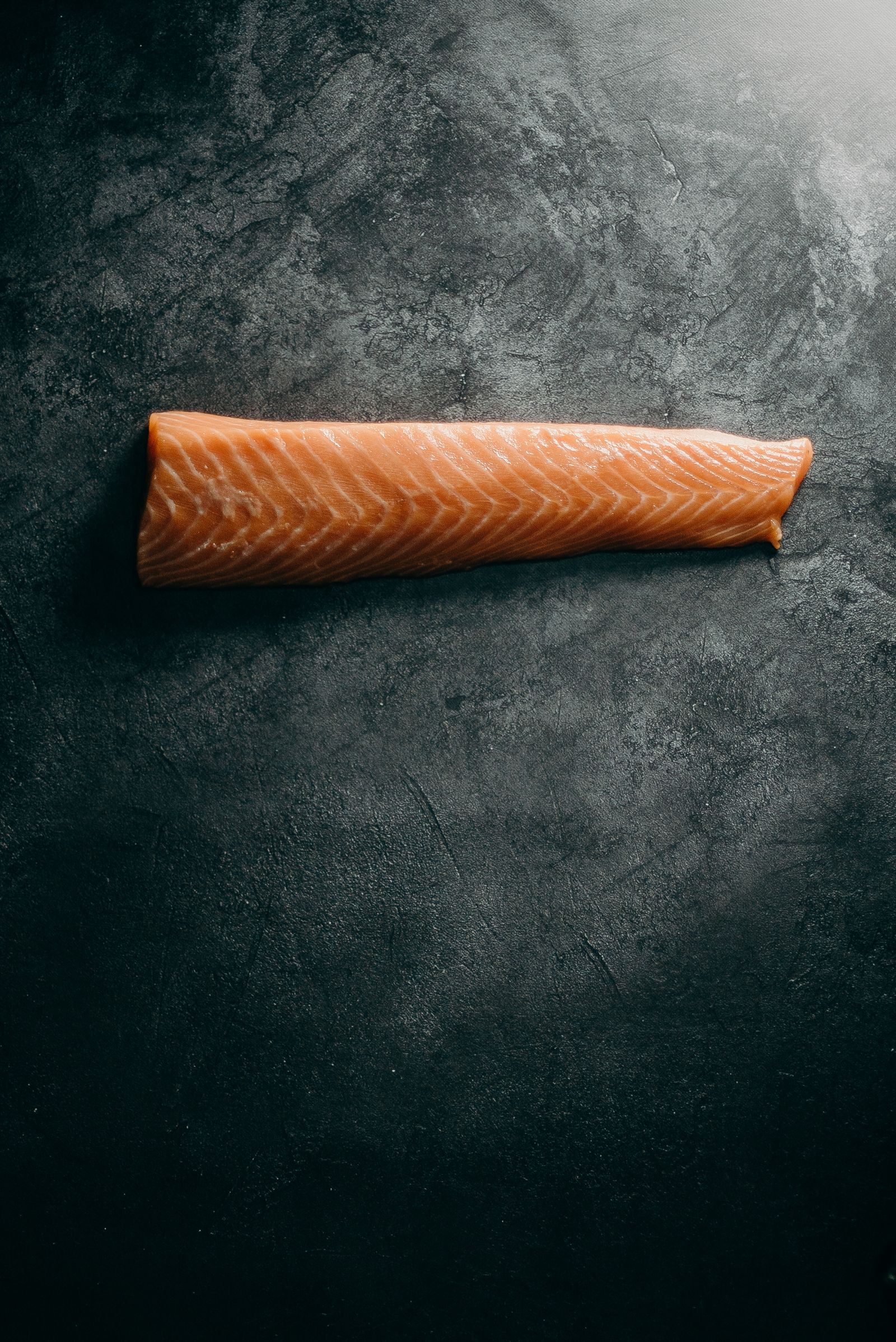
Salmon is a rich, orange-pink fish prized for its tender flesh and mild, buttery flavor. It cooks quickly and suits roasting, grilling and pan-searing.
- Species
- Atlantic (Salmo salar) and several Pacific species
- Flesh
- Pink to orange, oily
- Flavor
- Mild, rich
- Nutrients
- Source of omega-3 fats and protein
- Safe internal temperature
- 63 C / 145 F (as advised by food safety agencies)
History
Salmon has been caught and eaten for thousands of years, especially by peoples of the North Atlantic and North Pacific, who smoked and dried it. Farming of Atlantic salmon began in Norway in the twentieth century and changed its availability worldwide.
Where it comes from
Cold waters of the North Atlantic and North Pacific, and the rivers where the fish spawn. Today much salmon is farmed in Norway, Chile, Scotland and Canada.
Where it is used most
Scandinavia (gravlax, smoked salmon), Japan (sushi, grilled shake), North America (planked and baked salmon) and Britain (poached salmon).
Varieties and types
Atlantic salmon is usually farmed. Pacific kinds include king (Chinook), sockeye, coho, pink and chum, which differ in fat and color.
Flavor and how to use it
Salmon dries out if overcooked; roast at a high heat for a short time until it just flakes. Pat dry first so it browns. Leaving the skin on helps keep fillets intact.
Buying, storing and substitutes
Keep fresh fillets in the coldest part of the refrigerator and use within a day or two, or freeze. Arctic char or trout can substitute.
Good to know
Cook fish thoroughly and follow local food-safety advice, especially for pregnant people and young children. Allergy to fish is a common allergen.
Recipes that use it
Photo credit: cottonbro studio on Pexels.