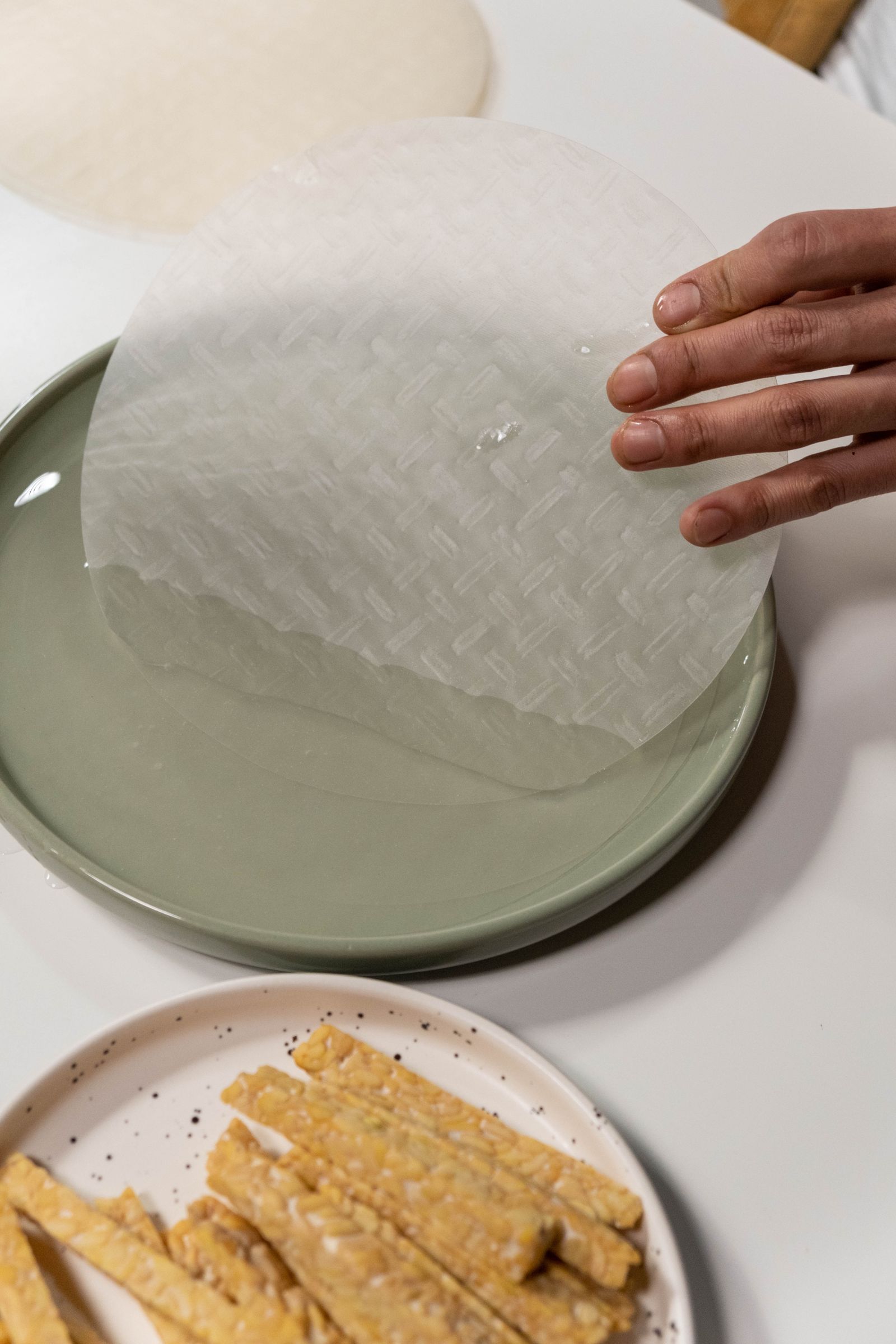
Rice paper wrappers are thin, translucent sheets made from rice flour, water and salt. Dipped briefly in water, they soften into pliable wrappers for fresh rolls.
- Made from
- Rice flour (often with tapioca starch), water, salt
- Also called
- Bánh tráng (Vietnamese)
- Form
- Dry round or square sheets
- Gluten
- Usually gluten-free (check the pack)
- Used for
- Fresh rolls and fried rolls
History
Rice paper has long been made in Vietnam by steaming a thin rice batter and drying it in the sun on bamboo racks. Bánh tráng is a staple in the country, used for rolls, snacks and street food.
Where it comes from
Vietnam, with similar wrappers made in other parts of Southeast Asia.
Where it is used most
Gỏi cuốn (fresh spring rolls) and chả giò (fried rolls) in Vietnam, and fresh rolls in restaurants across the world.
Varieties and types
Round wrappers are common for rolls; square ones are useful for neat parcels. Some contain tapioca for stretch and a glossy look.
Flavor and how to use it
Dip one sheet at a time in warm water for a few seconds, then let it finish softening on the board as you fill. Do not oversoak or it will tear and stick.
Buying, storing and substitutes
Keep dry in a sealed package in a cool place, where it lasts many months. Prepared rolls should be eaten within a day.
Recipes that use it
Photo credit: cottonbro studio on Pexels.