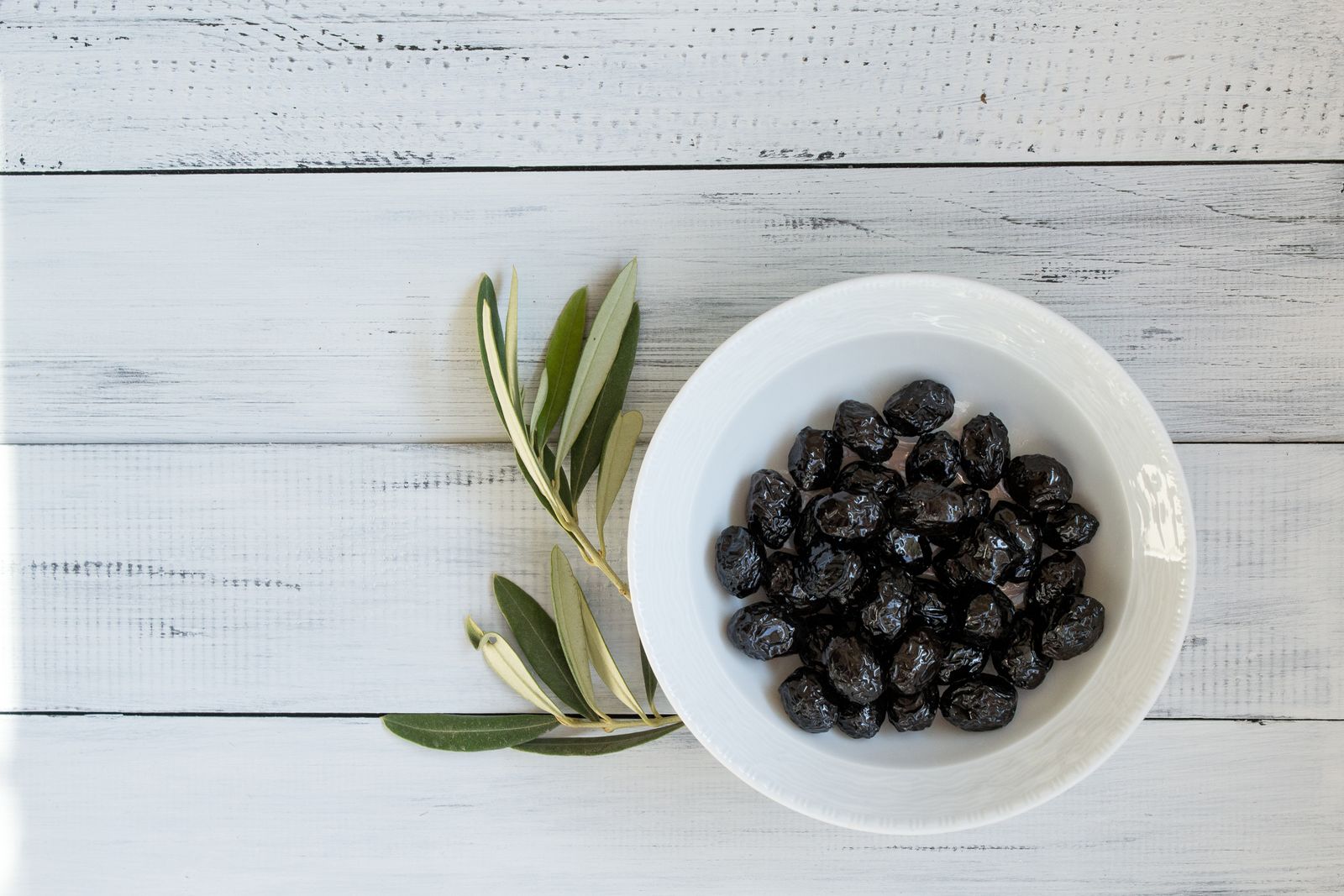
Olives are small stone fruits that are too bitter to eat fresh and become savory after curing. They give salads, pastas and breads a salty, fruity depth.
- Botanical name
- Olea europaea
- Family
- Oleaceae
- Part used
- Fruit
- Flavor
- Salty, briny, fruity, sometimes bitter
- Also yields
- Olive oil
History
Olive trees have been grown around the Mediterranean for at least six thousand years. In ancient Greece and Rome olives and olive oil were central to food, trade, lighting and ritual. The tree became a lasting symbol of peace.
Where it comes from
The eastern Mediterranean and the Levant. Today Spain, Italy, Greece, Turkey and Morocco are major producers.
Where it is used most
Olives are essential to Mediterranean cooking: Greek salad, Italian pasta and tapenade, Spanish tapas, and North African tagines.
Varieties and types
Green olives are picked unripe; black olives are fully ripe. Well-known kinds include Kalamata, Castelvetrano, Manzanilla and Niçoise. Some are cured in brine, others in salt or oil.
Flavor and how to use it
Add chopped or whole olives to salads, pizzas, pasta and stews. Taste before salting a dish because olives are salty. Rinse briefly if very briny.
Buying, storing and substitutes
Keep in their brine in the refrigerator once opened. Capers can add a similar briny note in some dishes.
Recipes that use it
Photo credit: Наталья Курт on Pexels.