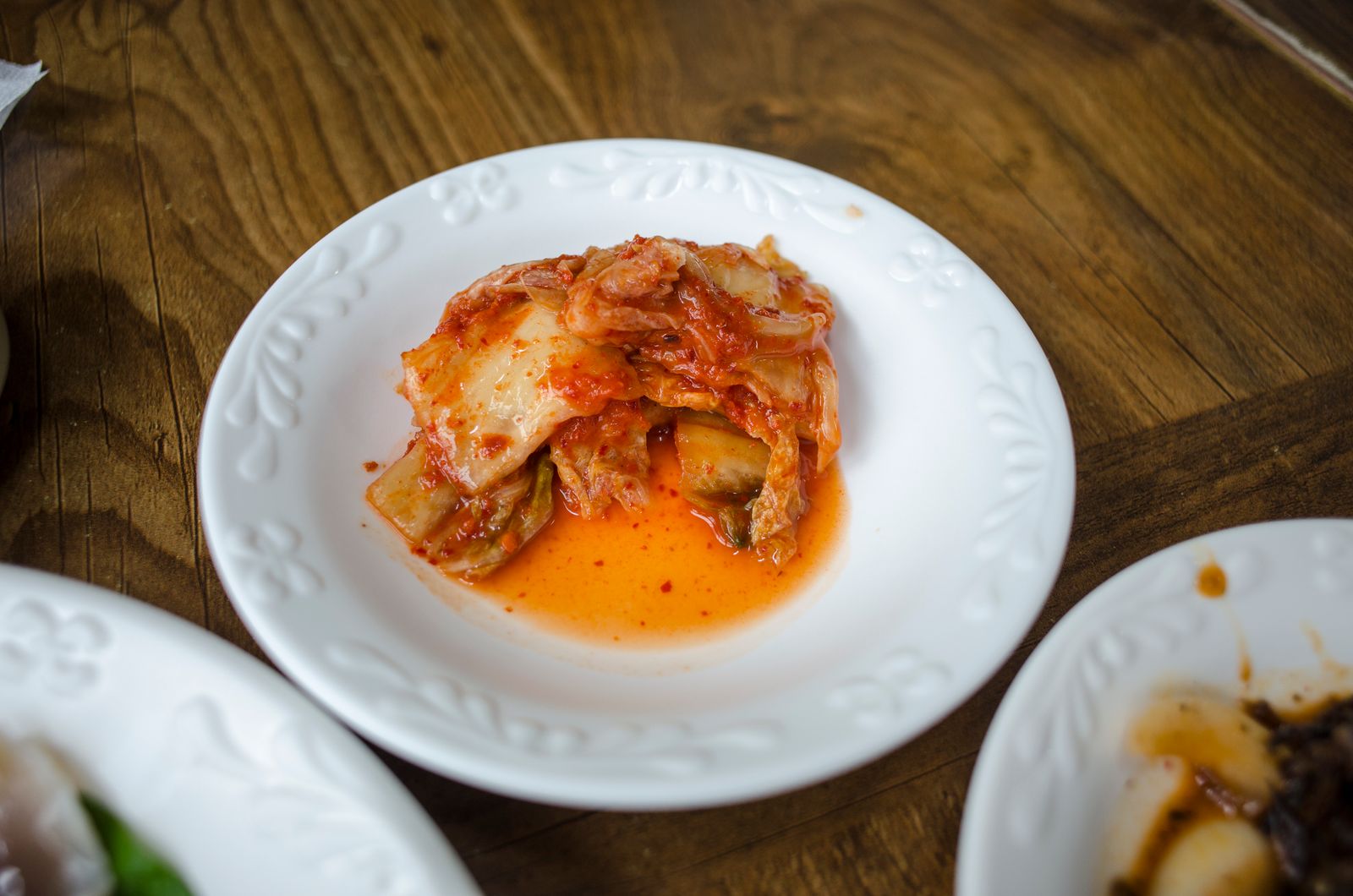
Kimchi is Korea’s fermented vegetable dish, most often made with napa cabbage, radish, garlic, ginger and chili. It is tangy, spicy and rich in savory depth.
- Main ingredients
- Napa cabbage, radish, chili, garlic, ginger, salt
- Process
- Salting and fermentation
- Flavor
- Sour, spicy, salty, savory
- Origin
- Korea
- Often contains
- Fish sauce or shrimp paste
History
Fermenting vegetables is an ancient method, and kimchi has been part of Korean food for many centuries. Chilies arrived from the Americas in the sixteenth to seventeenth centuries and gradually produced today’s red kimchi. UNESCO recognized kimjang, the tradition of making and sharing kimchi, in 2013.
Where it comes from
The Korean peninsula.
Where it is used most
Served at nearly every Korean meal, and cooked into stews (kimchi-jjigae), pancakes (kimchi-jeon) and fried rice.
Varieties and types
Baechu kimchi (cabbage), kkakdugi (cubed radish), oi sobagi (cucumber) and white water kimchi are among hundreds of kinds.
Flavor and how to use it
Older, sourer kimchi is best for cooking, since heat mellows its sharpness. Fresh kimchi is good as a side dish.
Buying, storing and substitutes
Keep refrigerated in a sealed jar; it keeps for months and keeps fermenting slowly. Open jars carefully, since gas may build up.
Good to know
Many kimchi contain fish sauce, shrimp or anchovy, so it may not be vegan or suitable for fish allergies. Check labels.
Recipes that use it
Photo credit: makafood on Pexels.