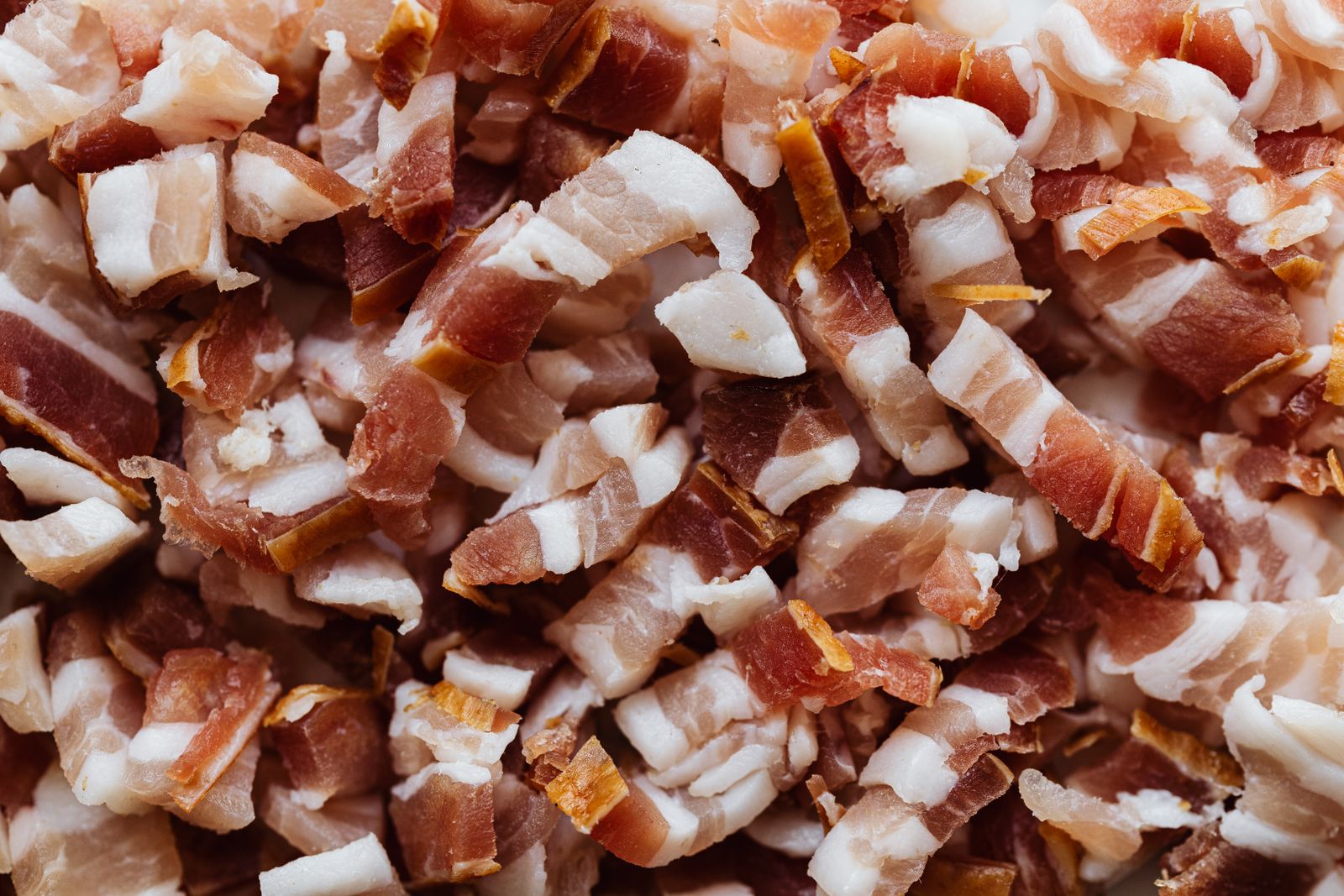
Guanciale is an Italian cured meat made from pork jowl. It melts into silky fat and crisp pieces, the traditional base of carbonara and amatriciana.
- Made from
- Pork jowl (cheek)
- Cure
- Salt, pepper and herbs, air-dried
- Origin
- Central Italy (Lazio, Umbria)
- Flavor
- Rich, savory, peppery
- Used in
- Carbonara, amatriciana, gricia
History
Curing pork cheek is an old Italian farm tradition for preserving meat. Guanciale became tied to Roman pasta dishes, especially carbonara, which was documented in the twentieth century.
Where it comes from
Central Italy, in Lazio around Rome.
Where it is used most
Roman pastas such as carbonara, amatriciana and gricia. It is not widely used outside Italy.
Varieties and types
Guanciale is richer and fattier than pancetta, which is cured pork belly. Pancetta or unsmoked bacon are common substitutes.
Flavor and how to use it
Cut into small strips and cook slowly in a pan so the fat renders and the pieces crisp. The rendered fat flavors the pasta.
Buying, storing and substitutes
Keep wrapped in the refrigerator; whole pieces keep for weeks. Check the label for sulfites and other additives.
Good to know
Contains pork. It is not suitable for people who avoid pork.
Recipes that use it
Photo credit: Kaboompics.com on Pexels.