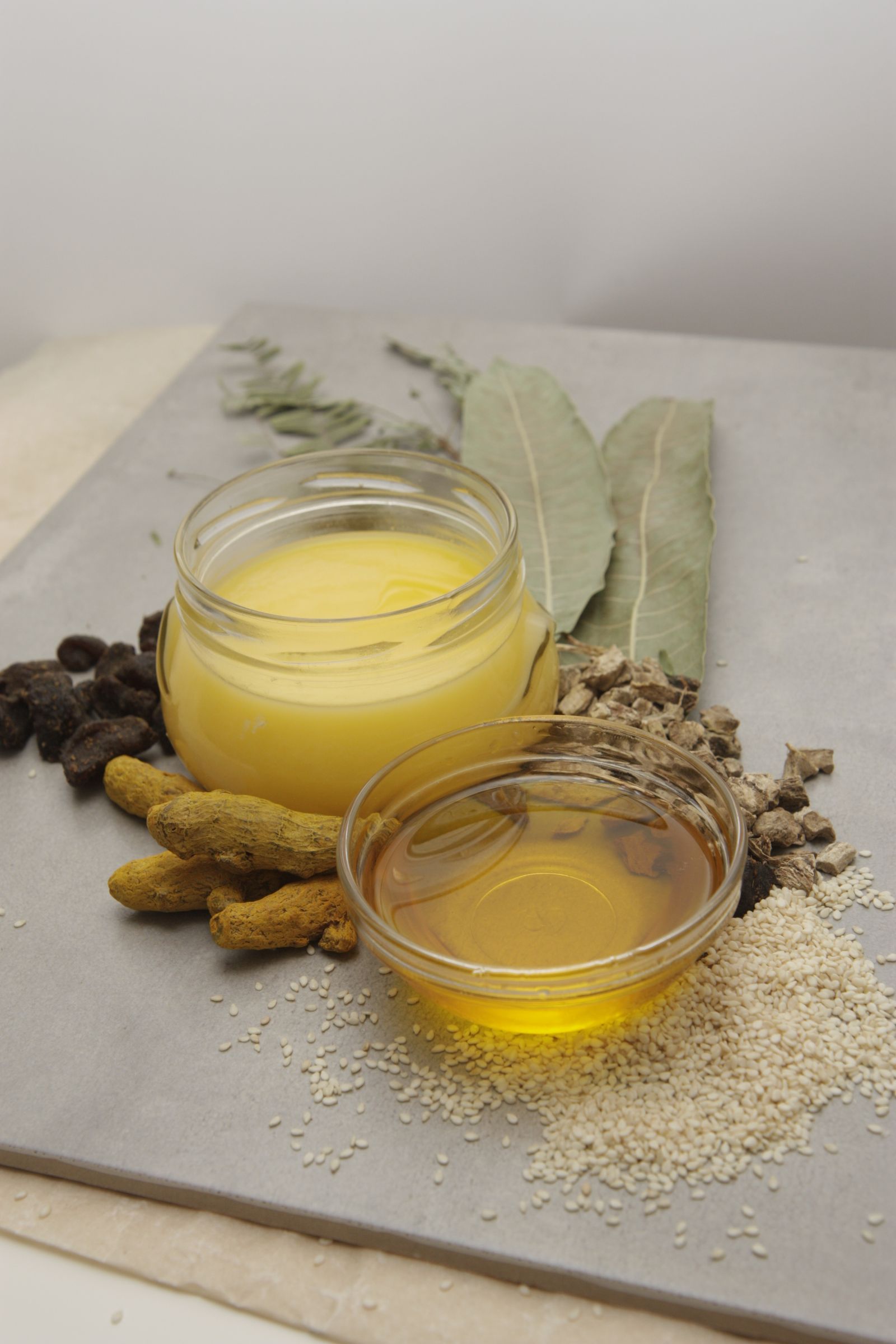
Ghee is butter that has been simmered until the water evaporates and the milk solids are strained off, leaving pure, golden butterfat with a nutty aroma.
- Made from
- Butter (usually cow or buffalo milk)
- Form
- Golden, solid when cool, liquid when warm
- Flavor
- Rich, nutty, buttery
- Smoke point
- Higher than butter, since the milk solids are removed
- Also called
- Clarified butter, desi ghee
History
Clarifying butter is an old preservation method in warm climates, where fresh butter spoils quickly. Ghee appears in ancient Indian texts, where it is mentioned in food, ritual and traditional medicine (Ayurveda). It has been a pantry staple in South Asia for a very long time.
Where it comes from
Ghee is most closely associated with the Indian subcontinent. Similar clarified butters exist elsewhere, such as smen in North Africa and niter kibbeh in Ethiopia.
Where it is used most
It is used most in India, Pakistan, Bangladesh and Nepal, for tempering dals, frying spices, finishing rice, and in sweets such as halwa and laddu. It is also found in Middle Eastern and North African cooking.
Varieties and types
Traditional ghee is made by culturing milk into curd, churning it to butter and then simmering. Quicker versions simmer unsalted butter directly. Cow ghee is lighter in color, while buffalo ghee is whiter and creamier.
Flavor and how to use it
Ghee tolerates higher heat than butter before smoking, so it suits frying spices and sauteing. A spoonful stirred into hot dal or rice adds aroma. It is a rich fat, so use it in moderation.
Buying, storing and substitutes
Store in a clean, dry jar at room temperature away from sunlight, or in the refrigerator for longer life. Always use a dry spoon. It can be swapped for unsalted butter (slightly lower heat tolerance) or a neutral oil.
Good to know
Ghee contains no lactose or casein in significant amounts, but people with milk allergies should still check with a doctor. It is high in saturated fat. This is general information, not medical advice.
Recipes that use it
- Dal Tadka (Yellow Lentil Curry)
- Rajma Masala (Kidney Bean Curry)
- Palak Paneer (Spinach and Paneer Curry)
- Rava Upma (South Indian Semolina Breakfast)
- Easy Vegetable Pulao
- Aloo Paratha (Potato Stuffed Flatbread)
- Chicken Biryani
- Matar Paneer
Photo credit: Galiya Tenisheva on Pexels.