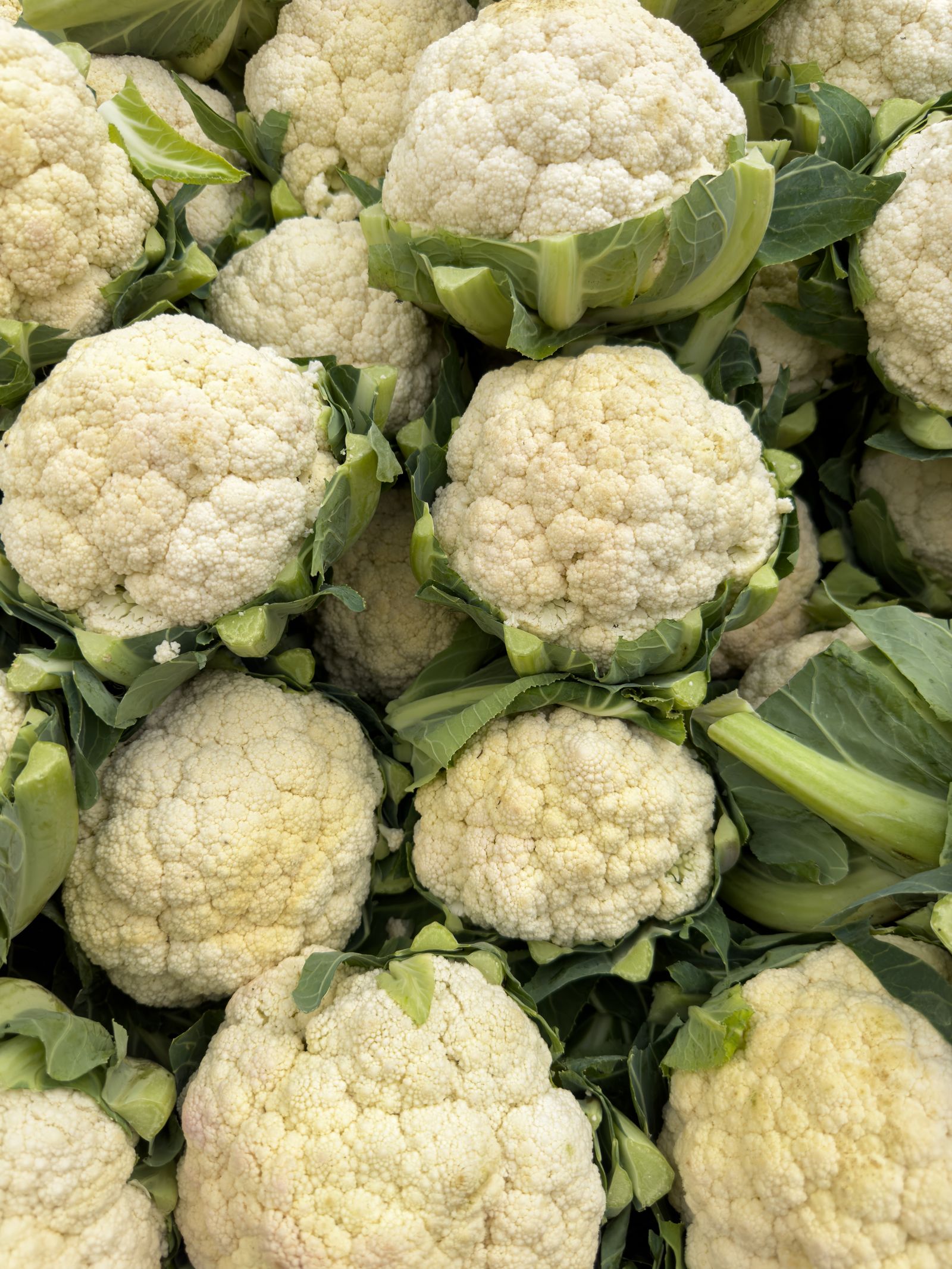
Cauliflower is a pale, dense cousin of cabbage and broccoli. Mild and slightly nutty, it soaks up spices beautifully.
- Botanical name
- Brassica oleracea var. botrytis
- Family
- Brassicaceae (cabbage family)
- Part used
- Flower head (curd)
- Flavor
- Mild, nutty, slightly sweet when cooked
- Season
- Cool weather
History
Cauliflower developed from wild cabbage through selection by farmers in the eastern Mediterranean region. Arab writers described it in the Middle Ages, and it spread across Europe. It reached India in the nineteenth century and became a winter favorite there.
Where it comes from
Its ancestors are wild cabbage plants of the Mediterranean region; the cauliflower form was refined in the Middle East and Europe.
Where it is used most
Cauliflower is popular in India (aloo gobi, gobi manchurian, paratha), the Middle East (roasted with tahini), and Europe and North America (roasted, mashed, or as rice substitute).
Varieties and types
White is the most common. Orange, purple and green varieties exist, and Romanesco has spiraling lime-green points.
Flavor and how to use it
Cut into even florets so they cook uniformly. In dry curries it is cooked with spices until tender yet still holding shape. Roasting concentrates its sweetness.
Buying, storing and substitutes
Choose a firm, tight head without brown spots. Refrigerate unwashed for up to a week. Broccoli can sometimes replace it, with a shorter cooking time.
Recipes that use it
Photo credit: Engin Akyurt on Pexels.