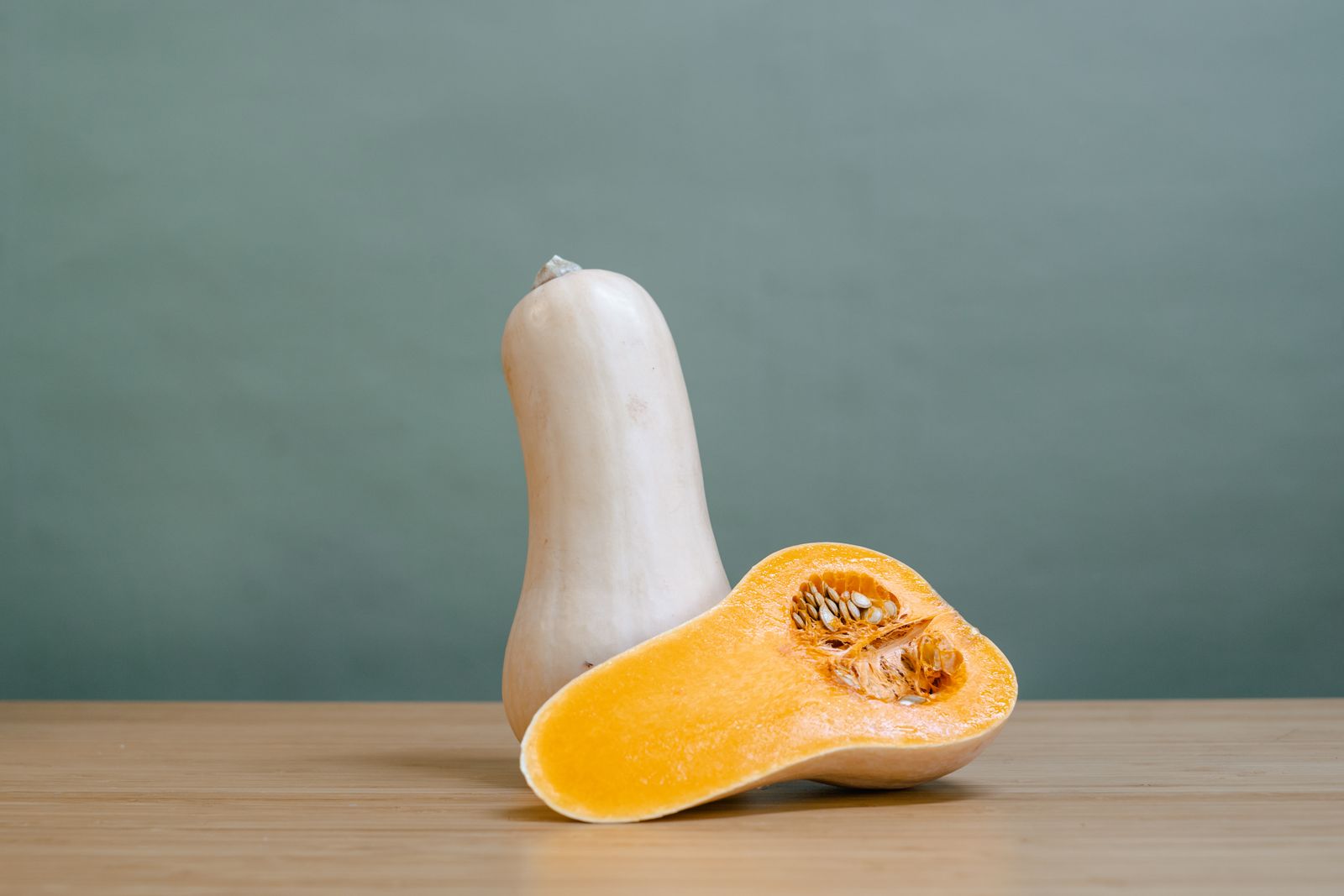
Butternut squash is a pear-shaped winter squash with smooth tan skin and sweet, orange flesh. It roasts into a creamy, nutty puree that suits soups, curries and side dishes.
- Botanical name
- Cucurbita moschata
- Family
- Cucurbitaceae (gourd family)
- Part used
- Flesh and seeds
- Flavor
- Sweet, nutty, earthy
- Season
- Autumn and winter
History
Squashes were among the first plants cultivated in the Americas, thousands of years ago in Mexico and Central America. They were later carried across the world. Butternut squash in its modern form was developed in Massachusetts in the 1940s.
Where it comes from
The Americas, with the Cucurbita moschata species coming from Mexico and Central America.
Where it is used most
Butternut squash is popular in North America and Europe for soups and roasts, in South Africa for soups, in Australia (where it is called butternut pumpkin) and in Italy for ravioli and risotto.
Varieties and types
Butternut is one of many winter squashes. Kabocha, acorn squash and pumpkin can often replace it.
Flavor and how to use it
Roasting concentrates sweetness and gives a deeper flavor than boiling. Blend with stock, onion and warm spices such as nutmeg for a smooth soup. The seeds can be roasted as a snack.
Buying, storing and substitutes
Keep whole squash in a cool, dry place for a month or more. Cut squash should be wrapped and refrigerated for a few days. Pumpkin is a good substitute.
Recipes that use it
Photo credit: MART PRODUCTION on Pexels.