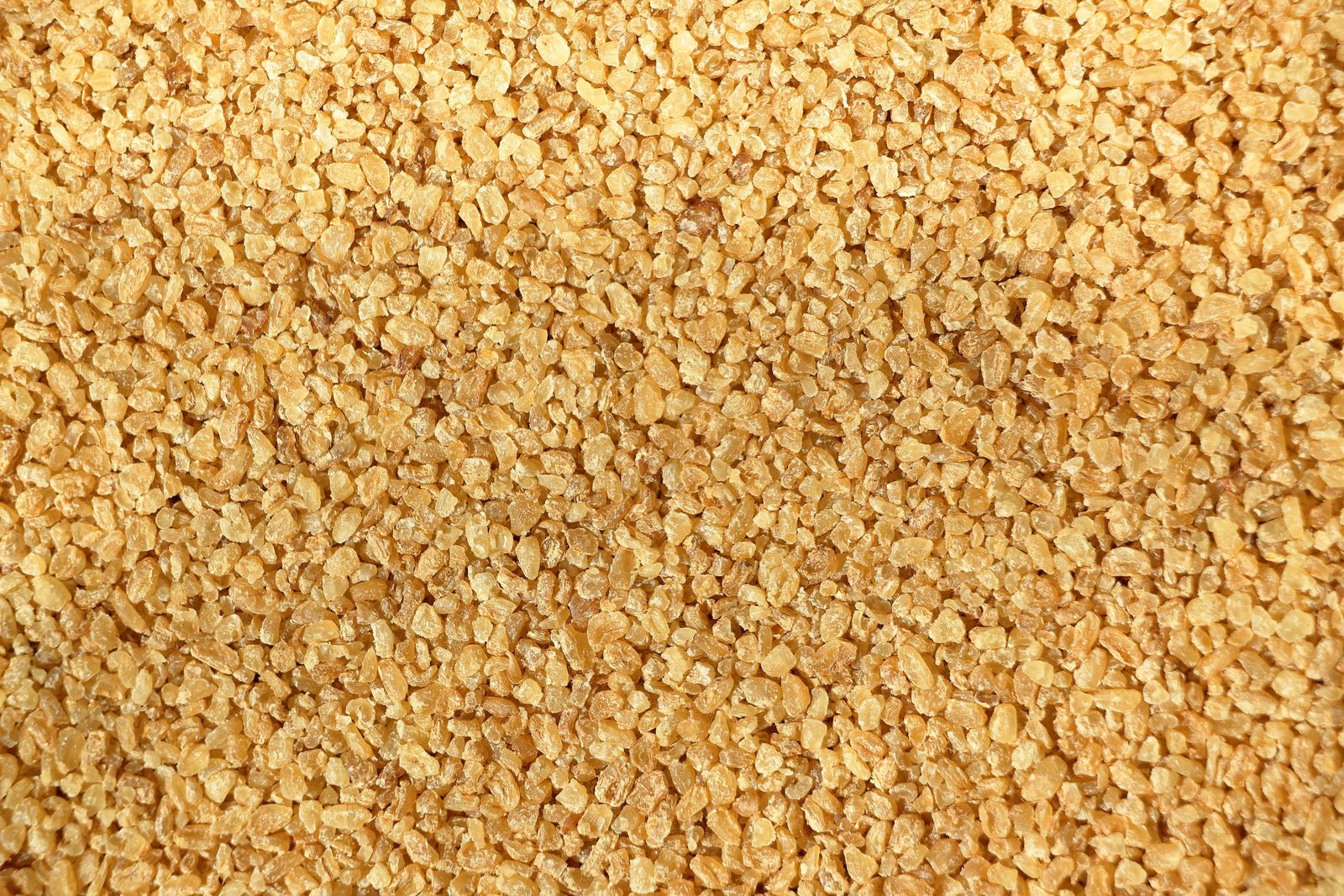
Bulgur is cracked wheat that has been parboiled and dried. It is quick to prepare, nutty and a staple of Middle Eastern and Mediterranean cooking.
- Made from
- Wheat (usually durum), parboiled and cracked
- Grades
- Fine, medium, coarse
- Flavor
- Nutty, mild
- Preparation
- Soak or simmer briefly
- Contains
- Gluten
History
Bulgur is one of the oldest processed foods, with a history reaching back thousands of years in the Middle East. Parboiling and drying wheat made it keep well and cook quickly.
Where it comes from
The eastern Mediterranean and Middle East, including Turkey, Lebanon and Syria.
Where it is used most
Tabbouleh in Lebanon, kibbeh in Lebanon and Syria, pilafs in Turkey, and çiğ köfte in Turkey.
Varieties and types
Fine bulgur only needs soaking, as in tabbouleh. Medium and coarse need simmering for pilafs and stews.
Flavor and how to use it
Soak fine bulgur in water or lemon juice until tender, and drain well. Simmer coarse bulgur with twice its volume of liquid.
Buying, storing and substitutes
Keep in an airtight container in a cool, dry place. Couscous, quinoa or rice can substitute in some recipes.
Good to know
Contains gluten and is not suitable for people with celiac disease.
Recipes that use it
Photo credit: Mustafa Akın on Pexels.