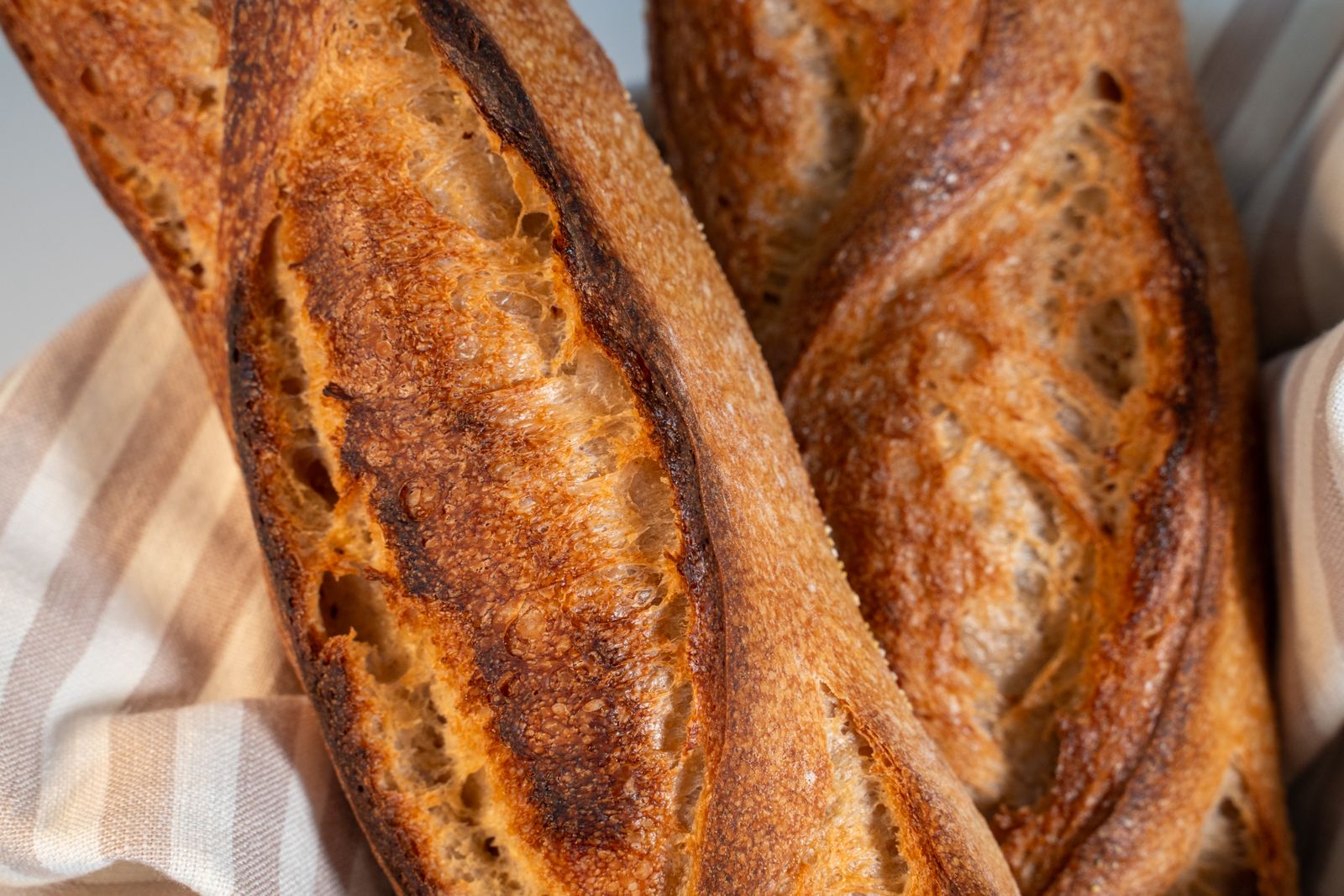
Bread is among humanity’s oldest prepared foods. A baguette, with its crisp crust and airy crumb, is the classic base for toasts and bruschetta.
- Made from
- Flour, water, yeast or sourdough starter, salt
- Baguette origin
- France
- Crust
- Crisp and golden
- Crumb
- Open and chewy
- Contains
- Gluten
History
Bread-making goes back thousands of years to ancient Egypt and Mesopotamia. The long, thin baguette is associated with France and became widespread in the early twentieth century.
Where it comes from
Bread appears in nearly every culture; the baguette is French.
Where it is used most
Baguette is used in France for sandwiches and with cheese, and in Italy and the Mediterranean as a base for crostini and bruschetta.
Varieties and types
Baguettes, ciabatta, sourdough and rustic country loaves all work for toasting. Day-old bread is firm enough to slice and grill.
Flavor and how to use it
Slice, brush with oil, and toast until golden so the crumb stays firm under toppings.
Buying, storing and substitutes
Keep at room temperature in paper or cloth for a day or two; freeze slices for longer. Ciabatta or sourdough can replace a baguette.
Recipes that use it
- Chicken Shawarma
- Classic Tomato Bruschetta
- Homemade Baked Chicken Nuggets
- Menemen (Turkish Eggs with Tomato and Peppers)
- Swedish Meatballs (Köttbullar) with Cream Sauce
Photo credit: Manish Jain on Pexels.