


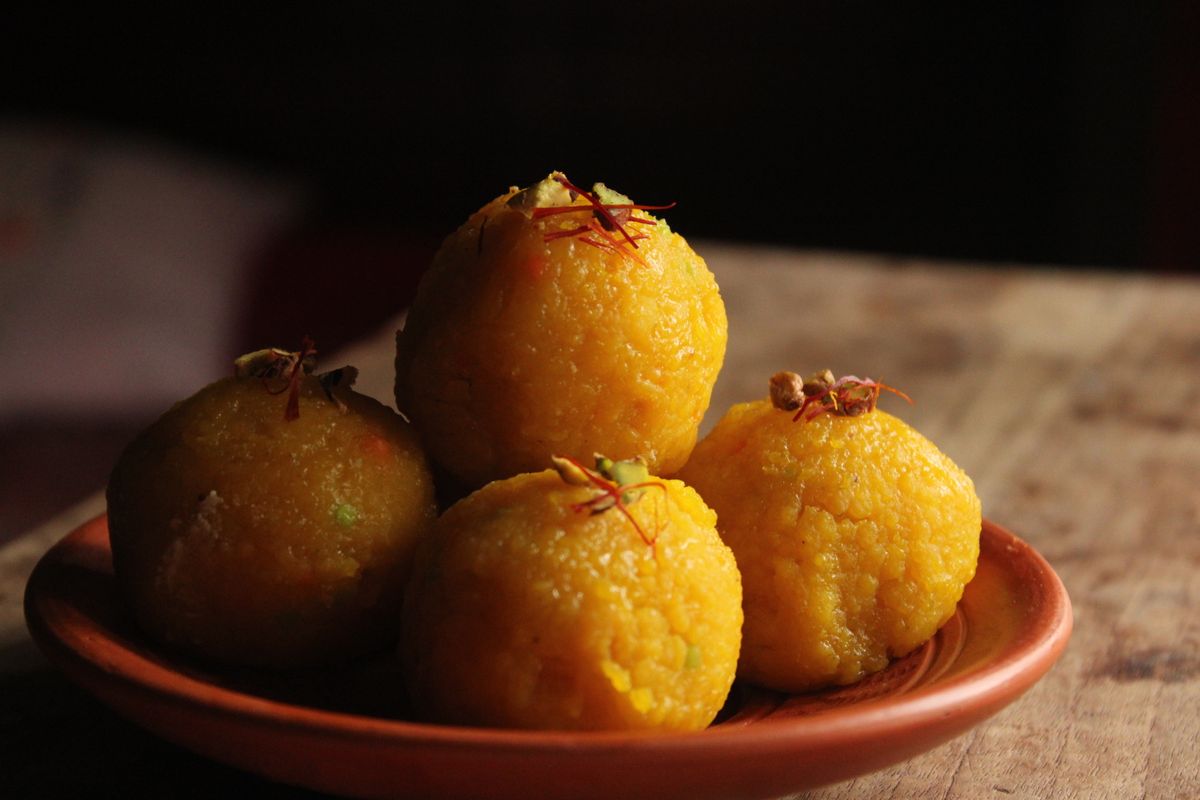
Illustrative stock photos, not this exact recipe. Photo credits are at the bottom of the page.
Ingredients in this recipe
Tap any ingredient to read its history, origin and where it is used.


Churma is a traditional sweet of Haryana and Rajasthan. Coarse wheat dough is shaped into thick rounds, cooked, crumbled and fried or toasted in ghee, then mixed with jaggery or sugar, cardamom and nuts. It is often shaped into laddoos and offered at festivals, or eaten warm with ghee. Haryanvi cooking is often described as hearty and rustic, built on millets, wheat, milk, ghee and yogurt, with relatively simple spicing. Read more in Indian regional cuisines.
It is rich and sweet, so a small portion is usually enough.
Recipe label: Based on traditional technique. Photo: illustrative stock photo, not the finished dish from this exact recipe. Regional recipes vary by family and village.
Photo credits: Photo 1: Nur Tok on Pexels; Photo 2: Sabhyata Sahu on Pexels; Photo 3: Jahra Tasfia Reza on Pexels. Free stock photos, used under the Unsplash or Pexels license and shown here as illustrations only.
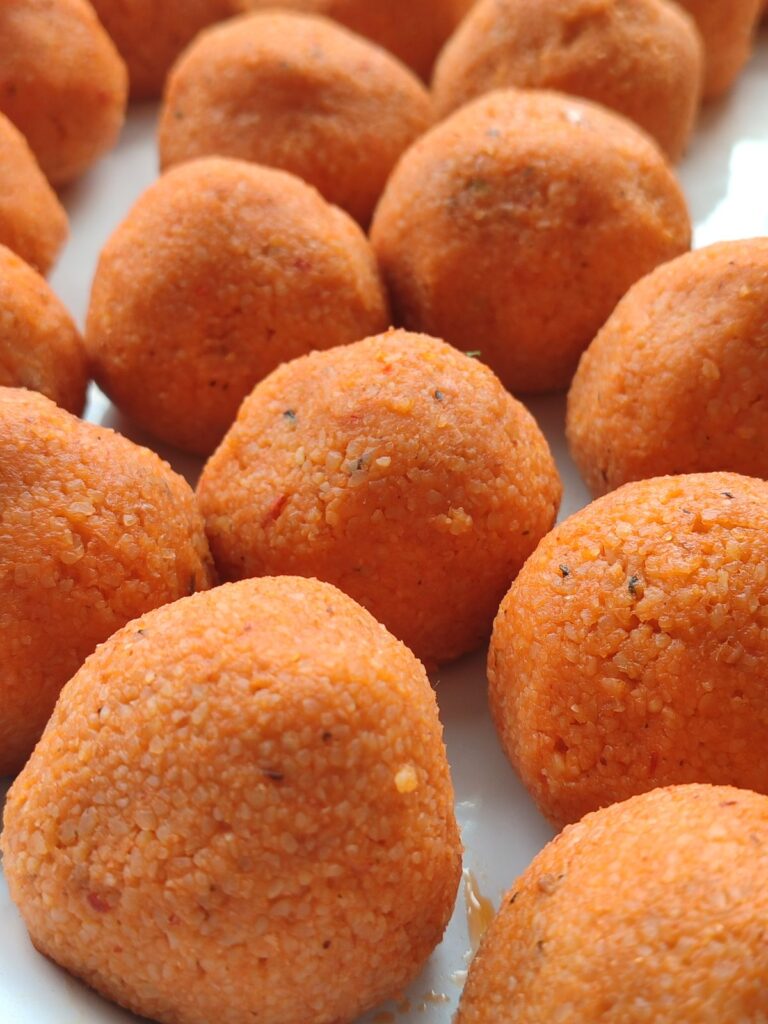
Churma (Haryanvi Crumbled Wheat and Ghee Sweet)
Description
Churma: a traditional Haryanvi sweet of crumbled fried wheat flour bread mixed with ghee, jaggery and nuts. Often served at festivals and with dal.Ingredients
For the churma
Instructions
-
Mix the flour, semolina and 3 tbsp ghee until crumbly. Add the warm water and knead into a firm dough. Rest for 20 minutes.
-
Divide into 10 to 12 small balls and flatten into thick discs.
-
Heat the oil or ghee in a deep pan over medium-low heat to about 160 C / 320 F. Be careful with hot oil. Fry the discs slowly for 8 to 10 minutes until deep golden and cooked through. Drain and cool completely.
-
Break the cooled discs into pieces and grind coarsely in a food processor, or crush with a rolling pin, to a crumbly texture.
-
Warm the 1/2 cup ghee. Mix the crumbs with the ghee, grated jaggery (or sugar), cardamom and nuts.
-
Serve warm or shape into small laddoos while the mixture is warm.
