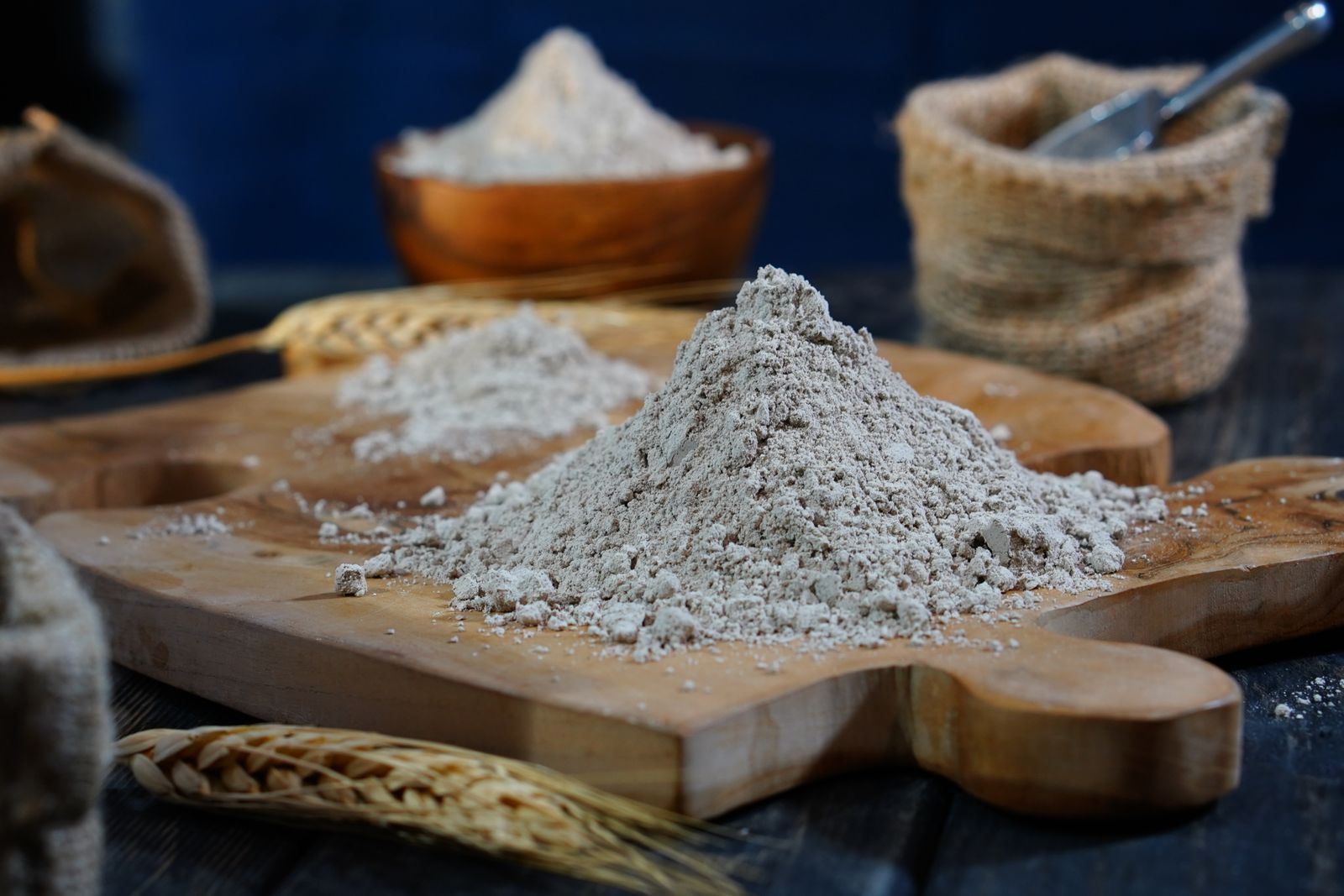
Atta is the finely ground whole wheat flour used to make everyday Indian flatbreads such as roti, chapati and paratha.
- Made from
- Whole wheat grain
- Indian name
- Atta
- Texture
- Fine, slightly coarse
- Main use
- Flatbreads and doughs
- Contains
- Gluten
History
Wheat has been grown in the Indus valley for thousands of years. Stone grinding (chakki) produced atta for daily bread, and the tradition continues in homes and mills across India.
Where it comes from
Wheat comes from the Fertile Crescent; in India it is a main grain across the north and center.
Where it is used most
Roti, chapati, paratha, puri and thepla in northern and western India, Pakistan, Nepal and across the Indian diaspora.
Varieties and types
Chakki atta is stone-ground. Multigrain atta mixes wheat with other flours. Regular whole wheat flour from other countries can be used, though it is often coarser.
Flavor and how to use it
Knead with warm water into a soft dough and rest it, so the gluten relaxes and the flatbreads roll easily.
Buying, storing and substitutes
Keep in an airtight container in a cool place, since the germ makes it go stale sooner than white flour.
Good to know
Contains gluten and is not suitable for people with celiac disease.
Recipes that use it
Photo credit: diosix on Pexels.