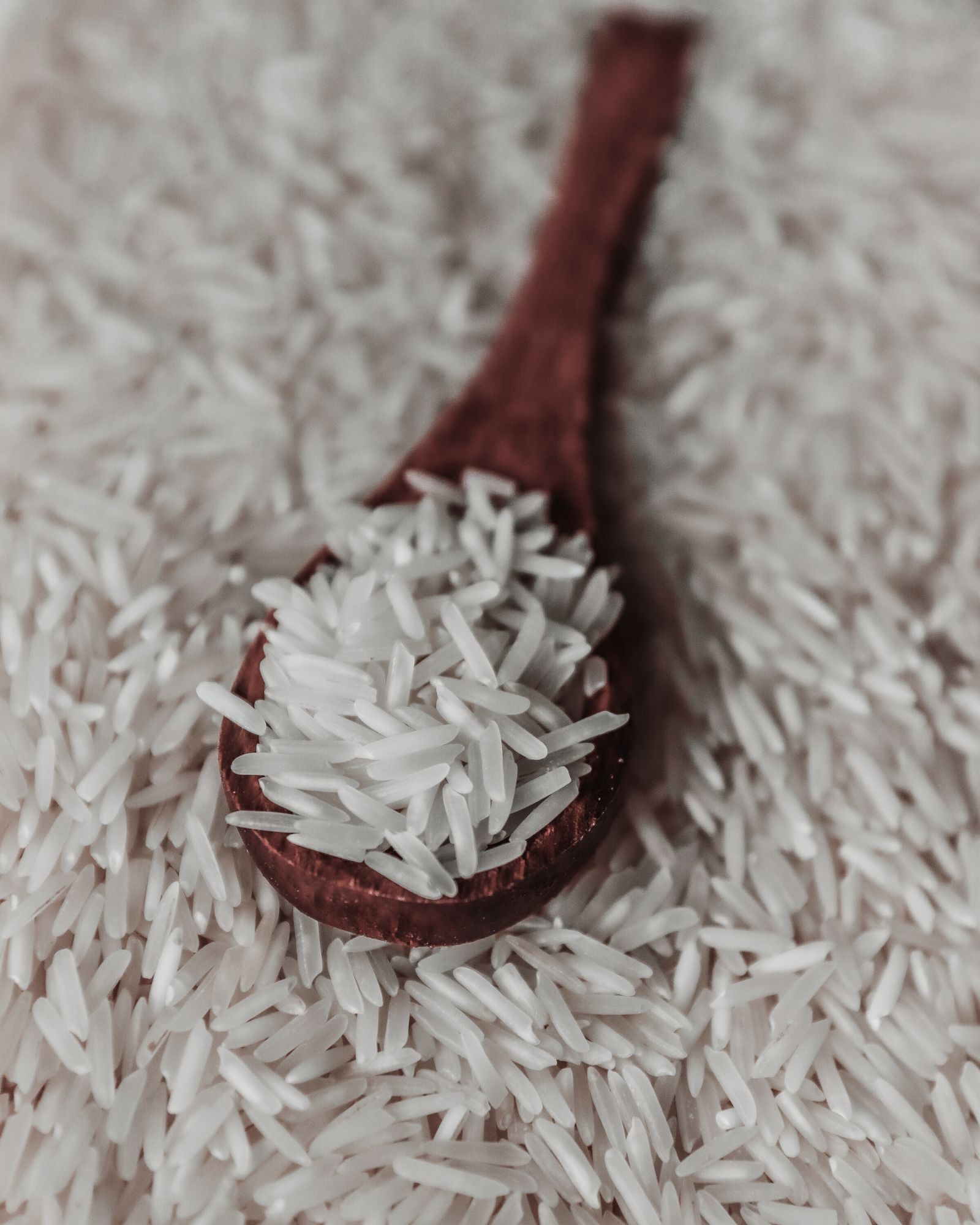
Basmati is a long-grain rice known for its delicate, nutty aroma. The grains stay separate and lengthen as they cook.
- Botanical name
- Oryza sativa
- Grain
- Long and slender
- Flavor
- Aromatic, nutty
- Main growing regions
- Northern India and Pakistan
- Name meaning
- “Fragrant” in Hindi
History
Basmati has been grown in the foothills of the Himalayas for centuries, and is mentioned in old regional writings. Its fine aroma made it a rice for royal tables and celebrations.
Where it comes from
The Himalayan foothills of India and Pakistan, in the Punjab region and surrounding plains.
Where it is used most
Basmati is the traditional rice for biryani, pulao, and everyday dal-chawal, and is also popular in Persian and Middle Eastern cooking.
Varieties and types
Aged basmati is firmer and more aromatic than new-crop rice. White and brown (whole grain) versions exist.
Flavor and how to use it
Rinse until the water runs fairly clear and soak briefly for fluffier grains. Cooked gently with whole spices, it makes pulao.
Buying, storing and substitutes
Store dry rice in an airtight container in a cool, dry place for a long time. Other long-grain rice can replace it, though the aroma differs.
Recipes that use it
Photo credit: Maddy Freddie on Pexels.