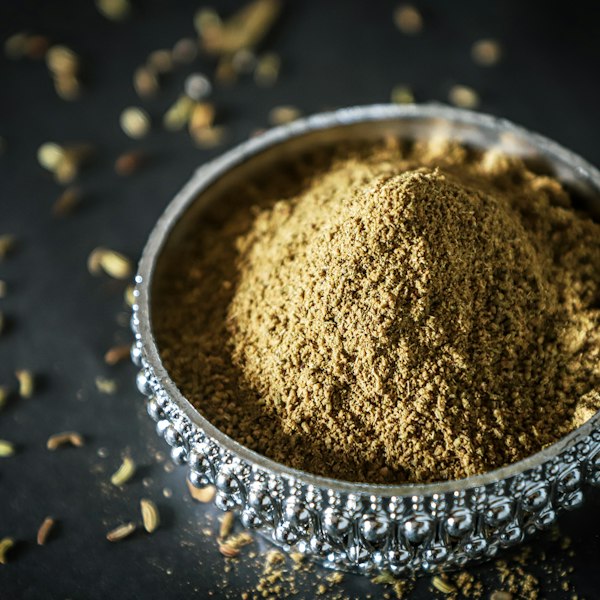
Garam Masala is a blend of ground spices, not a single spice. “Garam” means warming and “masala” means mix.
Origin and history
The mix varies by region and by family. Common ingredients are cardamom, cinnamon, cloves, black pepper, cumin and coriander seeds, and sometimes nutmeg, mace or bay leaf. It developed in northern India and is now used across the country and abroad.
Flavor and how to use it
Warm, sweet and aromatic. It is usually added near the end of cooking so its fragrance stays bright, as in chicken curry, chana masala and paneer dishes.
Buying and storing
Buy small amounts, or toast and grind your own. Store airtight and use within a few months.
More history and where it is used
Garam masala means “warm spice mix”. It is not one fixed recipe but a family of blends used in North Indian and South Asian cooking. A typical blend includes cardamom, cinnamon, cloves, black pepper, cumin and coriander, and sometimes bay leaf, nutmeg, mace or star anise. Every region and family keeps its own proportions.
Unlike curry powder, garam masala is usually added near the end of cooking, or sprinkled on a finished dish, so that its aroma stays bright. It also appears in marinades, kebabs, biryani and savory snacks, and has spread to Kenya, the Caribbean, the United Kingdom and other places with South Asian communities.
Varieties and types
Punjabi blends are often warm and sweet-smelling, Kashmiri blends may include dried ginger and fennel, and some South Indian versions add stone flower or poppy seed. Chaat masala and sambar powder are different blends.
Cooking tips
For the best flavor, toast whole spices in a dry pan, cool and grind them in small batches. Store in a sealed jar away from heat. Add a pinch at the end of cooking and taste.
Substitutes
A mix of ground cumin, cinnamon, cardamom and black pepper in a 2:1:1:1 ratio is a simple substitute.
Recipes on this site that use it
In kitchens and traditions
Many Indian families keep a household blend, passed from mother to daughter, with proportions that differ from home to home. Shops and spice houses in Delhi, Kolkata and Hyderabad grind their own mixes, and each is a point of pride. The blend plays a role in festive cooking, from biryani on Eid to kebabs at weddings.
Good pairings and ideas
- Sprinkle on dal, rajma or chana masala just before serving.
- Stir into yogurt marinades for chicken, paneer or vegetables.
- Add to roasted nuts or popcorn with salt for a quick snack.
- Use a small pinch in soups, omelets and rice.
Frequently asked questions
Is garam masala hot?
Not necessarily. “Garam” means warming, not chili-hot. Most blends contain black pepper but little or no chili.
Is garam masala the same as curry powder?
No. Curry powder is a Western invention, usually with turmeric and other spices. Garam masala is a finishing blend without turmeric in most traditions.
Can I make it at home?
Yes. Toast and grind cumin, coriander, cardamom, cinnamon, cloves and black pepper, and adjust to taste.
This page is general information, not medical advice. If you have allergies, a medical condition or are pregnant, check with a qualified professional before using any food in larger amounts than usual.
Recipes that use it
- Aloo Gobi (Potato and Cauliflower Curry)
- Chicken Biryani
- Dal Tadka (Yellow Lentil Curry)
- Easy Chana Masala
- Easy Home-Style Chicken Curry
- Indian Egg Curry
- Matar Paneer
- Palak Paneer (Spinach and Paneer Curry)
- Paneer Butter Masala
- Rajma Masala (Kidney Bean Curry)
Photo credit: Aditya Kulkarni on Unsplash.