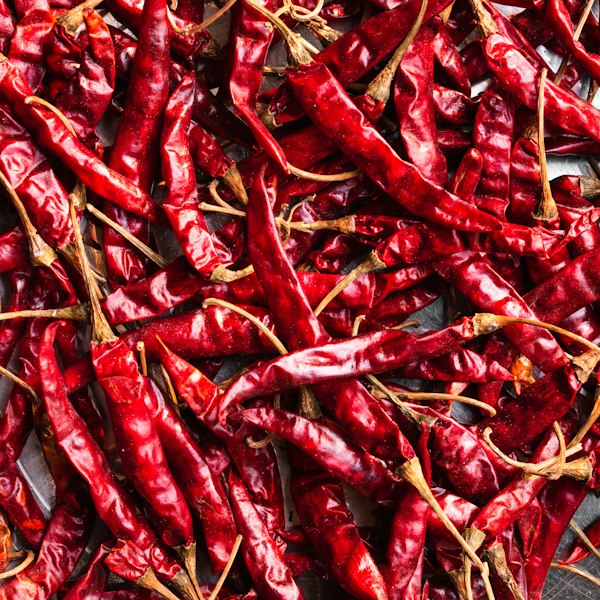
Red Chili (Hindi: Lal Mirch) is capsicum annuum and related species. Dried red chilies are sold whole, as flakes or as powder.
Origin and history
Chilies are native to the Americas. They reached India in the 1500s through Portuguese traders and spread quickly, because they were easy to grow. India is now the world’s largest producer and consumer of dried chilies. Kashmiri chili is prized for its deep red color and mild heat.
Flavor and how to use it
Heat ranges from mild to fiery depending on the variety. Kashmiri chili powder adds color with gentle heat; cayenne and similar chilies are hotter. Add gradually and taste as you go.
Buying and storing
Store powder airtight and away from light to keep its color. Whole dried chilies keep longer than powder.
More history and where it is used
Red chilies come from the Americas, where they have been cultivated for thousands of years. After 1492 they traveled around the world within a century, carried by Spanish and Portuguese ships, and transformed the food of India, Africa, Korea, Thailand and China.
Where it is used: India (curries, pickles, chutneys), Mexico (moles and salsas), Korea (gochugaru in kimchi), Hungary (paprika), Ethiopia (berbere), Sichuan, China (chili oil and bean paste), and Spain (pimentón). Different chilies are chosen for color, heat or smokiness.
Varieties and types
Kashmiri chili is mild and very red, Guntur is hot, Byadgi is wrinkled with deep color, and bird’s eye chilies are small and fiery. Chili flakes, powders and whole dried chilies behave differently in cooking.
Cooking tips
Add chili powder after onions have softened and before liquids go in, and stir for a few seconds so that it does not burn. Combine a mild chili for color with a hot one for heat. Wear gloves when handling very hot chilies.
Substitutes
Paprika for color with a pinch of cayenne for heat is a handy substitute.
Recipes on this site that use it
In kitchens and traditions
Chili heat is a cultural language. In Mexico, dried chilies such as ancho and guajillo give mole and salsas their depth. In Korea, gochugaru colors and flavors kimchi, while in Hungary, ground sweet and hot paprika is a national symbol. In India, regional styles use chili in different ways: sharp tempering oils in the south, rich red gravies in the north, and fermented chili pickles in the northeast.
Good pairings and ideas
- Fry a dried red chili in oil for a smoky tempering over dal.
- Make chili oil by pouring hot oil over chili flakes, garlic and sesame seeds.
- Rehydrate dried chilies in hot water, blend with garlic and salt, and use as a simple paste.
- Sprinkle mild Kashmiri chili over eggs and roasted vegetables for color.
Frequently asked questions
How can I cool a burning mouth?
Dairy such as milk or yogurt, sugar, bread or rice usually helps more than water, because capsaicin is oily.
Are seeds the hottest part?
Most heat is in the white pith that holds the seeds, though seeds carry some heat as well.
How do I store chili powder?
Keep in a sealed jar away from light and heat. It fades in color and flavor within a year.
This page is general information, not medical advice. If you have allergies, a medical condition or are pregnant, check with a qualified professional before using any food in larger amounts than usual.
Photo credit: ABHISHEK HAJARE on Unsplash.